Large language models often answer structurally unanswerable questions, such as computing cot(-540{\deg}) or evaluating (1).startswith("1"), instead of abstaining. We ask whether this failure reflects missing recognition or failed routing from recognition to abstention. Across instruction-tuned models from 1.7B to 70B parameters, a single linear direction in the hidden state separates answerable from structurally impossible math and code prompts, showing that models represent impossibility before generation. Yet this recognition direction is nearly orthogonal to the canonical safety-refusal direction that mediates trained harmful-content refusal. An in-domain behavior-defined invalidity-aware direction is closer to recognition, but only partially aligned with it, and remains near-orthogonal to safety refusal. Generation-time steering along the recognition direction changes invalidity-aware behavior bidirectionally and dose-responsively on structural math and code cells, while random directions do not. Base/instruct comparisons further show that the low-cosine geometry is already present at the pretraining endpoint. The confident-on-impossible failure is therefore better explained as a routing failure than as an encoding failure: the model has a usable "no admissible answer" signal, but the safety-refusal pathway is not aligned to use it.
Stance detection is crucial for understanding the underlying attitude of an expression towards a target. Conversational stance detection is a more challenging stance detection task in real-world social media scenarios, as it involves detecting the user's stance by leveraging the target-related historical statements across conversational sessions. In this paper, we propose target-aware Memory Graph TamGraph, a novel method that dynamically leverages target-related statements for conversational stance detection. Instead of considering all preceding historical conversations or using no prior conversation information for stance detection, our TamGraph employs a stepwise, entropy-guided backtracking mechanism to selectively activate memory from historical conversations and dynamically constructs a target-aware graph to model the stance relations among utterances. This allows the exploitation of target-related information from the conversation history for stance detection while preventing the introduction of noise. Experimental results on both English and Chinese benchmarks demonstrate that our TamGraph substantially improves LLM performance on conversational stance detection.
Yifan Xiang, Bin Liang, Yuqi Huang et al.· 0 citations
Dynamic sparse attention can reduce the quadratic cost of long-context prefilling without changing model weights. MInference assigns each attention head one pattern offline and estimates that pattern's sparse indices for every prompt. This design is efficient, but it assumes that a head's preferred pattern and sparsity budget remain suitable across inputs. We introduce RouteSparse, which routes each head and prompt segment among a small library of GPU-efficient sparse patterns. A low-cost probe estimates pattern utility and uncertainty; a latency-aware router then selects a pattern and budget, while uncertain cases fall back to a denser mask. We formulate routing as constrained risk minimization, derive an attention-output error certificate from omitted probability mass, and evaluate the method on long-context retrieval, question answering, summarization, and language modeling. On Llama 3.1-8B-Instruct with 128K-token prompts, RouteSparse achieves $6.5\times$ dense prefill speed with a 0.2-point RULER drop relative to dense attention, compared with $7.3\times$ speed and a 1.6-point drop for fixed per-head routing. Ablations confirm that input-conditional routing, hardware profiling, and selective dense fallback each contribute to the quality--latency tradeoff.
Chao Zhang, Yifan Ji, Ziyan Zhang et al.· 0 citations
A wide range of methods have been proposed for interpreting language models, delivering important insights into their inner workings. However, different methods and their resulting insights stand in relative isolation: what could the underlying structure of language models be, such that they give rise to all our interpretations? In this work, we propose using Tensor Product Representations (TPRs) as a unifying hypothesis. TPRs give a concrete proposal for how compositional structure could be represented in vector space --- as filler-role bindings. We show, both mathematically and empirically, that TPRs can unify several prior interpretability methods: additive analogies, linear probing, sparse autoencoders, and activation patching. Mathematically, we show that these methods can all be derived from TPRs. Empirically, we apply the derivations to a range of different models --- from small toy models to LLMs --- to construct instances of each of the above interpretability methods; these constructed variants perform comparably to their standard variants. We view this work as a step toward what interpretability will ideally provide: a unified account of the nature of neural networks, corroborated not just by individual observations but also by an explanation of the connections between them.
Zhang Enyan, R. Thomas McCoy· 0 citations
Reach audiences
Advertise in front of researchers, engineers, and readers.
LLMs often struggle with modern Korean poetry, producing outputs that resemble "line-broken prose." We address two coupled tasks: detecting whether a Korean poem is human- or LLM-authored, and guiding LLMs to generate poetry closer in form to human writing. We quantify the human-LLM gap along four form-level linguistic dimensions: output length (Volume), the diversity and connective use of line-final forms (Structure Variation), the irregularity of line lengths (Rhythmic Irregularity), and adherence to standard orthography (Normative Adherence). We operationalize these dimensions as five interpretable features. For detection, a logistic regression classifier over these five features attains an average AUC-ROC of 83.60 in zero-shot out-of-distribution detection across seven unseen LLMs, versus 75.84 for the strongest baseline in our comparison, KatFishNet, an absolute gain of 7.76 AUC points and a 10.23% relative improvement; one generator-specific punctuation pattern outside our taxonomy remains a boundary case. For generation, expert evaluation on GPT-5.2 prefers feature-guided poems over the unconstrained baseline, and analyses across GPT-5.2 and Gemini-3 show that targeted length, rhythm, and ending statistics move toward the human distribution. These results suggest that interpretable, language-specific features can bridge the diagnosis and guidance of LLM-generated poetry.
Keunhyeung Park, Seunguk Yu, YoungBin Kim· 0 citations
Chain-of-thought (CoT) reasoning has dramatically improved large language models (LLMs) by allowing them to decompose problems into intermediate steps. While CoT is widely effective for linguistic tasks, text-only CoT forces models to serialize visual problems into awkward prose. Although architectural solutions exist to process visual inputs, the community lacks a massive, multi-step, self-corrected dataset to teach models how to build and maintain internal visual workspaces when solving purely textual reasoning problems. To address this limitation, we introduce CoVA-SFT, a highly structured corpus of 51.9K samples containing over 222K multimodal reasoning steps across 5 distinct layout families and 17 complex tasks, and CoVA-Bench, a companion benchmark of 1,700 held-out test samples spanning the same tasks for reproducible evaluation. By providing explicit rationale formulations, agentic renderings, and verification loops, CoVA-SFT teaches multimodal language models to interleave text and visual abstractions. We validate the dataset by demonstrating that models fine-tuned on CoVA-SFT outperform all interleaved CoT baselines by more than 2x on average on CoVA-Bench, though they still fall short of strong text-only CoT baselines, highlighting open challenges for future work.
Tsung-Han Wu, Heekyung Lee, Anya Ji et al.· 0 citations
Voice products increasingly need affective cues that are present in speech but absent from transcripts. We introduce VocalAffectBench, a public, test-only benchmark for evaluating whether AI audio models can identify expressed vocal emotion from raw audio. The benchmark contains 273 human-recorded English WAV clips from 51 speaker accounts totaling 1.95 hours across seven labels: angry, disgusted, fearful, happy, neutral, sad, and surprised, with 39 clips per class. All baselines are evaluated from audio alone, without transcripts or contextual metadata. Across six released baselines, average accuracy is 35.5%. The strongest baseline, gemini_3_5_flash, reaches 46.5% on the seven-way task, above the 14.3% random baseline but far from robust emotion recognition. A secondary valence-bucket analysis maps labels into positive, neutral, and negative classes, excluding surprised because its valence is ambiguous. Aggregate accuracy under this coarser view is 50.9%. Performance is highly uneven across classes. By recall, neutral is identified most reliably at 75.6% averaged across baselines, while surprised and fearful reach only 10.7% and 15.4%, respectively. These results show that the evaluated baselines can extract some affective signal from speech, but discrete expressed-emotion recognition remains fragile, especially for non-neutral emotions that are often most important in voice agent workflows.
Models Luc Debaupte, Tyler Baumgartner, Brandon Tai et al.· 0 citations
Linguistic theory has long recognized cross-linguistic syntactic regularities, leading to claims that these similar structures are processed by similar mechanisms. However, this hypothesis has been difficult to test empirically due to our lack of fine-grained, manipulable access of human processing mechanisms. In this work, we take advantage of techniques from mechanistic interpretability to study such a question in multilingual LMs. We first isolate language-internal mechanisms before attempting to transfer them cross-lingually. Across four models and three well-studied constructions (subject--verb number agreement, anaphoric pronoun gender agreement, and filler--gap object extraction) we find consistent cross-lingual mechanism transfer. We further find transfer to be graded, with more transfer between more typologically similar languages. We believe our work provides novel hypotheses about cross-linguistic syntactic structures and multilingual processing, and more broadly shows how the study of language models can help inform linguistic theory.
Sasha Boguraev, Toshiki Nakai, Kyle Mahowald et al.· 0 citations
Automatic speech recognition (ASR) systems are commonly evaluated with word error rate (WER), yet many voice workflows depend on exact written values for identifiers, paths, and measured quantities. A transcript can appear fluent and achieve low WER while corrupting a value that a downstream system must parse, store, or execute.
We introduce VoiceCodeBench, a benchmark for evaluating exact structured-token recovery in English ASR. It contains 300 human-recorded workplace segments spanning eight workflow domains and 1,482 audited target entities across 26 entity types, each with a canonical written form recoverable from the audio. Under a raw-audio-only protocol, systems receive audio bytes without additional context or metadata. Alongside WER, we evaluate Canonical Token/Entity Match (CTEM), Task Success Rate (TSR), and per-type exact recovery.
Across 12 baseline ASR systems, lower WER generally corresponded to better structured-token recovery but did not fully determine it: Spearman correlations were -0.73 for both WER versus CTEM and WER versus TSR. The strongest baseline by TSR reached only 68.7%, leaving nearly one third of recordings with at least one unrecovered workflow-critical value. These results show that entity-sensitive metrics are needed to assess whether ASR output preserves exact values that production systems must parse, route, store, compare, or execute.
Tyler Baumgartner, Brandon Tai, Lisa Kaelin-Martin et al.· 0 citations
Supplying context at inference time to a large multimodal model is an inexpensive lever for adapting speech transcription to a domain, and earlier results on smaller models reported large gains. This work tested that mechanism where it ships, in the prompt-conditioning layer of a production oral-history transcription tool, on a sample from its own production corpus. Full prompt-level context did not detectably change side-level word error rate (WER), and none of the four preregistered hypotheses was supported. The design was a within-item paired ablation, preregistered with the analysis code frozen by hash before the confirmatory batch was scored; two disclosed gpt-4o pilot sides had been scored earlier, during scorer development. Nineteen cassette sides, about 10.6 hours of degraded 1970s-80s interview audio, were reprocessed through the production code path under three prompt arms, crossed with two deployed commercial configurations, gpt-4o-transcribe and gemini-2.5-flash, and scored against operator-corrected verbatim references. For gpt-4o-transcribe the median paired difference between the full-context and no-context arms was +0.6 WER points, with a side-resampled interval of [-1.1, +1.0]; the Gemini estimates were too unstable to support a comparable negative inference. A post-hoc rerun found run-to-run pipeline variability larger than the confirmatory differences, so effects of that size cannot be resolved from one transcription per cell. An implementation audit verified the manipulation was live, and sequence-alignment analysis found a small improvement on complete context-listed phrases, too small to materially change side-level WER, and for Gemini coexisting with worsened unlisted-token error. Evaluating context mechanisms therefore requires sequence-aligned term-level, insertion, and speaker-label measures alongside aggregate accuracy.
Theodore O. Cochran, Stephanie Dodson, Keith Nore· 0 citations
Large Language Models (LLMs) often answer the same factual question differently across languages. We study whether cross-lingual latent-space intervention can reduce this inconsistency. We train layer-specific autoencoders on parallel multilingual representations and apply inference-time corrections to factual QA prompts. We find that latent intervention improves geometric alignment between languages, and that this improvement translates into consistent gains in cross-lingual consistency with English across both open-ended and multiple-choice QA formats, without degrading factual accuracy. In open-ended QA, Spearman's rank correlation between English and non-English languages improves substantially, with gains of 0.16 for English-Arabic and 0.20 for English-Russian pairs. In multiple-choice QA, answer agreement with English improves consistently across both KLAR and mParaRel. Ablations show that AE reconstruction yields consistent gains at no accuracy cost, while PCA projection contributes marginally, and mean-shift produces substantially larger consistency gains in open-ended QA at the cost of some accuracy.
Faeze Ghorbanpour, Constanza Fierro, Alexander Fraser et al.· 0 citations
Multilingual sentence embeddings are increasingly used to estimate semantic similarity across languages, yet their sensitivity to fine-grained translation errors remains insufficiently understood. This study investigates whether general-purpose multilingual embedding models can distinguish correct English-Greek translations from minimally modified erroneous alternatives. A contrastive dataset was developed from FLORES+ sentence-aligned reference translations and reviewed by two translation experts. It contains 1,850 examples across ten core and five exploratory error categories, covering factual, lexical-semantic, grammatical, relational, referential, and discourse-level phenomena.
Five multilingual sentence-embedding models (BGE-M3, Multilingual E5, Multilingual MPNet, LaBSE, and Jina Embeddings v3) were evaluated using cosine similarity between each English source sentence and its correct and erroneous Greek translations. A reference-free COMETKiwi model was also evaluated as an MT quality-estimation baseline. Performance was assessed through contrastive accuracy and score margins for category-specific sensitivity. BGE-M3 achieved the highest accuracy among embedding models at 89.30 percent, while COMETKiwi achieved 94.49 percent. Embedding models detected explicit factual and lexical changes more reliably than tense-and-aspect and pronoun-coreference errors. COMETKiwi improved performance on several difficult categories, including tense and aspect, pronoun and coreference, and semantic-role errors, but showed lower sensitivity to date-and-time errors and underperformed the embedding models on numbers. The results show complementary error-sensitivity profiles: multilingual sentence embeddings provide useful semantic adequacy signals but are better suited as components of broader translation-evaluation frameworks than as standalone metrics.
Eleftherios Kalogeros, Athanasios Ntalakas, Manolis Gergatsoulis et al.· 0 citations
A new method, called CW-Net, translates the reasoning process of an autonomous vehicle’s AI system into understandable concepts that explain its behavior.
MIT News · Artificial Intelligence· news.mit.eduAug 31, 2026
With millions of users across the world, Julia has been used to conduct cutting-edge research and to design new drugs, jet engines, heat pumps, and more.
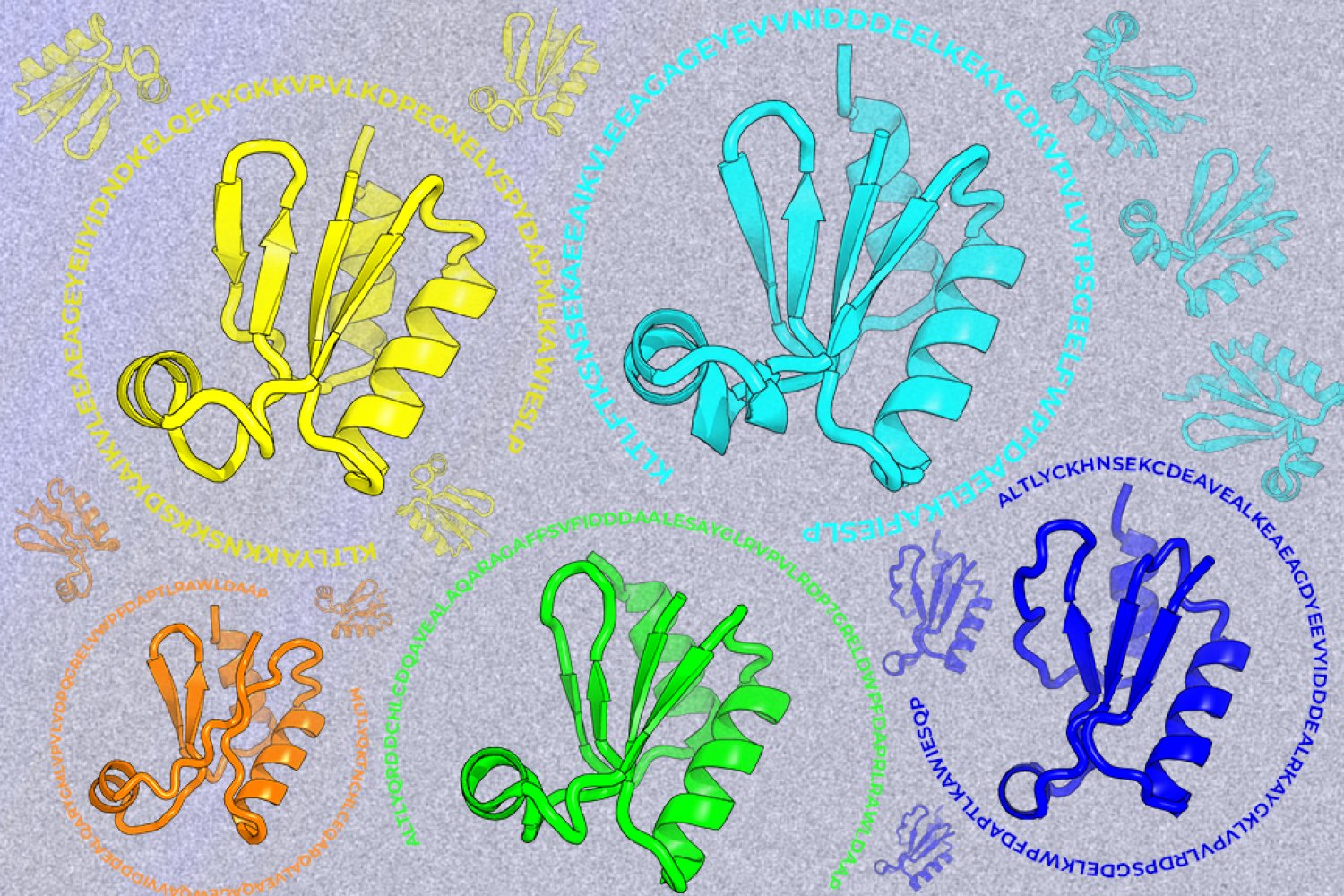
A new machine-learning framework aims to improve the success rate of computational protein design while moving away from results that reproduce sequences found in nature.
New MIT research could lead to better materials for a fossil-fuel-free process for making the chemical that's essential to fertilizer and other products.