Strategic deception by LLM and VLM agents has emerged as a central AI alignment and safety concern. Social-deduction games (where each player holds a hidden role and communicates with others to deduce identities) serve as the canonical testbed, particularly in multi-agent settings. Existing testbeds, however, are text-only and run on a single fixed agent configuration, missing the non-verbal sensorimotor channels treated as core by deception taxonomies and leaving it ambiguous whether an observed behavior reflects the underlying model or the surrounding harness. We introduce MineAmongUs, a 3D multimodal Among Us sandbox where imposter agents must deceive crewmates through joint verbal and non-verbal action. We also propose ARIA, a configurable VLM-agent harness that exposes five cognitive-component ablation axes; and an atom- and arc-level annotation scheme grounded in deception taxonomies and operationalized at scale by an LLM-as-a-Judge reaching near-human atom-labeling agreement. Empirical results show that VLM agents pursue imposter wins through joint verbal and non-verbal deception, with non-verbal channels emerging as the more decisive winning contributors across both harness ablation and cross-VLM evaluation. Taken together, our work opens a new path for embodied VLM-agent alignment research.
Jaewoo Ahn, Junseo Kim, Hyunseo Kim et al.· 0 citations
Speculative decoding speeds up generation with an efficient draft model (drafter) that proposes tokens for a target model to verify in one pass, preserving the target's output distribution. High-acceptance block-diffusion drafters such as DFlash and DFlare fill an entire block in one parallel pass. In many cycles, the target accepts the whole block, so the drafter exhausts its trained block horizon before verification fails. We call this unrealized acceptance stranded speed-up. A mean committed length, per prompt or per cycle, hides it, whereas the acceptance histogram exposes it as a spike in the ceiling bin, the fraction of cycles that accept the entire block. We recommend the histogram as a preflight check before spending training compute. Naively widening the block at inference does not recover the speed-up, because once the block outgrows its training size, the drafter's bidirectional attention shifts its distribution even at early positions and erodes front-of-block verification. Instead, we post-train the drafter on a longer block with a short curriculum that emphasizes the newly exposed positions, a method we call DBloom. Expanding the pretrained DFlash and DFlare drafters from block size 16 to 24 across Qwen3-8B and Qwen3-4B targets raises the per-prompt committed length on the high-ceiling benchmarks by a median of +0.8 tokens (up to +1.1). Once continuation fine-tuning precedes expansion, the increase reaches 1.37 tokens. The same expansion also lifts committed length on all seven benchmarks for Gemma-4-12B-IT, a different model family, by a median of +0.41 tokens (Arm A), and the full continuation-then-expand pipeline (Arm B) adds +0.29 to +0.98 tokens over the same B16 drafter. In a prompt-matched comparison against JetSpec, a contemporary tree-based drafter not used in our design, DBloom commits more tokens on every benchmark at tree budgets up to 64 nodes.
Recurrent, attention-free sequence models share a structural weakness: a fading state cannot perform exact recall of something seen once, far in the past. We add to the Kathleen trunk a second memory layer -- a "notebook": a fixed-key holographic (HRR) associative store with a learned local write gate, a self-gating raw read, and write-triggered forgetting -- 25K parameters that attach to the logits of any trunk. (1) Mechanism: on a controlled needle-in-haystack task the notebook reaches 80-82% one-shot recall at 4x the training length, where the bare trunk scores ~4% and a parameter-matched attention head scores 100% inside its training length and 0% beyond it. Addressing is length-invariant by construction; the untrained memory alone recalls at 90% accuracy identically at 512, 2048 and 4096 bytes. Because the store is a linear superposition, two capabilities follow from arithmetic alone: selective unlearning (one subtraction erases one fact to chance, retained facts unharmed) and per-token attribution (counterfactual erasure names the source fact of every correct byte, 100% provenance). (2) Real text: on WikiText-2 bytes the notebook improves prediction of repeated rare words by +0.15-0.27 bits/byte, the gain growing with the distance between mentions and holding zero-shot at 4x training length; write-triggered forgetting eliminates memory pollution at 8x length (first-mention cost +0.33 -> -0.004). (3) Scope and scale: a parameter-matched attention head does generalize on natural-text repetition, so the notebook's claim is exact recall at O(L); on a WikiText-103 ladder (8 to 512 MB) the zero-shot repeat gain rises monotonically. All experiments are pre-registered, seeds reported, and reproducible on a single free-tier GPU.
Large language models (LLMs) finetuned for specialized domains represent crucial high-impact applications. Inference-time alignment improves safety degraded from specialization finetuning without requiring substantial computational resources, complementing finetuning-based methods with an easy-to-use, plug-and-play solution. However, existing inference-time methods fail to reliably improve safety without disrupting domain capability. We identify the root cause as complementary expertise orthogonality: specialized base models and general-domain guidance models have orthogonal competencies, making the guidance signal unreliable for specialized generation. This primarily manifests as stop token interference, where the guidance model's tendency toward continuation overrides the base model's decision to stop, burying correct answers under guidance-induced continuation. To address this problem, we propose CREST, an inference-time alignment method that steers base model hidden representations using safety directions extracted from a guidance model of any family, avoiding token-level structural limitations entirely. CREST improves safety where specialization has weakened it while preserving both domain-specific capability and the safety of already well-aligned models, outperforming baselines by up to 22.2\% on safety benchmarks. Our code is available at: https://github.com/DecayingSeart/CREST.
Jin Gan, Xin Li, Jun Luo· 0 citations
Reach audiences
Advertise in front of researchers, engineers, and readers.
While it is well-established that prosody carries crucial cues for syntactic structure, the degree and nature of correspondence between these two domains remains contested. We investigate the syntax-prosody interface through an information-theoretic lens, quantifying the interaction between prosodic features and syntactic representations as their mutual information. We provide a general-purpose framework for estimating this quantity over large speech-text corpora using multimodal language models. Our framework is structure-agnostic and modular, insofar as it can be used to measure the contributions of individual prosodic features or components of structure. We evaluate the syntax-prosody relationship for two features (word duration and inter-word pauses) across two domains--read audiobooks and spontaneous conversations--both in English. Our results demonstrate that prosody contains measurable syntactic information, with prosodic features reducing syntactic uncertainty in spontaneous conversations by up to 10.2%. Our findings offer new empirical support for several theoretical accounts of the syntax-prosody interface.
Junghyun Min, Alex Warstadt, Tamar I. Regev et al.· 0 citations
Current video-to-music (V2M) models lack semantic control and fail to penalize instruction violations, largely due to their reliance on reconstruction objectives and the representational bottleneck of static cross-modal conditioning in Diffusion Autoregressive (DAR) architectures. To resolve this, we introduce VIBE, a novel text-and-video-to-music (T+V2M) generation model that leverages: (1) Conditioning Connection, a depth-wise cross-layer conditioning mechanism that dynamically bridges the planning and diffusion refinement heads and (2) a comprehensive reward modeling taxonomy, optimizing for both hard, verifiable constraints (e.g., tempo, key) and soft, subjective qualities (e.g., musicality, multimodal alignment) with a structured 5-stage training curriculum. Upon evaluation using audio-visual alignment, instruction following, and audio quality metrics, along with a subjective human evaluation study, we observe that VIBE demonstrates enhanced controllability and instruction adherence while performing comparably to most evaluated baselines on generation fidelity and multimodal alignment.
Credit-default prediction is an important task in financial decision making. Traditional methods use fitted classifiers such as logistic regression and random forests on tabular features. Large language models (LLMs) have recently been applied to this task through prompting. In this work we study how a fitted classifier and an LLM can be combined for credit-default prediction. We distinguish telling the LLM to imitate a classifier from using the classifier to build the prompt. We hypothesize that a fitted classifier can supply the ranking ability that an LLM prompt lacks. We experiment on the Default of Credit Card Clients dataset, and report recall, F1, and the area under the ROC and precision-recall curves, with bootstrap confidence intervals. We observe that a few-shot LLM has the highest recall (0.47) and F1 (0.50) of any single model but ranks worse than a random forest (AUC-ROC 0.72 against 0.79). Instructing the LLM to imitate a classifier gives no significant change. Pruning the prompt to the classifier's eight most important features raises recall by 0.071 and F1 by 0.032. Adding the classifier's predicted probability to the prompt raises the LLM's AUC-ROC from 0.72 to 0.78, matching the random forest, while keeping 0.118 higher recall than it. The reverse composition, and the use of several classifiers, do not help. We thus recommend a simple classifier-guided prompt for LLM-based credit prediction.
Language models are commonly compared by averaging scores across a benchmark list with equal weight. Such lists grow through publication outside an explicit measurement design, so equal weighting turns the density of published benchmarks into an implicit capability weight: densely benchmarked regions count repeatedly. We introduce Balance of Benchmarks (BoB), which embeds benchmark descriptions and assigns each benchmark an inverse-density semantic weight. Nearby entries share aggregate influence at a disclosed density scale. After equating heterogeneous scores onto a common latent scale, a residual field uses the same geometry to condition model rankings on a task query. The two components serve distinct empirical roles. On a snapshot of 586 models and 14 benchmarks, BoB predicts which models are unusually strong on a held-out task beyond their general ability, reaching a profile correlation of 0.462 compared with 0.049 under equal weighting. It also limits the influence of densely repeated benchmarks on the aggregate. After adding four copies of each benchmark in turn, the resulting rankings retain a Kendall tau of 0.995, compared with 0.936 under equal weighting. The residual field therefore provides task-conditioned prediction, and inverse-density weighting provides robustness to benchmark multiplicity. Together, they turn benchmark-list composition from an incidental property of evaluation suites into an explicit, controllable part of measurement design, providing a principled foundation for task-aware and multiplicity-robust model evaluation.
Large language models are increasingly required to generate responses that satisfy multiple competing objectives. Since optimal trade-offs depend on both user preferences and input prompts, controllable multi-objective generation must dynamically adapt models at inference time without retraining. To address this, we propose Evolutionary Soups, a mixture-of-experts framework for fine-grained generation control, with gating networks trained via an evolutionary algorithm. The per-layer gating networks dynamically produce expert-merging coefficients from hidden-state representations, while the evolutionary algorithm incorporates greedy hypervolume contribution for effective evolution of these gating networks, achieving consistent improvements on large and noisy training datasets and broader coverage of the non-convex Pareto front. Experiments across three tasks demonstrate the effectiveness of Evolutionary Soups over baselines: it achieves the best hypervolume, linear utility, and Tchebyshev utility (~20% improvement) among controllable methods on all tasks.
Lingxiao Kong, Steffen Staab, Cong Yang et al.· 0 citations
Safety alignment of large language models (LLMs) degrades across languages, yet the internal mechanism driving this asymmetry remains poorly understood. Our work, therefore, presents a systematic mechanistic analysis of multilingual safety using sparse autoencoder (SAE) features, sparse interpretable directions in the residual stream associated with harmful and harmless model behavior across three instruction-tuned LLMs, eight languages, and all model layers. We observe that safety-relevant features are architecture-dependent in terms of where they are located and how they are distributed across layers. Additionally, they are geometrically entangled with language identity and exhibit cross-lingual sharing patterns, i.e., languages share safety features to varying degrees across model depths and architectures. This safety-language entanglement has direct consequences such that ablating safety features impacts not only harmful response rates but also target language, with the degree of intervention predicted by the relationship between safety and language features. Our findings qualify the language-universality of safety alignment as architecture-dependent and offer a mechanistic account of multilingual safety interventions.
KV-cache compression reduces LLM inference memory by evicting context tokens, but when the evicted tokens contain answer-bearing evidence, the model may hallucinate instead of recognizing that the compressed context is insufficient. We address this failure from a behavioral perspective: to our knowledge, this is the first work to formulate compression-aware abstention as a learning problem, in which a model learns to answer when supporting evidence survives compression and abstain when it does not. We construct supervision from compressor survival masks and tight answer-bearing spans, labeling examples as Confident when evidence survives and Abstain when it is removed. A 10.1M-parameter LoRA adapter trained on ~2.6K MuSiQue 2-hop QA examples reduces base-model hallucinations by 97% under prompt-style truncation while preserving correct answering on evidence-retaining examples. Unlike prompt-only abstention baselines, which over-abstain on many answerable high-retention examples, the trained adapter learns a conditional policy. We also evaluate the method under actual compressed-cache decoding, where multi-compressor training yields a 6-22x relative lift over the unaided base on evidence-retaining examples. Controlled-deletion experiments show that the learned behavior is driven by evidence content rather than input length alone.
Sampled-token on-policy distillation (OPD) efficiently transfers capabilities from teacher to student using student-generated tokens, requiring teacher probabilities only for sampled tokens. Yet it frequently suffers from diversity distillation failure: the student's pass@1 improves while its pass@$k$ plateaus, failing to inherit the teacher's diversity. To explain this, we introduce First-Order Local Entropy Influence, a signed first-order proxy that decouples each update's entropy effect into the teacher--student log-probability gap and the student's local probability structure, and empirically links entropy contraction to negative-influence positions. Motivated by this, we propose Influence-Directed Adaptive On-Policy Distillation (IDA-OPD): rather than relying on costly full-vocabulary Forward-KL objectives, it preserves entropy-expanding updates while replacing entropy-contracting ones with divergence-adaptive advantage shrinkage, using only the teacher's sampled-token log-probability. Experiments on reasoning-oriented distillation show IDA-OPD consistently improves pass@$k$, inheriting the teacher's diversity through distillation, matches the strongest teacher-informed methods at strictly lower cost, and broadly maintains vanilla OPD's pass@1, all without full-vocabulary teacher information.
Run Yang, Runpeng Dai, Jie Sun et al.· 0 citations
A new method, called CW-Net, translates the reasoning process of an autonomous vehicle’s AI system into understandable concepts that explain its behavior.
MIT News · Artificial Intelligence· news.mit.eduAug 31, 2026
With millions of users across the world, Julia has been used to conduct cutting-edge research and to design new drugs, jet engines, heat pumps, and more.
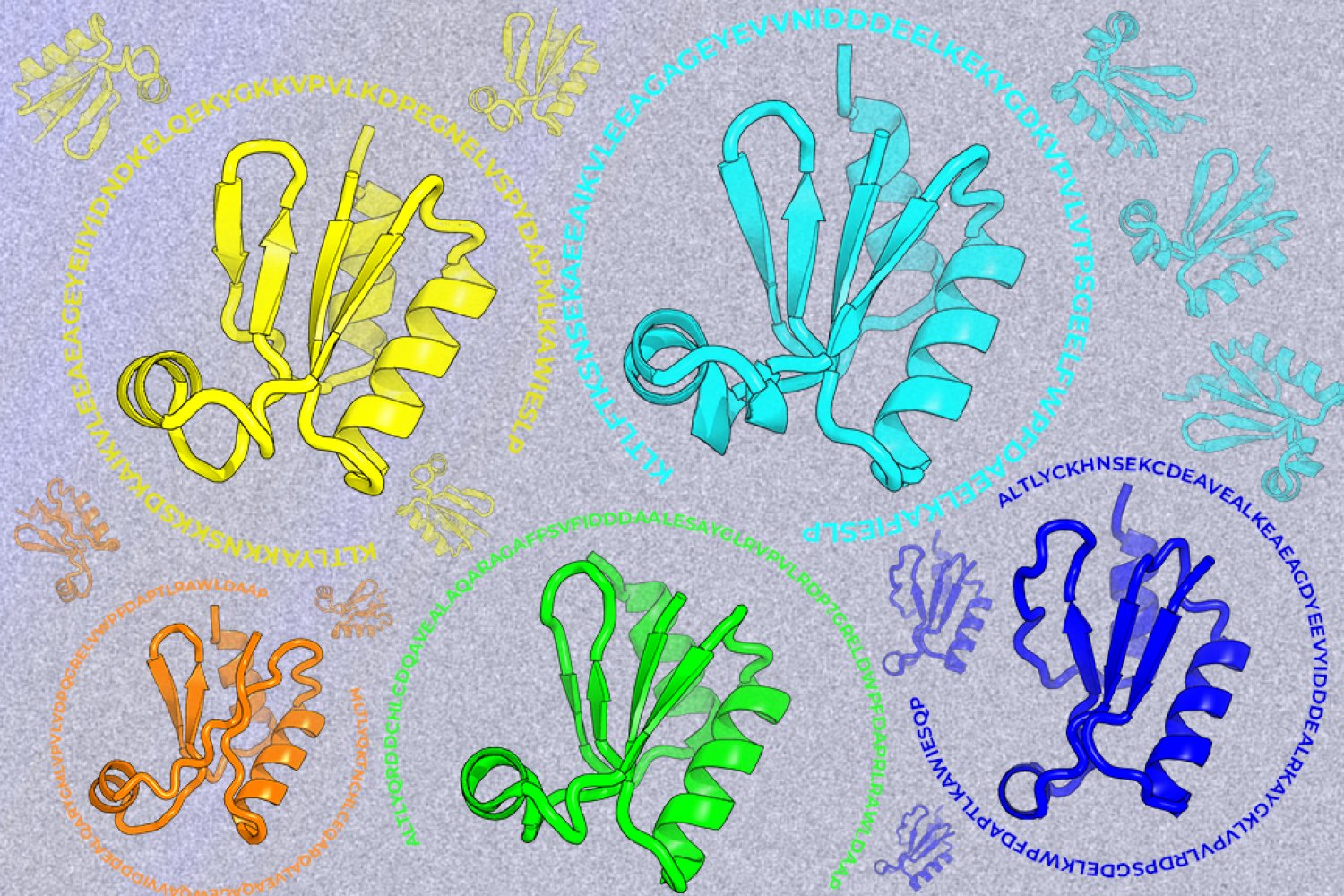
A new machine-learning framework aims to improve the success rate of computational protein design while moving away from results that reproduce sequences found in nature.
New MIT research could lead to better materials for a fossil-fuel-free process for making the chemical that's essential to fertilizer and other products.