Layer-skipping methods for efficient LLM inference decide, at some granularity, which transformer layers to execute for a given input. We present a rigor-matched, three-seed audit of two periodic-step, search-based methods that make this decision online at inference time and re-evaluate it every few generation steps: a confidence-gated early-exit baseline (ConfLayers) and genuine self-speculative decoding (SWIFT, Xia et al. 2024), together with vanilla autoregressive decoding, across two model scales (Qwen2.5-0.5B and Qwen2.5-1.5B) and two tasks (GSM8K reasoning and CNN/DailyMail summarization). SWIFT is the strongest method on accuracy in three of four cells; ConfLayers is dominated everywhere, with particularly large deficits on GSM8K at 1.5B. Once online-search overhead is separated from pure inference cost, SWIFT's true inference speed is faster than ConfLayers's in all four cells (5-21%), reversing the naive wall-clock ranking in three of them. ConfLayers's search overhead is small and stable (1-2% of cost), while SWIFT's is larger and more variable (up to 28.7%). We additionally examine two trained-routing methods, LayerRoute (Sikdar, 2026) and LayerDrop (Fan et al. 2020), as a supplemental analysis because they operate at coarser decision granularities. Under a verified protocol with genuine per-input gating, a genuine full-model baseline, and genuine inference-time compute skipping, both show modest speedups (1.08-1.33x) but accuracy well below the periodic-step methods, including a near-total collapse for LayerRoute on GSM8K at 1.5B (0.003 mean exact-match across three seeds). We release the full audit protocol as a template for rigor-matched efficiency comparisons.
Test-time scaling (TTS) improves language model reasoning by allocating additional test-time compute, but prior work mainly studies closed-ended tasks such as math and coding. We study TTS for automated equation discovery, an open-ended setting where models search over candidate equations and rely on observed datapoints for feedback. We formulate LLM-driven equation discovery as an iterative search process that unifies Best-of-N, sequential refinement, tree search, and evolution-style methods under a common compute-allocation view. To isolate allocation effects from prompt engineering and other heuristics, we compare minimal parallel controllers under fixed budgets. On LLM-SRBench equation-discovery tasks, we find that search width is the dominant allocation parameter: the best width in our sweep generally increases with the compute budget, while the population--branching split and controller choice matter less. Appropriate width selection also improves wall-clock efficiency by increasing parallelism. These results suggest that, given an informative verifier, controlling exploration and exploitation is central to scaling LLM-based equation discovery.
Haowei Lin, Hubert Lim, Xiangyu Wang et al.· 0 citations
We study how instruction-tuned LLMs arbitrate direct conflicts between system and user instructions. We introduce a benchmark of 41 paired constraints with deterministic verifiers and evaluate eight models under matched baseline, conflict, and same-channel control conditions. Behaviourally, the models split into three regimes by System Authority Delta: hierarchy-respecting models use the system channel as an authority signal, anti-hierarchy models follow the system less often than their same-channel baseline predicts, and no-effect models show little channel sensitivity. Llama-3.1-8B is the strongest anti-hierarchy case in our suite, following the system in only 0.10 of conflict trials. We use this behavioural failure case to ask whether user-preferring arbitration reflects the absence of an internal conflictresolution signal. It does not: on Llama-3.1-8B, the conflict outcome is linearly decodable from residual-stream activations at 0.97 balanced accuracy, 17 percentage points above a metadata-only baseline, with analogous signals on Qwen2.5-7B and gpt-oss-20b. Steering with a layer-12 mean of four per-conflict logistic-regression directions raises genuine system compliance from 0.132 to 0.530, while directions selected mainly for pooled separability steer poorly. User-preferring conflict resolution can therefore coexist with a readable internal arbitration signal, and successful intervention depends on the geometry of the readout rather than probe accuracy alone
Enrique Balp-Straffon, Chih-Hao Hsu, Rushiraj Gadhvi et al.· 0 citations
Large language model agents can discover alphas, yet current methods have three weaknesses. The search cannot adapt during the run, automation usually ends at alpha generation while library selection and model choice stay manual, and alpha discovery can read the test window through loop feedback or code problems. We present AutoScientist-Quant, a self evolving search process that regards quantitative research as one budgeted search problem. A single controller conditions every decision on the remaining budget, choosing at each round whether to improve, combine, pivot, or stop, which node to expand, how many alphas to generate, and how to retrieve past trajectories from the shared memory. The same core then selects from the library and tunes the model, closing the loop from hypothesis to deployable strategy. We also review the evaluation pipeline reused from prior work, fix two lookahead problems, and keep the feedback window disjoint from the held out test window, so every comparison tests true generalization. On CSI universes, the framework attains the best value of nearly every metric in every setting, and these conclusions hold across several backbones and markets.
Zongqian Li, Yaoyiran Li, Yaohui Guo et al.· 0 citations
Reach audiences
Advertise in front of researchers, engineers, and readers.
Biomedical NLP pipelines routinely presuppose clean input text, yet large-scale corpora assembled through automated PDF parsing harbour pervasive OCR-like artifacts, token splits and merges, hyphenation remnants, and character-level corruption, that systematically erode lexical evidence and degrade downstream classifiers. We introduce a conservative, fully auditable spell-correction reliability layer conceived as a safety-oriented preprocessing module rather than a maximal-accuracy corrector: under conditions of uncertainty, the system abstains from editing, in accordance with a medical do-no-harm philosophy. The deterministic architecture couples bounded edit-distance candidate generation with corpus-derived n-gram scoring and a suite of biomedical safety gates that protect domain-critical terminology. We evaluate the layer both intrinsically, on a manually curated benchmark of 2,104 token-level cases, and extrinsically, on a tri-class CORD-19 topic classifier (Prevention, Treatment, Epidemiology) spanning 10,000 examples under a principled four-run protocol (Clean, Noisy, Restored, Safety). Intrinsically, the layer attains 94.61% error-fix recall on synthetic errors with zero harmful edits on negative controls. Downstream, it recovers approximately 80.45% of the noise-induced macro-F1 degradation, elevating macro-F1 from 0.7654 (Noisy) to 0.7717 (Restored) while preserving near-clean performance (Safety: 0.7721). A supplementary case study on 103 real-world OCR-extracted abstracts classified with BioBERT confirms that transformer encoders appeared relatively robust to mild noise, motivating a future grey-box architecture that integrates bounded neural signals and UMLS lexicons without compromising auditability. The system is fully deterministic, artifact-driven, and designed with deployment and auditability in mind.
Moustafa Yehia Hassan, Sharon Wong, Woh Kai Xuan· 0 citations
Large language models decode by projecting hidden states through a large vocabulary head at every step. This operation is computationally costly and forces all reasoning to be expressed in discrete tokens. We introduce Soft Latent Thinking, a method that replaces the LM head during reasoning with a lightweight projector, enabling autoregressive rollout in embedding space where reasoning steps remain continuous rather than tokenized. Experiments on DeepSeek-Qwen-1.5B and LLaMA-3.2-3B show that Soft Latent Thinking consistently improves pass@k across all k while reducing per-step compute during chain-of-thought. Our method achieves the highest pass@32 among all soft-thinking approaches, demonstrating that effective reasoning can be carried out in continuous space without discrete token generation.
Nikita Koriagin, Yaroslav Aksenov, George Bredis et al.· 0 citations
On-policy distillation (OPD) offers dense token-level supervision as an alternative to the sparse outcome-level advantages of reinforcement learning with verifiable rewards (RLVR). However, the teacher scores student-generated trajectories that are inherently off-policy for it, so the reliability of its supervision, and hence the source of the student's improvement, remains unclear. We quantitatively analyze teacher supervision during OPD training and find substantial noise whose prevalence increases with teacher scale. Surprisingly, the student policy is insensitive to such noise, converging to comparable performance regardless of whether noisy supervision is retained or removed. Does OPD distill at all? By analyzing what drives its gains, we find that learning concentrates on low log-probability tokens, and using a single fixed negative advantage matches the performance of teacher-provided ones. This suggests that OPD works largely by suppressing low log-probability tokens, which requires no teacher. These findings motivate On-Policy Self-Adaptation (OPSA), a supervision-free method using entropy-adaptive negative advantages. It assigns stronger learning signals to high-entropy positions, suppressing tail tokens, and evenly redistributing probability mass among head tokens. Compared with the base \texttt{Qwen3-1.7B}, OPSA improves Avg@32 by 35.41 points on AIME24, corresponding to a 263\% relative gain, and more than doubles Pass@32 across all three benchmarks. It also outperforms OPD by 16.77 points in Avg@32 on AIME24. Extensive experiments and analyses across model families and tasks further demonstrate its effectiveness and generalizability.
Activation steering has emerged as a lightweight approach for controlling model refusal at inference time. A growing line of research explores trainable rotations of activations to develop geometrically principled intervention mechanisms. However, existing techniques rely on auxiliary constructs, such as refusal vectors, to define these rotations. In our work, we develop a self-contained methodology for learning parameter-efficient rotational transformations based on Riemannian optimization. We empirically validate the proposed scheme, demonstrating its superiority in intervention efficiency. An extensive ablation study highlights the importance of key design choices in our method. Our results identify the proposed rotation-based steering scheme as a promising direction for more reliable control over the behavior of LLMs.
Kirill Bunin, Dmitry Bylinkin, Vladimir Aletov et al.· 0 citations
Chemistry questions often demand exact computation and database lookups that a language model cannot supply from its parameters, so it must reach for external tools. Tool use here is a three-part problem: select the right tool from a large pool, fill it with correctly typed arguments, and chain calls so that each consumes the outputs of the last. CheMatAgent, a previously published system, addresses this with hierarchical evolutionary MCTS: separate policy and execution models searching tool-call trees under two learned critics, one regressed partly onto GPT-assigned scores. We show that a single policy suffices. Our model interleaves reasoning, tool calls, and returns in one left-to-right generation, trained by a supervised warm-up and then outcome-level reinforcement learning against a programmatic reward read directly off the gold call chain, which leaves no learned critic and no judge in the training loop. On ChemToolBench multiple-tool comprehensive chemistry, on both backbones CheMatAgent use, we improve Tool F1 by 5.5% and Return F1 by 9.6% on Qwen-2.5-7B, and by 3.7% and 3.9% on Llama-3.1-8B, compared with their strongest search configuration, at one model invocation per question, against a search whose cost grows with the tree; we also lead answer Pass Rate on Qwen-2.5-7B.
Armin Dariani, Si-Fan Wu, Bang Liu et al.· 0 citations
Spectroscopic structure elucidation is central to molecular analysis, but recent Large Language Model (LLM)-based methods mostly formulate it as direct spectrum-to-SMILES generation. Although this paradigm can leverage paired spectral data, it does not explicitly model the analytical workflow used by spectroscopists, such as diagnostic peak interpretation, fragment reasoning, formula constraints, and chemical consistency checking. In this paper, we introduce S3C-LLM, a skill-guided and code-grounded agentic LLM for spectrum-to-structure elucidation. Rather than directly predicting a molecule, S3C-LLM retrieves modality-specific spectroscopy skills, executes analysis code to instantiate these skills on the input spectra, and integrates the resulting peak-level evidence and formula constraints before generating SMILES. Specifically, we contribute a self-evolving spectroscopy skill library, a thinking-augmented skill-code trajectory construction pipeline, and a two-stage training strategy that teaches Qwen3-4B through supervised fine-tuning (SFT) followed by our proposed step-level reinforcement learning (RL). Experiments on diverse benchmarks show that S3C-LLM consistently outperforms current general LLMs and spectrum-specific models across spectra, while using less than 1/10th of SpectraLLM's training corpus.
Xuanle Zhao, Xinyuan Cai, Xiang Cheng et al.· 0 citations
Long-horizon agentic tasks go beyond chaining short tasks over more interaction turns. Their evolving dynamic environments and long-range dependencies require Large Language Models (LLMs) to continually explore, learn from experience, and adapt their policies over thousands of steps. We introduce E-Commerce Bench, the first open-source benchmark that integrates multi-round counterpart negotiation and dynamic events into a year-long business operation. Over a 365-day year, an LLM agent concurrently runs multiple online stores, researching the market, negotiating with suppliers to source inventory, optimizing sales strategies, fulfilling orders, handling returns, and managing cash flow to maximize its end-of-year total assets. To construct a realistic merchant-side operating environment, the product and supplier data are derived from a real e-commerce platform, while a year-long calendar of promotions, natural disasters, and supply-chain shocks continually reshapes demand. For reproducibility, both sides of the market are deterministic: customer purchases and returns follow a fixed demand model, while a negotiation kernel determines supplier pricing, concessions, and decisions, with an LLM used only to verbalize them. We evaluate 18 frontier models across seven dimensions, including year-end assets, and find that no single model dominates. GPT-5.6 Sol earns the most, growing the 100,000 opening stake into 1,431,425, yet it ranks 16th of 18 on fraud avoidance and trails Fable5 in operational efficiency. Among open-weight models, Qwen3.8-Max-Preview leads with 416,252, 38% above GLM 5.2 (high), and achieves the strongest learning over the horizon, progressively bargaining down prices across repeated orders. Our code is available at https://github.com/QwenLM/E-CommerceBench.
Wei Fan, Xinjie Shen, Xudong Guo et al.· 0 citations
Direct Preference Optimization (DPO) simplifies alignment through pairwise comparisons but assumes all observed preferences are reliable. Real data often violates this assumption, leading to reversed, weak, or ambiguous labels that cause harmful policy updates. To address this, we propose Posterior Label Correction DPO (PLC-DPO) to robustly optimize preferences by routing each pair's training signal as a clean, flip, or tie case. The key idea is to use the calibrated policy-reference margin as online evidence to take appropriate correction actions. This reframes noisy preference learning as actively correcting supervision direction and strength rather than merely filtering suspicious examples. Across 57 dataset-model-benchmark cells, PLC-DPO obtains the best mean win rate against DPO (60.5 vs. 55.5 for the next-best method). Injected-noise and tie stress tests, human disagreement analysis, and self-confirmation diagnostics further show that the routing remains stable and distinguishes flipped from weakly directional pairs.
A new method, called CW-Net, translates the reasoning process of an autonomous vehicle’s AI system into understandable concepts that explain its behavior.
MIT News · Artificial Intelligence· news.mit.eduAug 31, 2026
With millions of users across the world, Julia has been used to conduct cutting-edge research and to design new drugs, jet engines, heat pumps, and more.
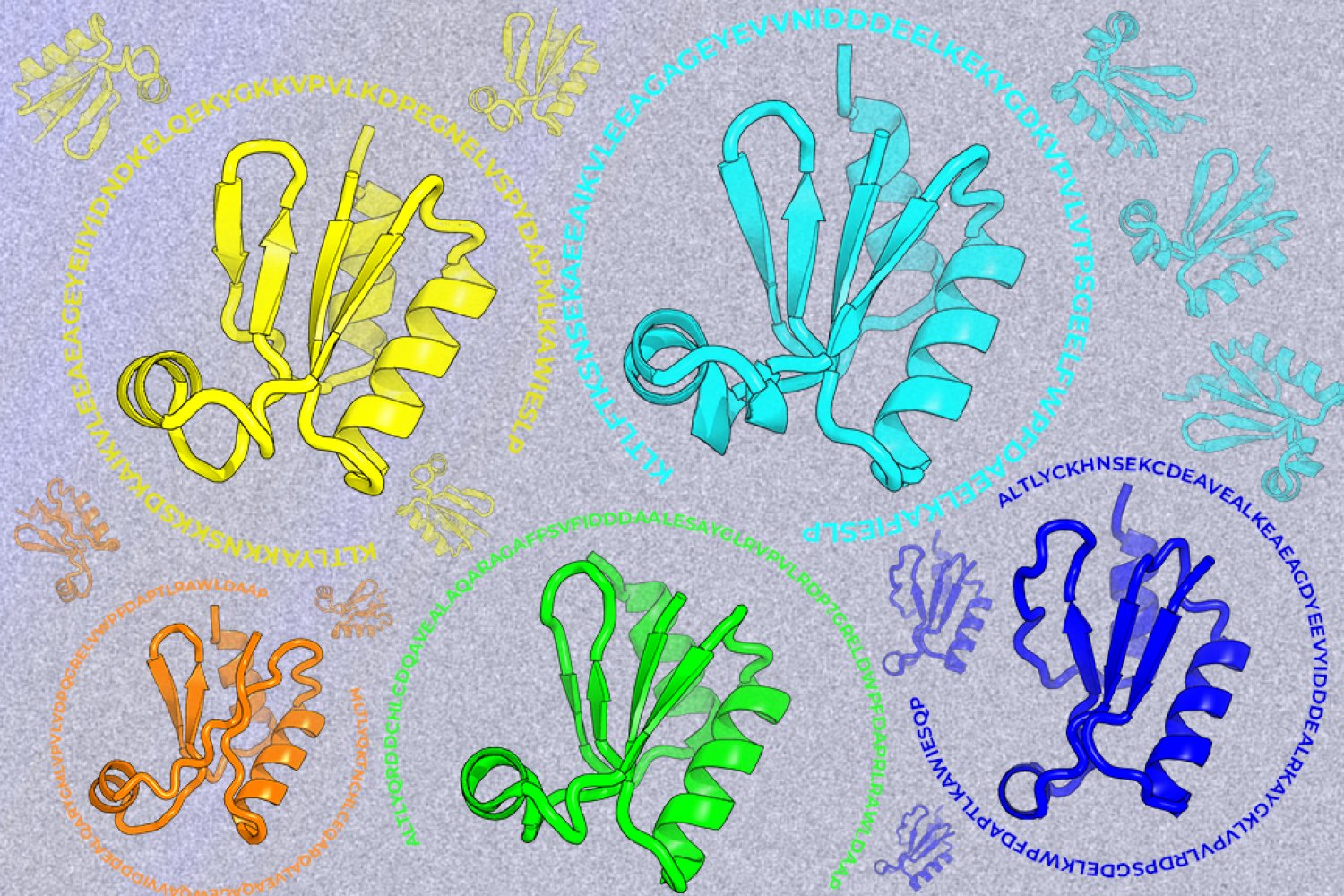
A new machine-learning framework aims to improve the success rate of computational protein design while moving away from results that reproduce sequences found in nature.
New MIT research could lead to better materials for a fossil-fuel-free process for making the chemical that's essential to fertilizer and other products.