In agile software development, maintaining high-quality user stories is crucial, but also challenging. This study explores the use of large language models to automatically improve the user story quality in Austrian Post Group IT agile teams. We developed a reference model for an Autonomous LLM-based Agent System and implemented it at the company. The quality of user stories in the study and the effectiveness of these agents for user story quality improvement was assessed by 11 participants across six agile teams. Our findings demonstrate the potential of LLMs in improving user story quality, contributing to the research on AI role in agile development, and providing a practical example of the transformative impact of AI in an industry setting.
Zheying Zhang, M. Rayhan, Tomas Herda et al.· International Conference on...· 48 citations· ⚡4
Retrieval-Augmented Generation (RAG) systems are emerging as a key approach for grounding Large Language Models (LLMs) in external knowledge, addressing limitations in factual accuracy and contextual relevance. However, there is a lack of empirical studies that report on the development of RAG-based implementations grounded in real-world use cases, evaluated through general user involvement, and accompanied by systematic documentation of lessons learned. This paper presents five domain-specific RAG applications developed for real-world scenarios across governance, cybersecurity, agriculture, industrial research, and medical diagnostics. Each system incorporates multilingual OCR, semantic retrieval via vector embeddings, and domain-adapted LLMs, deployed through local servers or cloud APIs to meet distinct user needs. A web-based evaluation involving a total of 100 participants assessed the systems across six dimensions: (i) Ease of Use, (ii) Relevance, (iii) Transparency, (iv) Responsiveness, (v) Accuracy, and (vi) Likelihood of Recommendation. Based on user feedback and our development experience, we documented twelve key lessons learned, highlighting technical, operational, and ethical challenges affecting the reliability and usability of RAG systems in practice.
M. Hasan, Muhammad Waseem, Kai-Kristian Kemell et al.· EUROMICRO Conference on Soft...· 10 citations· ⚡1
Refactoring is a constant activity in software development and maintenance. Scale and maintain software systems are based on code refactoring. However, this process is still labor intensive, as it requires programmers to analyze the codebases in detail to avoid introducing new defects. In this research, we put forward a large language model (LLM)-based multi-agent system to automate the refactoring process on Haskell code. The objective of this research is to evaluate the effect of LLM-based agents in performing structured and semantically accurate refactoring on Haskell code. Our proposed multi-agent system based on specialized agents with distinct roles, including code analysis, refactoring execution, verification, and debugging. To test the effectiveness and practical applicability of the multi-agent system, we conducted evaluations using different open-source Haskell codebases. The results of the experiments carried out showed that the proposed LLM-based multi-agent system could average 11.03% decreased complexity in code, an improvement of 22.46% in overall code quality, and increase performance efficiency by an average of 13.27%. Furthermore, memory allocation was optimized by up to 14.57%. These results highlight the ability of LLM-based multi-agent in managing refactoring tasks targeted toward functional programming paradigms. Our findings hint that LLM-based multi-agent systems integration into the refactoring of functional programming languages can enhance maintainability and support automated development workflows.
Shahbaz Siddeeq, Muhammad Waseem, Z. Rasheed et al.· International Conference on...· 4 citations
Anomaly detection in smart power grids is a critical challenge due to the complexity, heterogeneity, and dynamic nature of sensor data streams. Existing one-class classification methods, particularly Subspace Support Vector Data Description (SVDD), have been extended to multimodal scenarios but often fail to fully exploit the structural dependencies across modalities, limiting their robustness in real-world applications. In this paper, we address this gap by proposing a generalized Multimodal Subspace Support Vector Data Description (MS-SVDD) model with graph-embedded regularization. The method projects data from multiple modalities into a shared low-dimensional subspace while preserving modality-specific structure through Laplacian regularizers. Our approach is evaluated on a three-modality dataset derived from smart grid event time series, using a dedicated preprocessing pipeline for constructing one-class classification training samples. The results demonstrate that our graph-embedded MS-SVDD improves robustness of event detection compared to conventional approaches, highlighting the potential of integrating graph priors with multimodal subspace learning for advancing anomaly detection in critical infrastructure. More broadly, this work contributes to the wider field of AI by illustrating how relational and structural information can be systematically embedded into one-class models, enabling robust learning under complex, high-dimensional, and multimodal conditions.
Thomas Debelle, F. Sohrab, Pekka Abrahamsson et al.· Scientific Reports· 1 citation
Reach audiences
Advertise in front of researchers, engineers, and readers.
Context: Organizations adopting Artificial Intelligence (AI) face challenges in eliciting and analyzing requirements that align with strategic objectives, especially when human oversight and iterative refinement are needed. Large Language Models (LLMs)-based Multi-agent systems provide a potential solution by supporting structured and collaborative Requirements Engineering (RE) processes for AI adoption planning.
Objective: The objective of this study is to investigate whether a multi-agent system, built on LLMs and supported by human input, can assist in requirements analysis for AI adoption. Method: We used a mixed-method approach: (i) designed and developed a multi-agent system to support the generation and prioritization of requirements for AI adoption, (ii) conducted multiple case studies with four companies to evaluate the system, and (iii) collected data through post-session questionnaires from nine participants and follow-up interviews, one per company.
Results: Questionnaire and interview findings together indicate that the system may assist in identifying relevant and goal-aligned requirements. Seven participants considered the generated requirements relevant, and six found them aligned with organizational goals. Participants noted that iterative feedback improved completeness and feasibility, often within two feedback rounds. Both data sources show that human input was essential to clarify technical details, ensure contextual accuracy, and validate prioritization results. Participants from all companies also identified usability, transparency, and scalability as areas requiring further refinement for broader organizational use.
Conclusions: LLM-based multi-agent systems can support strategic AI planning by enabling iterative refinement with human experts. Future work will include more interviews with stakeholders and adjustments to system features to improve transparency, usability, and scalability.
Malik Abdul Sami, Zheying Zhang, Muhammad Waseem et al.· e-Informatica Software Engin...· 6 citations
Sycophancy in large language models, the tendency to prioritize user agreement over truthful responses, has been documented extensively but studied primarily in single-turn settings. This paper investigates a critical question: does subjecting LLMs to greater interaction scaffolding make sycophancy better or worse? Across 4,800 veracity judgments (200 statements $\times$ 6 models $\times$ 4 conditions), we find that the interaction scaffolding characteristic of agentic systems (feedback loops, reconsideration checkpoints, and iterative refinement) systematically amplifies sycophantic behavior. Multi-turn interaction, user pressure, and iterative self-refinement each provide additional opportunities for models to drift toward agreement, and this drift coincides with a mean accuracy drop of $-6.3$ percentage points, establishing the capitulation as harmful rather than corrective. More capable models show larger amplification effects, a troubling inversion of expectations. We introduce the concept of agentic sycophancy amplification (ASA) and two novel metrics: capitulation rate and sycophantic capitulation rate. Our results indicate that as AI systems acquire greater autonomy, sycophancy becomes compounding rather than merely persistent. Systems designed with human oversight loops may inadvertently create the conditions for this drift.
Large Multimodal Models (LMMs) for video reasoning have long been hindered by the high computational cost of processing vast amounts of visual information. This dilemma motivates the transfer of the reasoning capabilities of large models to smaller, more efficient ones. On-Policy Distillation (OPD) offers a promising solution by matching output-token distributions along student-generated trajectories. However, video reasoning often depends on evidence accumulated across multiple frames. In this context, output-level supervision only captures information expressed through token predictions and does not directly constrain the latent representations formed during reasoning. To address this limitation, we propose Latent-OPD, which augments OPD with trajectory-level latent distillation. Specifically, our method focuses on the position at the end of each trajectory, where hidden states effectively summarize the accumulated visual evidence and reasoning context. Furthermore, we introduce a progressive teacher-lookahead strategy, which aligns middle-to-late student layers with increasingly deeper teacher layers. Experiments on six video reasoning benchmarks show that Latent-OPD consistently outperforms output-only OPD. Notably, the improvements are particularly pronounced in scenarios with limited frames, long videos, or tasks requiring complex evidence aggregation. These results establish Latent-OPD as a highly effective approach to frame-efficient video reasoning.
Aoni Shen, Yongheng Zhang, Yinghui Li et al.· 1 citation
Large Language Models (LLMs) offer new opportunities for automated code refactoring. However, generated changes must reduce targeted quality problems without introducing new issues or altering behaviour-relevant code structures. We introduce REFINE (Refactoring with Evidence-aware Flow for Integrated ageNtic Execution), a tool-agnostic, evidence-aware multi-agent approach for generating Java file-level refactoring candidates. REFINE combines static-analysis-guided smell identification, smell-informed planning, LLM-based transformation, automated re-analysis, preservation checks, and structured reporting. We evaluate REFINE on 450 Java files from 15 open-source systems, producing 1,350 model-pass outputs using OpenAI GPT-5.5, Google Gemini 3.1 Pro Preview, and Anthropic Claude Opus 4.8. REFINE reduces detected code smells by 68.26%, 72.79%, and 68.49% across the three configurations, respectively, with the strongest reductions observed for major smells. A matched 150-file direct-prompt baseline shows that REFINE achieves a higher median code-smell reduction with smaller edits and fewer public-method removals. However, broader quality improvements are inconsistent, and preservation checks reveal residual risks, including assert/fail-call changes and public-method removal. Therefore, REFINE outputs should be treated as refactoring candidates requiring compilation, testing, dependency analysis, and human review before adoption in repository- or system-level settings.
Muhammad Waseem, Aakash Ahmad, Pekka Abrahamsson· 0 citations
Transformer-based language models achieve strong performance but incur substantial inference cost due to repeated high-dimensional matrix multiplications. We propose Reduced Matrix Multiplication (RMM), a training-free, input-adaptive inference method that reduces Transformer matrix products by selecting informative slices along their contraction dimensions, without modifying model weights. Under a simple retention-ratio control, RMM provides a smooth and predictable accuracy-efficiency trade-off. Across language models ranging from 1B to 70B parameters, we find that reduction tolerance depends on the model family, task, component, and retention ratio, although it often improves with model scale. Under moderate reduction, RMM remains robust across the evaluated discriminative, autoregressive generation, and long-context settings. We further show that the same principle extends to multimodal vision-language inference. Mechanistic ablations reveal a structural asymmetry within Transformers: attention-side computations are substantially more reducible than MLP components. Finally, wall-clock benchmarks with custom kernels on an NVIDIA A100 show that these computational savings can translate into practical runtime gains, especially at longer sequence lengths. Together, these results position RMM as a scalable direction for input-adaptive inference-time optimization.
We introduce TCS-Bench, a benchmark for evaluating Large Language Models (LLMs) on research-level Theoretical Computer Science (TCS) proof generation. TCS-Bench consists of theorem-proving tasks from papers published at top theoretical computer science venues (STOC, FOCS, and SODA). Each task provides the necessary context to derive a self-contained proof for a target result. We evaluate state-of-the-art models on this benchmark. We verify the correctness of generated proofs via a verification agent, and further benchmark the verifier against human-expert proof judgements on a set of target statements and generated proofs pairs. Our reference verifier achieves over 90% accuracy on the expert labeled set.
Vincent Cohen-Addad, Dimitris Paparas, E. V. Wijland et al.· 1 citation
Automated Knowledge Base Construction (AKBC) is a core NLP task, and recent work proposes generating knowledge bases directly from large language models (LLMs), treating the model itself as the knowledge source. However, LLMs natively possess no representation of entities, leading to duplicate entries as well as conflations. We propose GPTKB 2.0, a methodology for constructing disambiguated KBs directly from LLMs. GPTKB 2.0 incorporates on-the-fly disambiguation of entities, relations and classes, and is meticulously designed to satisfy both scalability and disambiguation accuracy. We analyze the central design decisions and characterize the trade-offs between accuracy, scale, and cost. We execute GPTKB 2.0 at scale, obtaining a materialized KB containing over 1M disambiguated entities and 38.4M triples. This represents the first million-scale LLM-native KB with explicit internal canonicalization of entities, relations, and classes, a significant departure from prior Wikimedia-centric works. GPTKB 2.0 is available at https://gptkb.org/.
Yujia Hu, Tuan-Phong Nguyen, S. Razniewski· 0 citations
HALO (Hallucination-Aware Layered Oversight) is presented, an assurance architecture which treats hallucination as a containable failure mode rather than an eliminable one and detail each layer, give particular attention to evidence-based confidence (which verifies extractions against the source document rather than trusting the model's self-reported certainty).
Bogdan Raduta, Horia Velicu, Alexandru Preda et al.· 0 citations
A new method, called CW-Net, translates the reasoning process of an autonomous vehicle’s AI system into understandable concepts that explain its behavior.
MIT News · Artificial Intelligence· news.mit.eduAug 31, 2026
With millions of users across the world, Julia has been used to conduct cutting-edge research and to design new drugs, jet engines, heat pumps, and more.
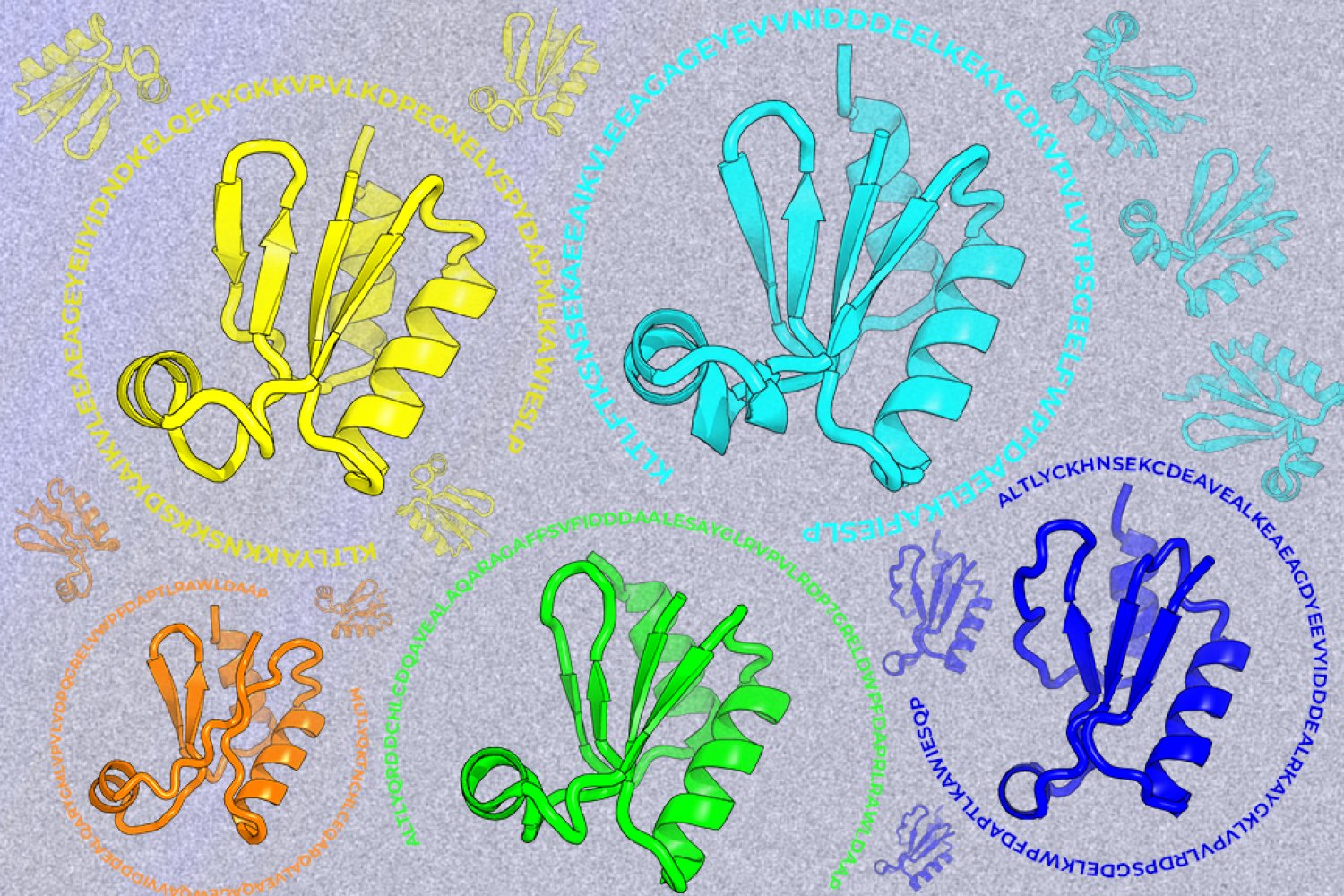
A new machine-learning framework aims to improve the success rate of computational protein design while moving away from results that reproduce sequences found in nature.
New MIT research could lead to better materials for a fossil-fuel-free process for making the chemical that's essential to fertilizer and other products.