Code for "Multi-criteria prioritized reinforcement learning for autonomous underwater vehicle navigation in 3D multi-node environments"
yan, zhang
· Zenodo (CERN European Organi... · 0 citations
Category
2,391 papers
This is a critical systematic review of 40 peer-reviewed articles published between 2021 and 2025 on artificial intelligence-enhanced Intrusion Detection Systems (IDS).To maintain rigour and transparency in the review, the PRISMA 2020 and Kitchenham guidelines are adhered to.The appropriate literature was also searched...
EANAS-GreenAI v1.0.0 EANAS-GreenAI is a research implementation of Energy-Aware Neural Architecture Search for Edge-AI Deployments. It combines CNN architecture search, reinforcement learning, and evolutionary optimization to balance model accuracy, inference latency, and energy consumption. Key Features: Five-block CN...
The basal ganglia are central to the selection and execution of actions, integrating diverse information to shape motor, cognitive, and motivational behaviors. Within this network, the striatum occupies a key position where convergent cortical, thalamic, and neuromodulatory inputs are transformed into patterns of activ...
Reach audiences
Advertise in front of researchers, engineers, and readers.
Integrated sensing and communication (ISAC), semantic communication, and mobile edge computing (MEC) jointly create a high-dimensional, non-convex, and time-coupled resource allocation problem in sixth-generation (6G) networks that existing heuristics and deep reinforcement learning (DRL) methods solve either slowly or...
Closed-loop artificial intelligence is increasingly claimed for metal-fabrication systems that combine reinforcement-learning-based process control with vision-based quality inspection. This review organizes the reinforcement-learning, computer-vision, and production-economics literature bearing on metal cutting around...
Cascading failures in hybrid AC/DC power systems can propagate rapidly through DC-side disturbances, AC branch overloads, topology changes, and islanding, making emergency mitigation a constrained sequential decision-making problem under evolving network structures. This paper proposes a topology-aware graph reinforcem...
High renewable energy penetration intensifies net-load ramping and increases the demand for operational flexibility in distribution networks. However, existing hybrid AC/DC distribution network planning studies rarely consider both renewable ramp stress and the network deliverability of available flexibility. Furthermo...
In this paper, we propose a complete mathematical framework for optimizing network slicing and resource allocation at the electronic system-level (ESL) of 6G ultra-reliable low-latency communication (URLLC). We present a multi-dimensional, non-convex mixed-integer stochastic optimization problem that jointly optimizes...
Magnetically driven microrobots have shown significant potential in biomedical applications, including endovascular intervention, targeted therapy, and drug delivery, particularly in the treatment of cardiovascular diseases. Conventional vascular interventional procedures typically rely on physicians to manually manipu...
A Blog post by IBM Research on Hugging Face
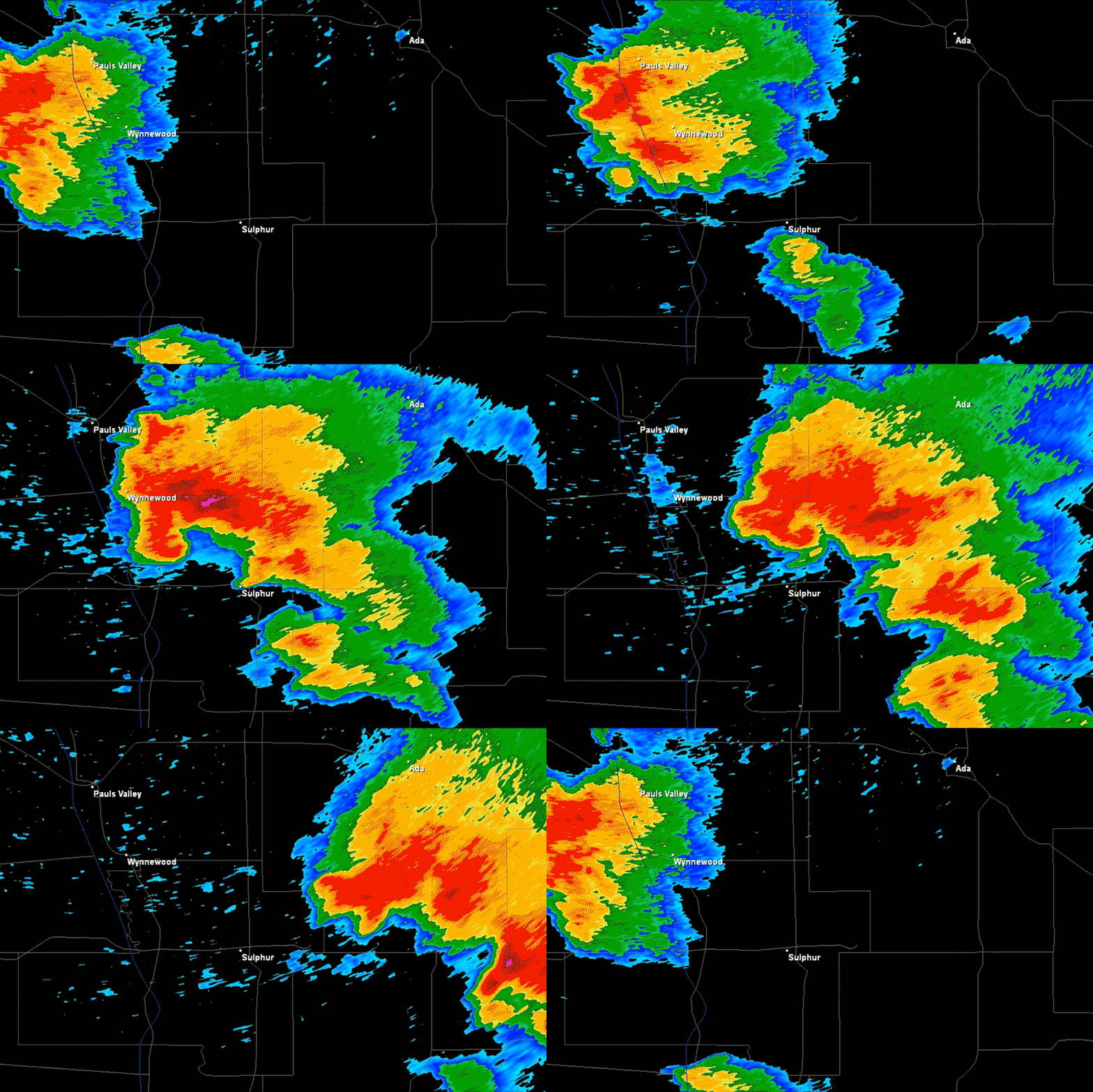
A new machine-learning approach broke records for weather forecasting for an important time frame in emergency planning.
Learn how Google DeepMind and GovTech Singapore uses lightweight on-device Gemma models to intercept conversational scams in private chats with zero cloud data egress.
Machine-learning networks can learn without detailed instructions from a designer. Those that do may offer insight into how the brain reorganizes itself during learning.
Learn more about our approach to safety and security for Gemini 4 Argon.
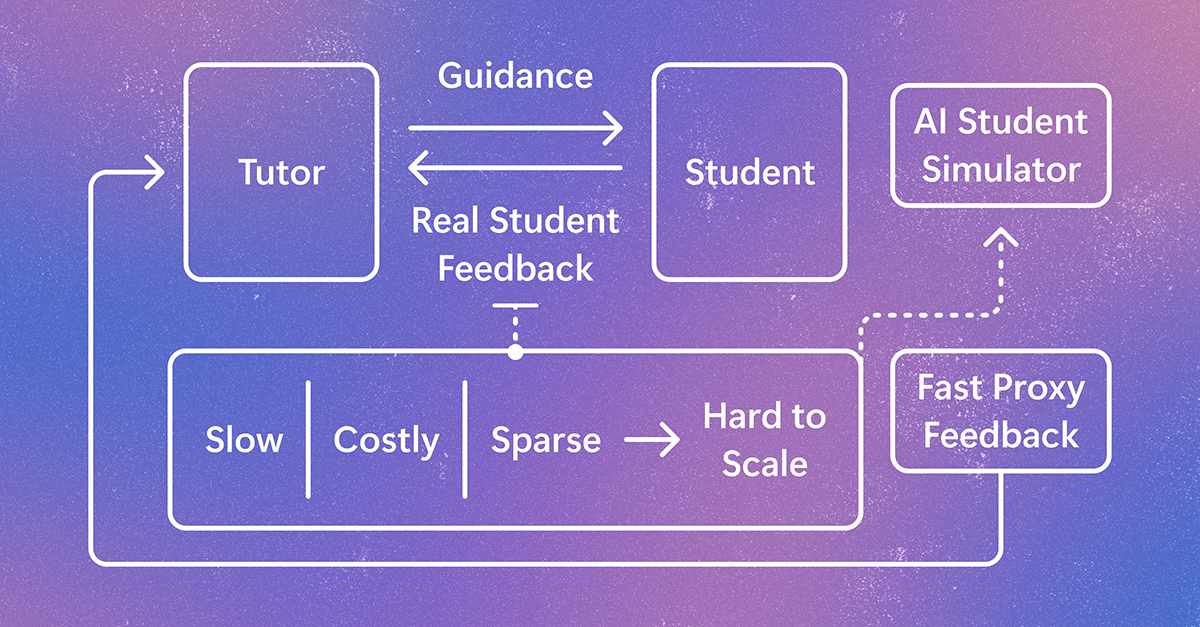
StudentSim is a research system for evaluating and improving AI tutoring tools before they are tested with learners. It models how individuals may engage with tutors, giving feedback to improve tutor performance across subjects like chess, writing, and mathematics. The post Simulating student learning for better AI tutoring appeared first on Microsoft Research.
We use cookies to run the site and, with your consent, for analytics and to show ads. See our Cookie Policy.