Skip to content

Category

small language model

343 papers

#small language model Open access Aug 2026

Confidence-aware pseudo-label selection and verifier training for semi-supervised LLM reasoning with minimal labels

An adaptive threshold selection policy that chooses thresholds on validation data using pseudo-label precision and sample count is introduced and is combined with confidence-aware verifier training to support confidence-based selection of pseudo-labeled subsets.

Keizo Kato, Chenhui Chu, Yugo Murawaki et al. · 0 citations
#small language model Open access Aug 2026

GS-Chaff: Multi-Agent Prompt-Level Semantic Chaffing for Privacy-Preserving LLM Inference

Generative semantic chaffing (GS-Chaff), a training-free multi-agent framework for privacy-preserving LLM inference over natural-language text queries that hides the user’s true intent among semantically plausible chaff queries, is proposed.

Quan Zhou, Zhi-Cheng Wang, Zhengjun Yue et al. · 0 citations
#small language model Open access Aug 2026

From perceptual rule transformation to listener attribution judgments: a blind-listening experiment on AI-generated, human–AI collaborative, and human-composed music

Findings suggest that, in the absence of external authorship labels, listeners spontaneously form judgments about the creative agent of music that are stably associated with aesthetic evaluation and may constitute an endogenous perceptual bias in the reception of AI-generated music.

Junfang Chang, Yue-Qi Jing · 0 citations
#small language model Review Sep 2026

AI Shepherds and Electric Sheep: Leading and Teaching in the Age of Artificial Intelligence

The theology chapters may be the most valuable in the book for a broad audience that spans pastors, church leaders, and lay people who may or may not regularly work with AI, and will help those teaching and preaching to connect doctrine to current and emerging AI content and methodology.

Seán A. O'Callaghan, Paul A. Hoffman · 0 citations
#small language model Open access Aug 2026

Incorporating Linguistic Normalization in Croatian NLP: Evaluating the Impact of Lemmatization on Disinformation Detection Performance

It is demonstrated that lemmatization does not produce uniform gains across architectures: while linear models and croBERT display small but measurable improvements from morphological normalization, non-linear models such as RBF SVM and neural networks experience substantial declines in performance.

I. Ljubi, M. Horvat, G. Gledec et al. · 0 citations
#small language model Open access Aug 2026

Let’s read the log: root cause analysis of railway test execution logs with large language models

Results showed that long-context LLMs tended to achieve higher accuracy than smaller models, suggesting that LLMs are currently better suited to support human-in-the-loop root cause analysis than to fully automate it, and motivating further work to improve prediction accuracy for log-based RCA.

Rahmanu Hermawan, Alessio Bucaioni, Eduard Paul Enoiu et al. · 0 citations
#small language model Open access Aug 2026

CytoGate-Bench: an LLM benchmark for cross-panel cell gating in cytometry

This work introduces CytoGate-Bench, a benchmark that reformulates this per-step procedure as a zero-shot, panel-agnostic task for large language models, and contributes a public benchmark that tests precisely that ability across 11 human cohorts.

Jaesik Kim, Byounghan Lee, Namhyuk Ahn et al. · 0 citations
#small language model Open access Aug 2026

MGTP-Seg: A Mask Guidance and Text Prompting Network for Gross Tumor Volume Segmentation in Esophageal Cancer Radiotherapy.

Accurate delineation of the gross tumor volume (GTV) is critical for determining the efficacy of radiotherapy in esophageal cancer. Conventional segmentation methods either rely solely on end-to-end learning from imaging features, which often struggle to address small tumor volumes and ambiguous boundaries, or incorporate coarse masks as spatial priors but fail to integrate the pathological semantics essential for clinical decision-making. This disconnect can lead to segmentation results that are poorly aligned with clinical practice. To address these limitations, this study proposed the Mask Guidance and Text Prompting Segmentation (MGTP-Seg) framework. Based on UNETR, MGTP-Seg innovatively integrates a mask guidance branch and a text prompting branch. The mask guidance branch utilizes pre-segmented masks from nnU-Net to provide spatial priors, while the text prompting branch dynamically integrates clinically relevant semantics from large language models into the visual feature space via learnable prompt tuning. Through adaptive fusion and bidirectional alignment, these branches enable synergistic integration of imaging details, spatial priors, and high-level clinical knowledge in an end-to-end manner. Experiments on multi-center datasets confirm that MGTP-Seg delivers accurate and robust segmentation on both internal and external validation sets. This work demonstrates that MGTP-Seg not only provides an accurate, interpretable, and clinically relevant solution for automatic GTV delineation, but also offers a novel methodological framework to fuse spatial priors with semantic knowledge in medical image analysis.

Chengwei Chen, Hongfei Sun, Yuxuan Yao et al. · 0 citations
#small language model Review Open access Feb 2026

An Ontology for Workplace Violence: Protocol to support Cross-sector Incident Reporting in Public Services.

BACKGROUND Underreporting is a defining problem in the registration of workplace violence across public services. This is reinforced by inconsistent, often poor incident descriptions and the absence of a clear, shared nomenclature. Without an ontology-backed structure, similar events are recorded differently across settings or remain uncodable and effectively invisible. Moreover, WPV is typically registered and studied within sector- and even organization-specific categories and local reporting logics rather than through a shared semantic framework, limiting comparability and cumulative understanding across sectors. To address this, we propose creating and publicizing a workplace violence ontology (WPV-ONTO) to unify the representation of WPV events across public services. OBJECTIVE The objective of this protocol is to describe and justify a research methodology for developing a cross-sector ontology and reference nomenclature for WPV in public services (WPV-ONTO), including the scoping review, expert-consensus, and evaluation procedures used to build it. Promoting openness and high standards during its creation and encouraging its uptake once available are broader project goals that this protocol is designed to support, rather than measurable objectives that this protocol itself tests. METHODS Using the Protégé ontology editor and the METHONTOLOGY ontology development life-cycle guidelines, we will create an ontology that captures the cross-sector WPV domain in Web Ontology Language (OWL). In order to find common WPV concepts, definitions, and synonyms, the modeling process will employ a methodologically defined, iterative workflow that combines (1) focused scoping searches (Web of Science/PubMed/APA PsycInfo/ERIC/Sociological Abstracts); (2) structured extraction from industry-standard incident reporting tools and code lists; and (3) expert consensus. Based on iterative rounds of scientific literature reviews and industry-standard code lists, a team of domain experts will use a hybrid top-down and bottom-up approach to define and identify key ideas and relationships. A small pilot with 6-8 frontline workers from two sectors will test the prototype reporting form against usability criteria before version 1.0 release. RESULTS The primary output will be a comprehensive, versioned WPV-ONTO accommodating key WPV concepts relevant to public services, augmented with synonyms, definitions, and references. WPV-ONTO will include an explicit hierarchical structure and relations supporting inheritance and compositional incident encoding. WPV-ONTO seeks to integrate the needs and conceptualizations of frontline workers, safety and aftercare professionals, sector policymakers, WPV researchers, and health/information systems experts. Recruitment of the expert panel is planned to begin in March 2027, and WPV-ONTO version 1.0 is expected at the end of the 24-month development period. CONCLUSIONS WPV-ONTO is expected to enable reasoning, inference, and consistent representation of relationships among WPV concepts for application in multiple contexts, including cross-sector reporting harmonization, software and API development, research data integration, and evaluation of prevention and aftercare initiatives. By providing a shared vocabulary and explicit structure, WPV-ONTO may also facilitate linkage with other relevant information systems, such as electronic medical records, and justice and police information systems, reducing methodological fragmentation and supporting coordinated cross-sector learning while retaining the contextual specificity necessary for public service environments. CLINICALTRIAL Not applicable.

I. Steenhout, Ronald Buyl · 0 citations
#small language model Preprint Aug 2026

Video-OPSD: Exploiting Privileged Visual Evidence for On-Policy Self-Distillation in Video Large Language Models

Experiments across video understanding and reasoning benchmarks show that the Evidence-Grounded Self-Teacher framework consistently improves upon Standard OPSD across multiple backbones and achieves performance comparable to GRPO while requiring substantially less training time, establishing an effective and efficient post-training approach for Video-LLMs.

Zi-Yue Wang, Shiqi Huang, Weiwen Xu et al. · 0 citations

From tech blogs

See all →
Microsoft Research Blog Aug 31, 2026

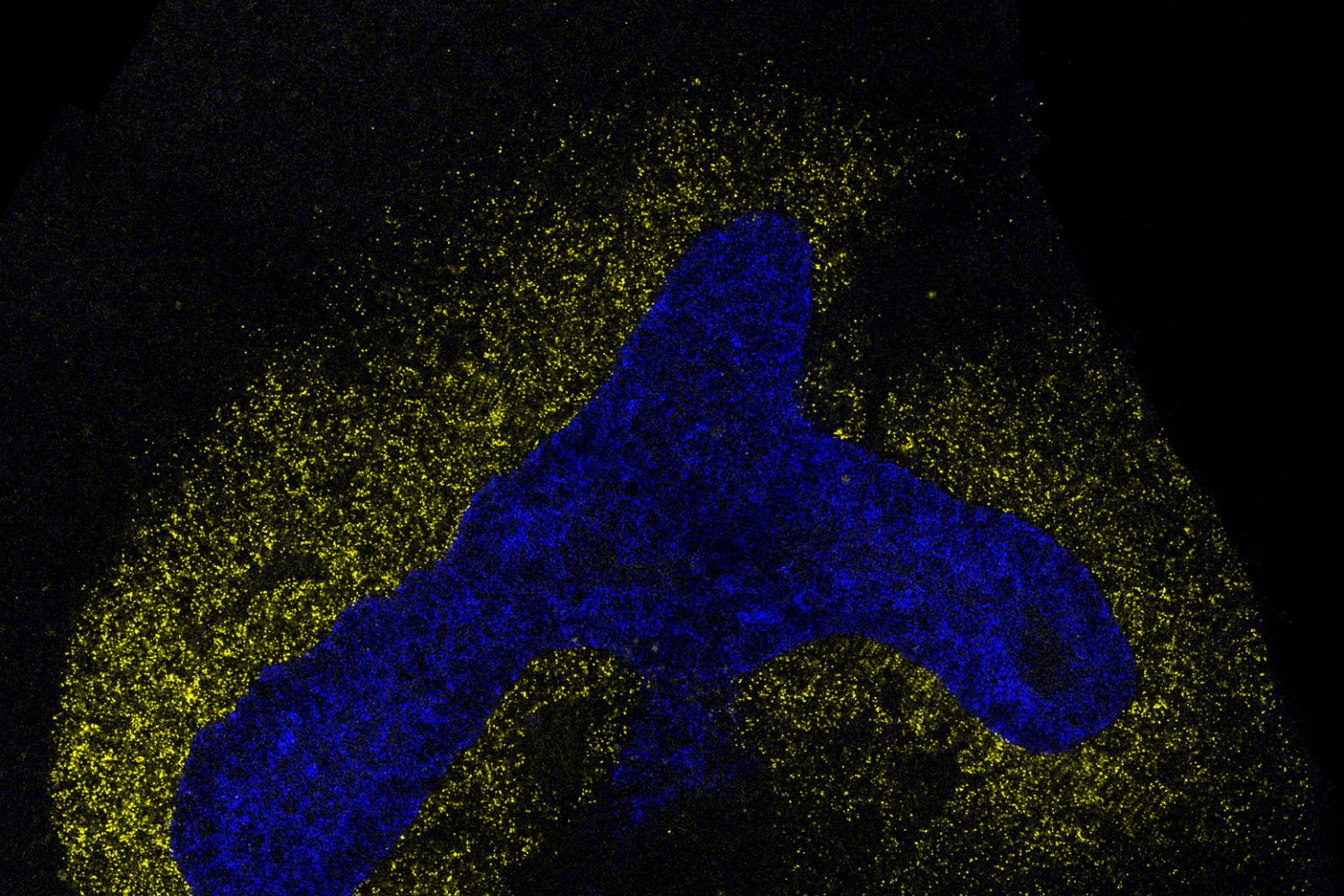
GigaPath-Flash and GigaTIME-Flash: Toward population-scale discovery with efficient pathology foundation models

What if pathology foundation models could do more with less? GigaPath-Flash and GigaTIME-Flash cut computational demands while maintaining strong performance, opening the door to larger studies and broader exploration. The post GigaPath-Flash and GigaTIME-Flash: Toward population-scale discovery with efficient pathology foundation models appeared first on Microsoft Research.