Interpreting an ambiguous utterance in real-world interactions often requires context beyond a single utterance. When the utterance refers to objects in a visual scene, it is necessary to maintain and update the set of plausible referents as context accumulates, without assuming that the available information identifie...
Shun Inadumi, Lee Sangmyeong, Koichiro Yoshino· 0 citations
Block-diffusion language models denoise a whole block of token positions in parallel so each forward pass can emit many tokens. However, blocks are still denoised in strict sequence, a cost that within-block acceleration leaves untouched. Here, we investigate decoding blocks concurrently and propose One Block Ahead (OB...
Yang-Yi Shen, Pin-Jui Ku, Nicolai Oswald et al.· 0 citations
The scaling relationship of compute and performance for language models (LMs) has been extensively studied; more recently, models are being designed to scale memory use, as well. In particular, adding embeddings for n-grams scales memory separately from compute use, because each pass only processes individual embedding...
Ian Magnusson, Noah A. Smith, P. W. Koh· 0 citations
Probes on activation vectors are widely used to detect misbehavior in language models, but their success relies on the assumption that models cannot control what their activations encode. Humans can learn, through neurofeedback, to control the firing of even single neurons, and recent studies investigated whether this...
Davide Baldelli, Robyn Kozierok, Mirko Bronzi et al.· 0 citations
Reach audiences
Advertise in front of researchers, engineers, and readers.
Simulated students let researchers test tutoring systems and teaching strategies before real learners are available, but only if the simulation reproduces where a particular learner succeeds and fails. The common approach asks a large language model to role-play a student, but a role does not model what this learner kn...
Yi-Lin Jiang, Fei Tan, Xuan-Yu Yin et al.· 0 citations
The same recipe trained on a multi-domain corpus improves the frozen backbone on twelve evaluation benchmarks spanning mathematics, science, and commonsense, without task-specific adaptation.
Kutay Tire, Atula Tejaswi, Haris Vikalo et al.· 0 citations
Layer-ablation studies often perturb early or late layers of a language model, compare the damage to prediction on two corpora, and read a larger early-layer effect on one corpus as early-layer specialization for its task. Such a comparison averages over the tokens that each corpus asks the model to predict, and these...
Large language model agents increasingly improve by distilling experience into reusable skills, but errors in that experience can persist in learned rules and affect later tasks. Existing evaluations largely examine clean learning or perturbations encountered after skills are frozen, leaving robustness during self-evol...
Tao Yu, Zhong-Tian Luo, Yu-Chen Long et al.· 0 citations
While LLM-based agent systems have demonstrated remarkable proficiency in reasoning and solving complex real-world tasks, they also come with substantial token consumption and inference latency, limiting their practical deployment. To enhance the efficiency of agent systems, recent efforts have focused on transferring...
Yuan-Pu Cao, Saket Sathe, Hanyu Wang et al.· 0 citations
This work derives an explicitly computable sufficient disturbance budget under which the clearance guarantee degrades gracefully, and proves that the clearance margin is never violated and that the prescribed clearance is restored exponentially, yielding an explicit clearance floor.
Anand Singh, Shubham Singh, Anjali Tiwari et al.· 0 citations
We continue the study of beautiful pairs of henselian valued fields, initiated in joint work of the second author with Cubides Kovacsics and Ye. As our main result, we show that separably closed non-trivially valued fields of arbitrary imperfection degree admit beautiful pairs which are elementary pairs satisfying cert...
This work proposes FrameLite, a compact cropping model built on Qwen3, which outperforms the compared large-VLM croppers across public benchmarks with a substantially smaller backbone and develops three-stage training to turn this potential into stronger direct predictions.
Jian-Ze Li, Kai Liu, Zi-Qing Zhang et al.· 0 citations
A new computational approach reveals how cells communicate to assemble into tissues. This could accelerate stem cell engineering, improve disease models, and inform therapies.
Microsoft Research Blog· microsoft.comOct 15, 2026
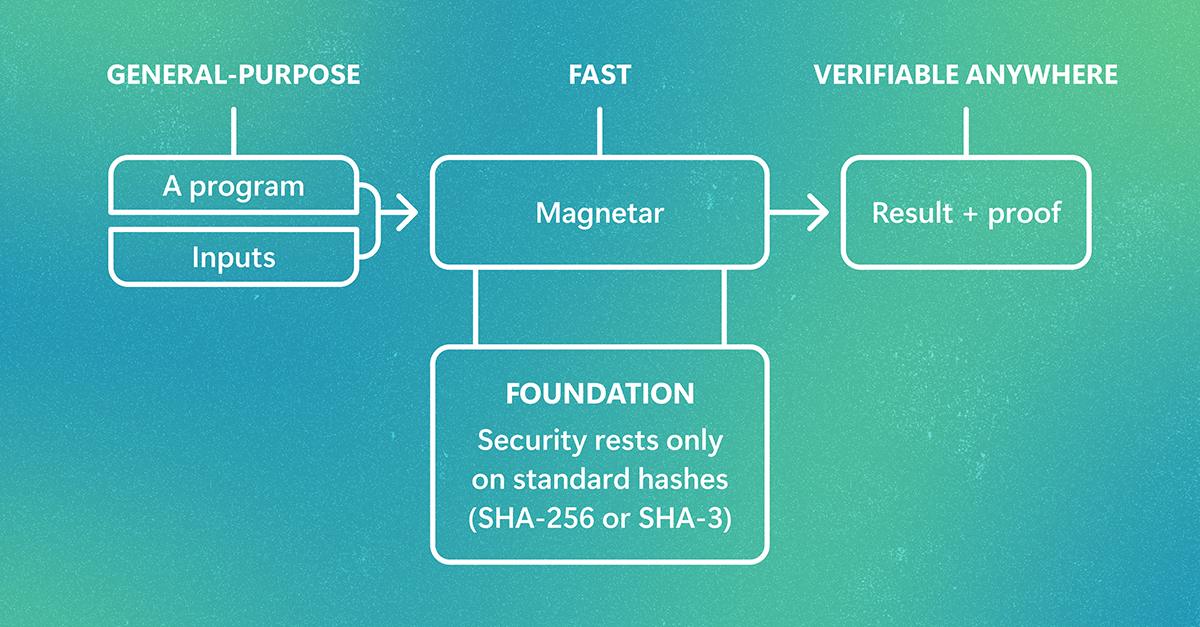
Zero-knowledge proofs can verify computing results without rerunning workloads or exposing sensitive data. Magnetar helps bring them into the mainstream with support for standard programming languages, major speed gains, and quantum-resistant security. The post Proof-based general-purpose computing with Magnetar appeared first on Microsoft Research.
Learn how Google DeepMind and GovTech Singapore uses lightweight on-device Gemma models to intercept conversational scams in private chats with zero cloud data egress.