Objectives Confirmation bias can distort information search and evidence interpretation in criminal investigations. We tested whether consulting a large language model (LLM) could reduce this bias in group decisions.Methods In total, 108 participants formed 36 three-person teams randomly assigned to LLM consultation, t...
Helmi Kiuru, Lotta Nissinen, Pekka Santtila et al.· Psychology Crime and Law· 0 citations
A small point release that fixes install problems in 1.12.0 and one JSON Schema bug. Install fixes 1.12.0 could be installed alongside dependency versions it doesn't work with. Both problems show up as import errors. linkml-runtime must now be ≥ 1.12.0. linkml 1.12 uses linkml_runtime.utils.rdf_canonicalize, which firs...
Sierra A. Taylor Moxon, Harold Solbrig, Nomi L. Harris et al.· Zenodo (CERN European Organi...· 0 citations
Introduction Emotional intelligence (EI) is an individual-difference characteristic relevant to how health-professions students learn, cope, and engage with support, making its valid measurement a prerequisite for research on student development in this field. This study examined the psychometric performance and educat...
Hamad Alhamad, Naser Alotaibi, Nasser N. Hasan et al.· Frontiers in Education· 0 citations
Background-Students’ metacognitive awareness remains a challenge in biology learning, including the respiratory system. Objectives- This study aimed to develop AR-assisted ASICC worksheets and examine metacognitive awareness and skills. Methods-The study employed Educational Design Research using the Plomp model. Feasi...
Mohammad Zakki Aqimul Haq, Dwi Ari Budiretnani, Putri Lina Anitasari et al.· Research and Development in...· 0 citations
Reach audiences
Advertise in front of researchers, engineers, and readers.
Chain-of-thought prompting lets a language model write out its intermediate reasoning, and a wrong intermediate claim can carry through to a wrong final answer. This preprint measures that error propagation directly for Qwen2.5-1.5B, Qwen2.5-3B and Llama-3.2-3B Instruct, run locally in 4-bit. On ProofWriter, every grou...
Pranav Achar· Zenodo (CERN European Organi...· 0 citations
Asked for the seahorse emoji, language models often supply a wrong one. Unicode has none, so the correct answer is a refusal. Using the Unicode registry as an exact oracle, we build 180 probe items (123 in an absent-emoji core) and 174 matched controls, scored under a five-category taxonomy. On Qwen2.5-Instruct at 0.5B...
Tyler Satchel Orden· Zenodo (CERN European Organi...· 0 citations
Compressive strength is a key quality index of iron ore pellets, reflecting the combined effects of pellet integrity, material characteristics, thermal history, and operating conditions during grate–kiln pelletizing. Reliable early prediction of pellet compressive strength is therefore essential for burden-quality cont...
Ya Gao, Hao Liu, Jie Li et al.· Ironmaking & Steelmaking Pro...· 0 citations
Smaller language models often exhibit high confidence in erroneous predictions, undermining traditional ensemble methods. In heterogeneous ensembles, simple averaging can grant disproportionate influence to overconfident but incorrect outputs. This paper introduces a reliability-weighted extension of the Proportional C...
Anas Dahabiah· International Journal of Com...· 0 citations
Pediatric speech and language assessment supports the early identification of communication difficulties and access to timely intervention. Large language models (LLMs) and related generative artificial intelligence technologies are increasingly being incorporated into systems that analyze children’s speech and languag...
Small language models offer a practical way to convert shopping queries into ex-ecutable constraints, but partial extraction accuracy can obscure whether the com-plete request is represented correctly. We study CommerceCore, a Qwen3-1.7B model adapted with QLoRA on 2,130 examples spanning entity segmentation, query con...
Mukherjee arghya· Indian Journal of Computer S...· 0 citations
Purpose Large Language Models (LLMs) can be helpful for literature search and summarization but retracted articles can confuse them. It is therefore important to know how aware LLMs are of retractions. Design/methodology/approach Three open-weight (offline) LLMs were asked whether 161 high-profile retracted articles ha...
(c) 2026 Pranay Mahendrakar. Licensed under CC BY 4.0. The expectation that language models will keep improving after the supply of human text runs out rests on a claim about synthetic data: that a model, or a family of models, can produce training text worth more than the text it was trained on. A competing reading ho...
Pranay M. Mahendrakar· Zenodo (CERN European Organi...· 0 citations
A new computational approach reveals how cells communicate to assemble into tissues. This could accelerate stem cell engineering, improve disease models, and inform therapies.
Microsoft Research Blog· microsoft.comOct 15, 2026
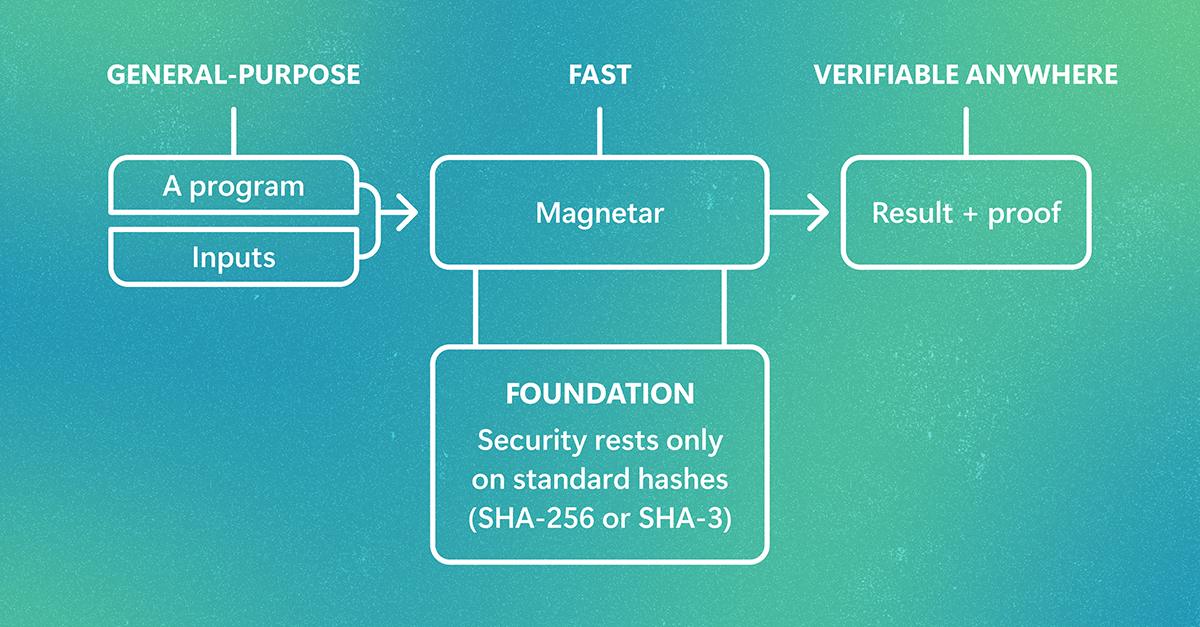
Zero-knowledge proofs can verify computing results without rerunning workloads or exposing sensitive data. Magnetar helps bring them into the mainstream with support for standard programming languages, major speed gains, and quantum-resistant security. The post Proof-based general-purpose computing with Magnetar appeared first on Microsoft Research.
Learn how Google DeepMind and GovTech Singapore uses lightweight on-device Gemma models to intercept conversational scams in private chats with zero cloud data egress.