Zero-shot large language models (LLMs) offer a low-barrier route to credit-risk prediction, but regulated use requires evidence on discrimination, probability reliability, and auditable decision patterns. We compare four open-source LLMs (Gemma-2-9B, Llama-3.2-3B, Mistral-7B-v0.3, and Qwen2.5-7B) with LightGBM on 396,0...
Saeed Al Marri, Kristof Juhasz, Mathieu Ravaut et al.· Journal of risk and financia...· 0 citations
Sustainable behaviour is often viewed as requiring personal sacrifice to benefit others, yet how individuals integrate self- and other-regarding values in sustainable decisions remains poorly understood. Here we investigate a two-dimensional framework of self-other value alignment across four studies comprising seven i...
Wei Liu, Hongxiao Li, CHEN Ruixin et al.· bioRxiv (Cold Spring Harbor...· 0 citations
We ask not how much text was produced with LLM help but how much writing, by any author, falls on the LLM side of a stylistic boundary, and which LLMs define that side. We define Machine-Style Overlap (MSO): the share of documents that a calibrated classifier on style features that ignore content-word identity judges a...
Natik Chhabra· Zenodo (CERN European Organi...· 0 citations
Federated Artificial Intelligence of Things (AIoT) activity-recognition systems learn from decentralized wearable and smart-home records with potentially incorrect labels, non-IID client distributions, and unequal edge-device resources.Our objective is to improve downstream learning from these labels while limiting har...
"RFJ-Bench is a multimodal benchmark dataset for automated radiology report generation in rheumatology. It contains 2,239 finger joint posteroanterior (PA) X-ray examinations from 2,124 unique patients, retrospectively collected at Dazhou Central Hospital between October 2020 and March 2024 under an IRB-approved protoc...
Connected consumer devices form an installed substrate of electricity, connectivity and heterogeneous computing resources. Their owners may control the physical equipment while suppliers retain authority to update its software and direct its behavior through device-initiated management sessions. This paper examines a c...
Facundo Barrera· Zenodo (CERN European Organi...· 0 citations
Many automated workflows end in a bounded decision among options that the software already knows, yet such decisions are usually obtained from language models by generating text. Decision-native models instead return one of the supplied options together with a probability distribution. We study one of them, Jev, on the...
Xuanming Cao· Zenodo (CERN European Organi...· 0 citations
We report two pre-registered tests of popular alternative-data signals built from U.S. Securities and Exchange Commission (SEC) filings, each rebuilt end to end from public sources. Insider purchases: across 31,971 tradeable officer and director open-market purchases (Form 4, 2014 to mid-2026), the 63-day return in exc...
Nishath Akula· Zenodo (CERN European Organi...· 0 citations
Pre-registration of a computational experiment on model collapse in a low-resource language setting, frozen before any model is trained. We fine-tune the open-weight model google/gemma-3-270m (bfloat16) in Bangla and in English over six generations of self-training, where each generation is trained on text generated by...
Md Tahidul Islam, Maksuda Akter· Open Science Framework· 0 citations
Scientific reasoning moves beyond natural language. The search for a discovery runs across sequences, structures, fields, omics, images and measurements, while language models reason mainly in text. This Perspective sets out four proposals from the Scinetics team. First, we define science tokens: modality-appropriate u...
Zaixi Zhang, Mingyang Xu, Jiaxian Yan et al.· Preprints.org· 0 citations
My project, “A Contextual Memory Framework for Privacy-Preserving Local Cognitive Agents using SLM,” aims to develop an intelligent AI system that remembers previous conversations, user preferences, and important information across sessions while protecting user privacy. It uses a Small Language Model (SLM), structured...
Harshal Gadekar· Zenodo (CERN European Organi...· 0 citations
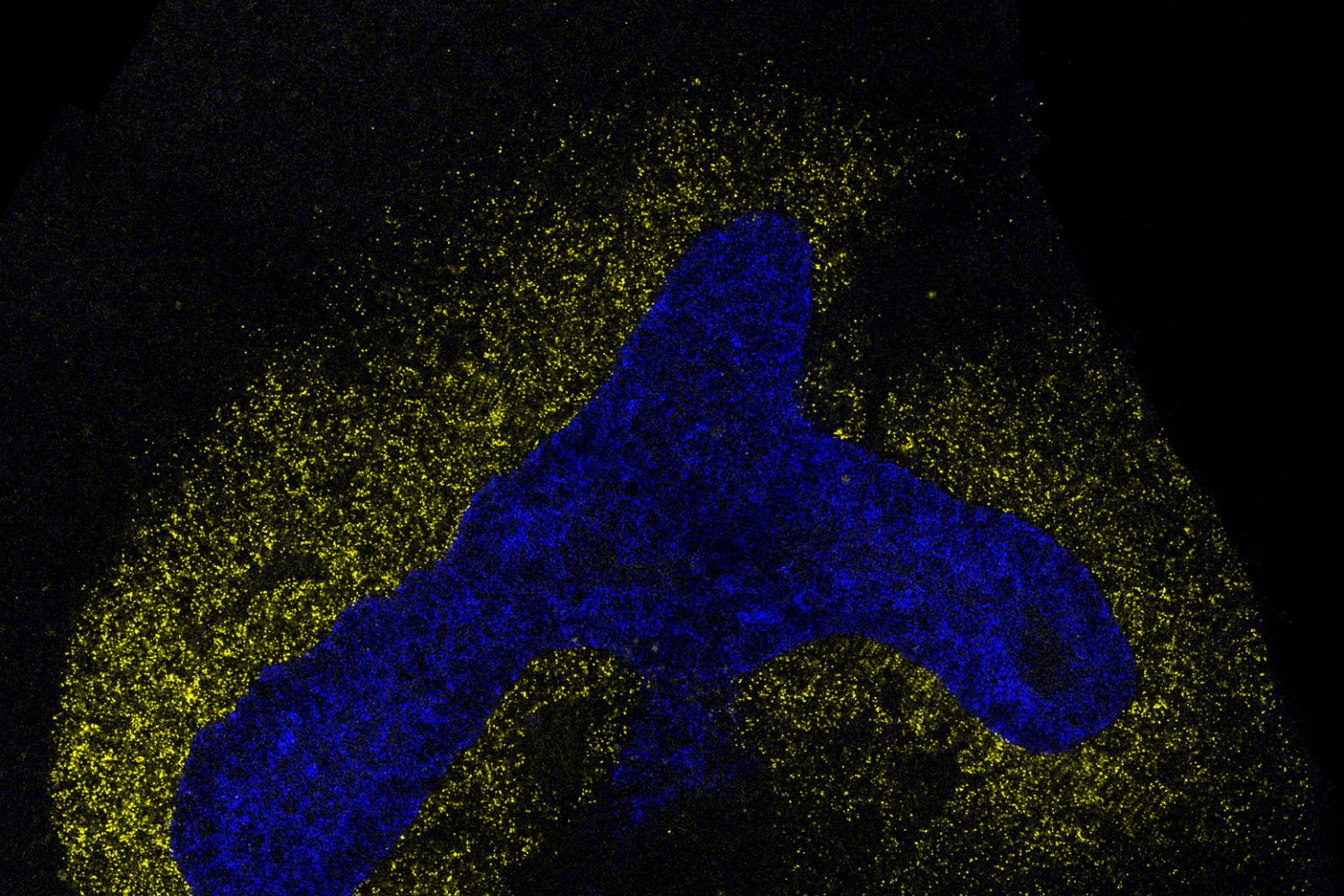
A new computational approach reveals how cells communicate to assemble into tissues. This could accelerate stem cell engineering, improve disease models, and inform therapies.
Microsoft Research Blog· microsoft.comOct 15, 2026
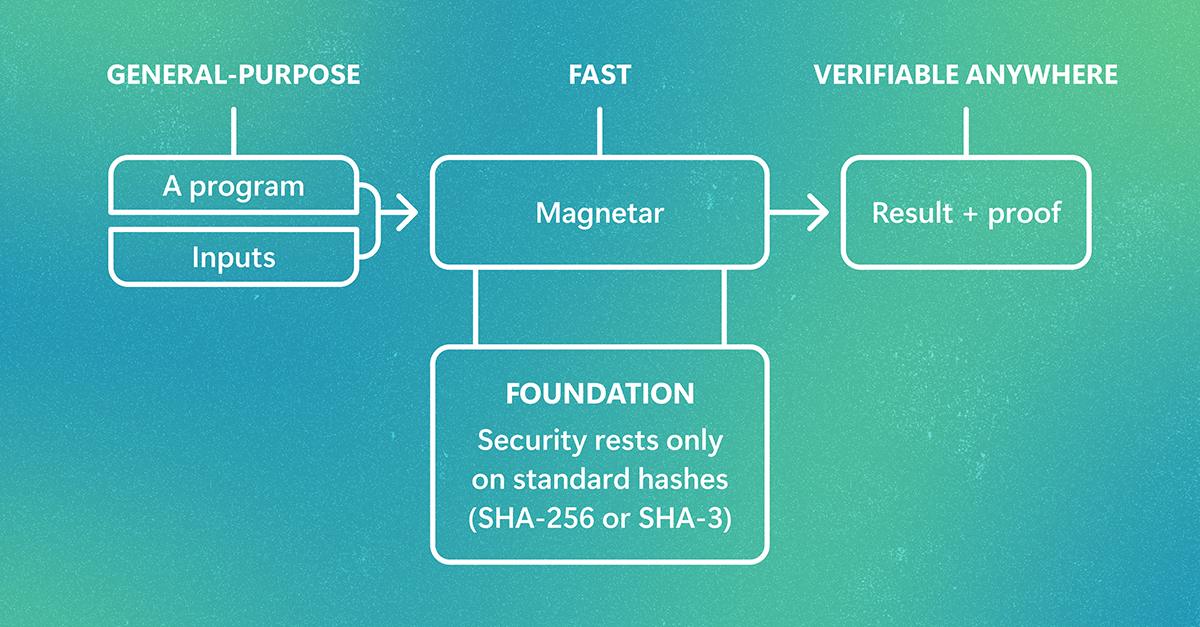
Zero-knowledge proofs can verify computing results without rerunning workloads or exposing sensitive data. Magnetar helps bring them into the mainstream with support for standard programming languages, major speed gains, and quantum-resistant security. The post Proof-based general-purpose computing with Magnetar appeared first on Microsoft Research.
Learn how Google DeepMind and GovTech Singapore uses lightweight on-device Gemma models to intercept conversational scams in private chats with zero cloud data egress.