External tools can extend the capabilities of small language models (SLMs), enabling their deployment in resource constrained environments. However, their limited capabilities make it difficult for SLMs to discover effective tool use behaviors through reinforcement learning alone, while direct teacher supervision suffe...
Hao-Xuan Gao, Qin-Wen Luo, Xiang Chen et al.· 0 citations
We study causal error-feedback coefficients as design variables for model quantization. Modeling instantaneous quantization errors as independent, zero-mean variables with a common fixed variance, we formulated a metric-dependent trace problem for designing feedback coefficients. The formulation resembles fixed-order G...
Wai-Yiu Keung, Chi Cui, Wing-Kin Ma et al.· 0 citations
Pre-trained Large Language Model (LLMs) are effective on many tasks in zero-shot and few-shot settings. For machine translation of low-resource languages, the obvious options are few-shot prompting and fine-tuning on a small parallel set. We ask: what if moderate amounts of low-resource monolingual data are also availa...
Direct Preference Optimization (DPO) has become a widely adopted approach for aligning vision-language models (VLMs), yet the security of multimodal preference data remains largely unexplored. Existing preference poisoning attacks either corrupt explicit supervision signals or require visible triggers, making them dete...
Cheng-Tao Jian, Kai Yang· 0 citations
Reach audiences
Advertise in front of researchers, engineers, and readers.
Readout scaling changes what a sparse autoencoder (SAE) learns, but the benefit of removing it depends on the data. We use readout-canonicalized decision-space (RC-DS) coordinates to remove singular-value gains while preserving retained decision information. At a fixed readout condition number, changing the generating...
Sparse autoencoders decompose language model representations into interpretable features, but feature interpretation in this literature remains predominantly correlational. Attribution methods offer more direct estimates of feature influence, yet their faithfulness to actual causal effects has not been systematically e...
Diffusion language models (DLMs) have attracted wide attention for their fast, parallel decoding, but they are believed to be far less efficient to train than autoregressive language models (ARMs): a widely cited study reports that a DLM needs roughly 16x the training compute of an ARM to match its likelihood, a figure...
Guang-Han Wang, B. He, Zhan Shi et al.· 0 citations
Many widely used activation functions, including ReLU, GELU, Swish, and Sigmoid, produce predominantly positive outputs, resulting in a nonzero post-activation mean that we term activation bias. Despite its ubiquity, the effect of activation bias on learning dynamics remains poorly understood. Using controlled models,...
Zi-Rui Peng, Helen Zheng, Zi-Ming Liu· 0 citations
Experiments with remote decision-making agents depend on more than the policy: the world may change during inference, the simulator determines which actions are available, and births and immigration alter who can act. We present Jevolution, an instrumented spatial predator-prey framework that makes these dependencies e...
Asynchronous reinforcement-learning post-training of large language models is computationally efficient but inherently off-policy: the learner updates on rollouts generated by a stale policy, while correcting this mismatch requires importance weights that can be extremely heavy-tailed. A small number of trajectories ma...
Augmenting worker capabilities in the physical world through guidance has been a decades-long goal for AI agents. One key supporting capability is to understand what the worker is doing, seeing through the human's camera or smart glasses, and assist them in documentation. Despite advances in vision language models, the...
Andrew Perrault, Anmol Takiar, Dominik Wienecki et al.· 0 citations
Point-in-time (PIT) agents can recall post-cutoff facts even when their external evidence respects a historical cutoff. We examine whether this access predicts evidence gathering in 48 historical company-comparison tasks. Independent closed-book revenue probes identify the better-remembered company for each model on ta...
A new computational approach reveals how cells communicate to assemble into tissues. This could accelerate stem cell engineering, improve disease models, and inform therapies.
Microsoft Research Blog· microsoft.comOct 15, 2026
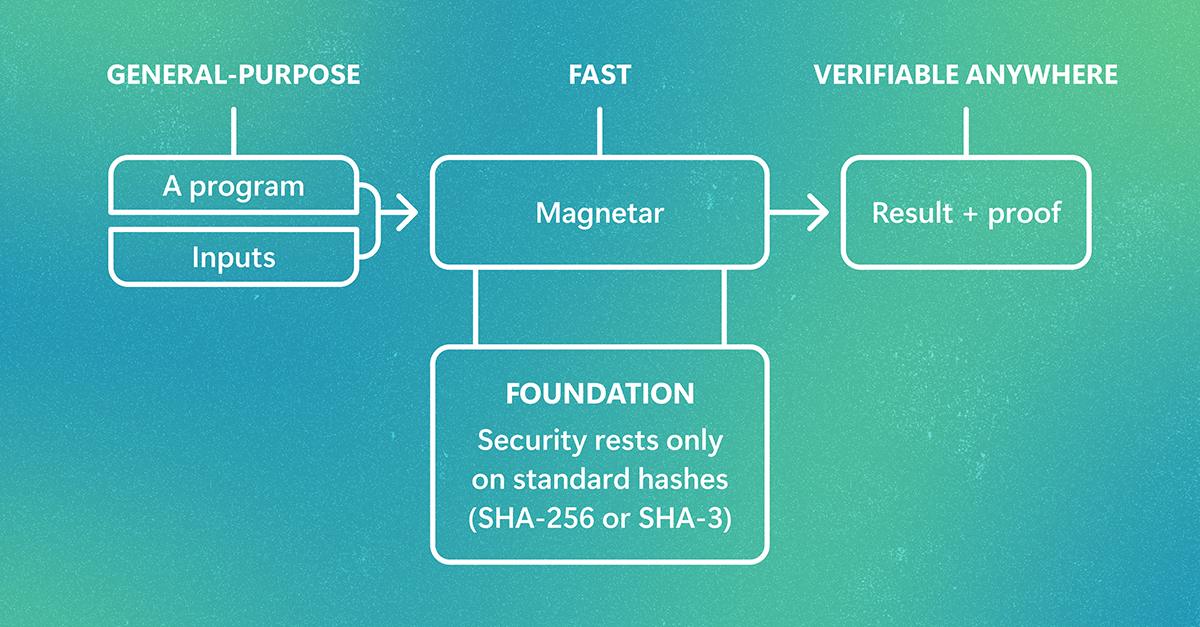
Zero-knowledge proofs can verify computing results without rerunning workloads or exposing sensitive data. Magnetar helps bring them into the mainstream with support for standard programming languages, major speed gains, and quantum-resistant security. The post Proof-based general-purpose computing with Magnetar appeared first on Microsoft Research.
Learn how Google DeepMind and GovTech Singapore uses lightweight on-device Gemma models to intercept conversational scams in private chats with zero cloud data egress.