Large language model (LLM) routers reduce serving cost by choosing which model to call and how many output tokens to grant it for each query. Existing routers rank model-budget actions using a single quality metric. This does not work for mixed workloads. For ordinary queries, a good answer is correct and useful (utili...
Yi-Chi Zhang, Zhen-Xiang Huang, Yu-Yang Zhang et al.· 0 citations
Large language models (LLMs) are increasingly used to discover scientific equations from experimental data. Such a discovery system has two parts that must work together: a library of executable computational tools and the model's tool-use policy. The tools supply the solving capability, from diagnosing structure in th...
Peng-Ze Li, Jia-Quan Zhang, En-Cheng Su et al.· 0 citations
As frontier LLMs gain more capabilities, the cost to run them also goes up. At the same time, small language models (SLMs) also gain more capabilities but have largely been able to keep their cost stable, offering 5-40 times cheaper inference for the narrow, repetitive subtasks that agents decompose work into. However,...
Large language model (LLM) alignment often assumes that the user interacting with a model is also the primary beneficiary of its behavior. Yet in many consequential settings, one person directs the system while another bears the consequences. We study this problem in caregiver-mediated healthcare, where parents, pet ow...
Priyadarsi Mishra, Arjun Beniwal, Zi-Yu Yi et al.· 0 citations
Reach audiences
Advertise in front of researchers, engineers, and readers.
The rapid advancement of Large Language Models (LLMs) has driven their deployment toward general-purpose harness environments, where LLM-based agents operate in sandbox workspaces and interact directly with file systems and shells. While numerous post-training pipelines exist for tool-use agents, their counterparts for...
Han-Si Yang, Lin-Ji Hao, Hong-Yan Hao et al.· 0 citations
A small language model running on local hardware can serve as the reasoning layer for case-level and trio-based variant interpretation when it is surrounded by deterministic safeguards.
F. Santoni, E. Ducret, S. Oreshkov et al.· medRxiv· 0 citations
Background: Vision-language models (VLMs) are being considered for estimating energy intake from meal photographs. Prompt descriptions such as a Japanese-dietitian persona shift the estimates, suggesting their use for calibration; what the estimates rest on was unknown. Objective: We examined whether prompt description...
An offline VLM on a tablet reproduced server-side energy accuracy and is a candidate tool for dietary counselling where photographs cannot leave the institution; given the wide limits of agreement, its usefulness in practice remains to be examined.
English-language proficiency requirements became more than three times as common between 2010 and 2023 and were associated with lower enrolled proportions of Asian and Hispanic/Latinx participants, which may be a tractable target for improving enrollment equity.
A. Tolas, L.-Y. Du, N. Schutz et al.· medRxiv· 0 citations
Clinical trials of LLM interventions show modest adherence to established reporting guidelines, with persistent underreporting of LLM specific methodological details, reproducibility artefacts, and harms reporting required to support reproducibility and confident appraisal of safety risks before their clinical translat...
David Chen, A. Blayne, T. Ning et al.· British medical journal· 0 citations
Praxis configures large language models to do data-driven natural science as a small lab of specialist agents running an explicit, falsifiable scientific method over real data. A domain-agnostic core (method loop, scientist roles, integrity rules, and a provenance-stamped, mechanically validated cache engine) is extend...
Uddipta Bhardwaj, Michele Vallisneri, Giada Badaracco et al.· Zenodo (CERN European Organi...· 0 citations
This repository contains an Agda implementation of the dependent SECD machine and the Dependent Abstract Machine (DAM), with a formalization of their type safety and dependent SECD machine's termination. Getting started (Kick the tires) To start, install Agda version 2.8.0 (instructions). Download and unzip the artifac...
Y Huang, Jeremy Yallop· Zenodo (CERN European Organi...· 0 citations
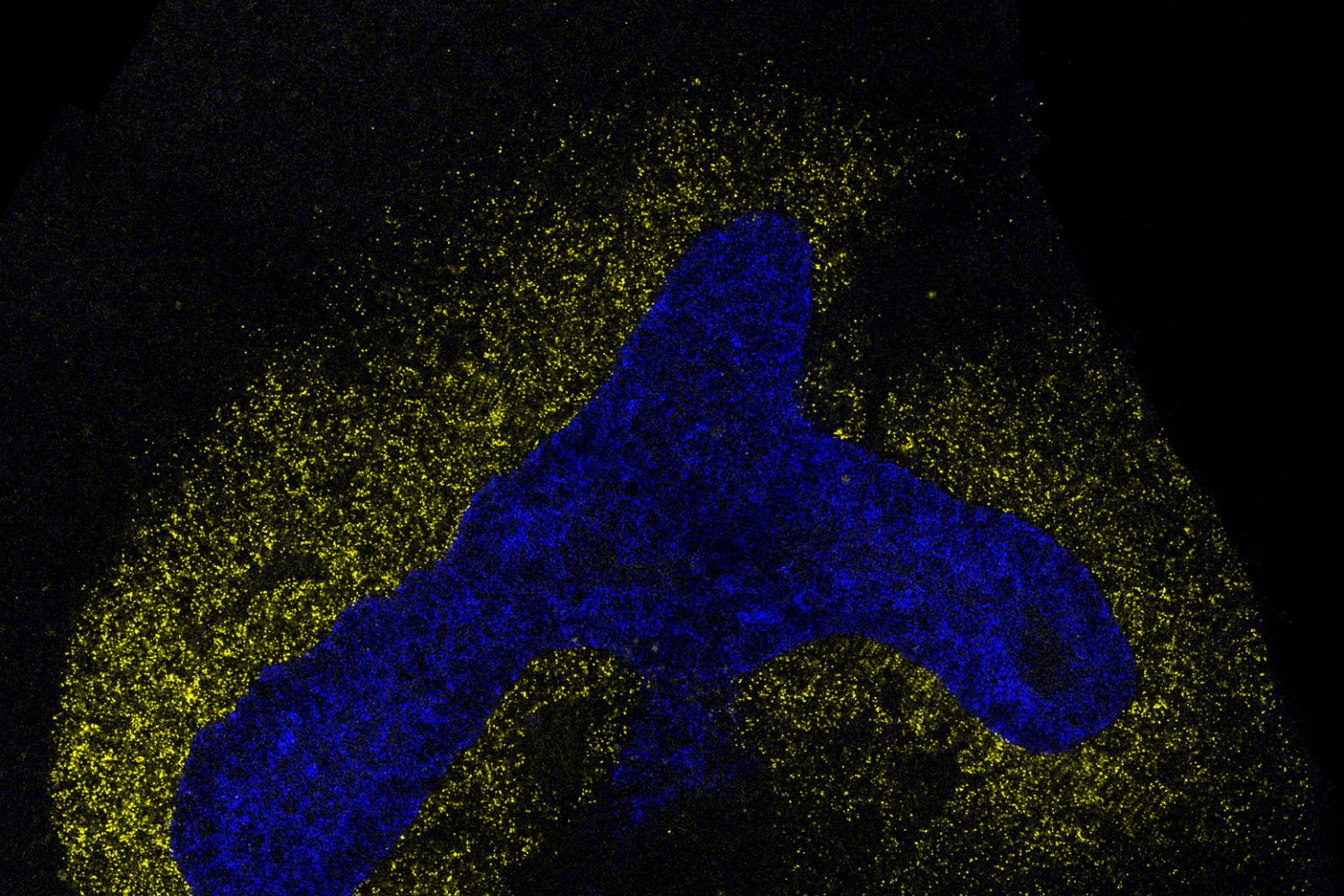
A new computational approach reveals how cells communicate to assemble into tissues. This could accelerate stem cell engineering, improve disease models, and inform therapies.
Microsoft Research Blog· microsoft.comOct 15, 2026
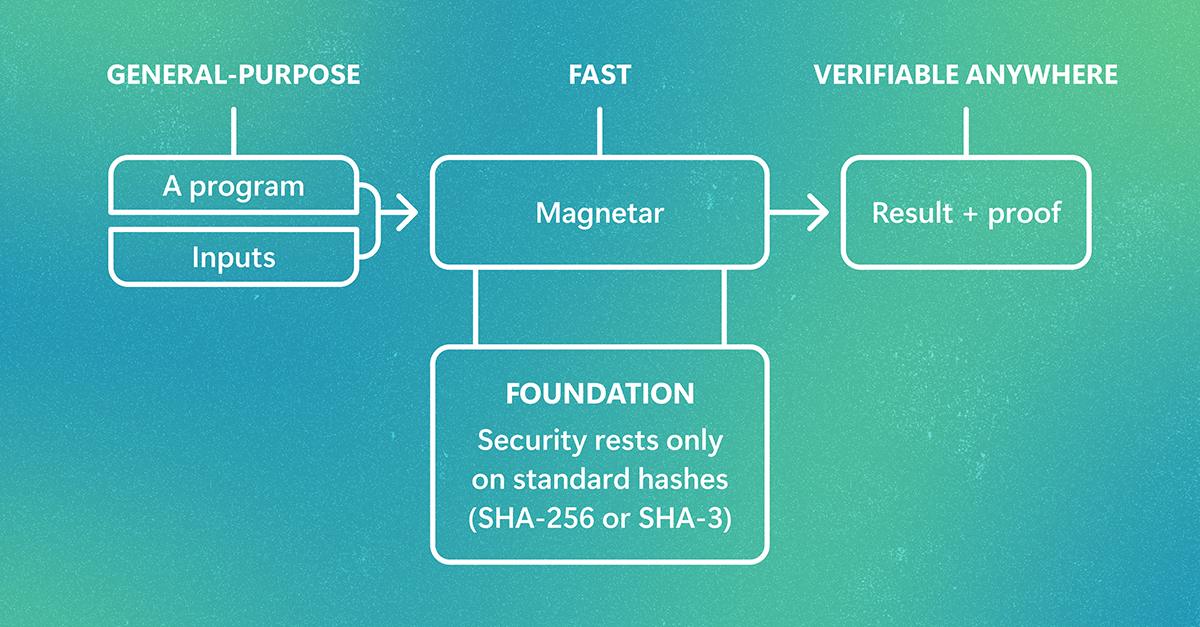
Zero-knowledge proofs can verify computing results without rerunning workloads or exposing sensitive data. Magnetar helps bring them into the mainstream with support for standard programming languages, major speed gains, and quantum-resistant security. The post Proof-based general-purpose computing with Magnetar appeared first on Microsoft Research.
Learn how Google DeepMind and GovTech Singapore uses lightweight on-device Gemma models to intercept conversational scams in private chats with zero cloud data egress.