Standard antibiotic regimens for Helicobacter pylori are failing more often as resistance rises, and the oral cavity has long been proposed as an extragastric reservoir that seeds gastric recolonization.If so, treating the mouth should improve gastric eradication, a testable clinical claim rather than a correlation.We...
Mihai Stefan Benchea, Andreea-Adriana Neamtu, Ciprian-Nicușor Solomon et al.· Cureus· 0 citations
Karakalpak is a Turkic language spoken by roughly 0.8–0.9 million people, chiefly in the Republic of Karakalpakstan (Uzbekistan), and has almost no open speech technology. We release the Karakalpak Speech Corpus, 106.9 hours (21,702 utterances) of read speech contributed by more than 200 volunteers, with speaker-disjoi...
Atabek Kadirbergenov, Dauitbay Nasiredinov, Sanjar Tleumuratov et al.· Zenodo (CERN European Organi...· 0 citations
v4.5.4 enforces the sovereign prompt interface osiris::}{> , introduces dual-substrate hardware execution with dynamic architecture detection (Node Alpha: Fold7/Termux with 300s temporal lock vs Node Beta: PC/WSL with 1800s horizon), eliminates hardcoded root paths across all tools and scripts, lands the RQC S2 12-job...
Devin Phillip Davis· Zenodo (CERN European Organi...· 0 citations
Per-image model outputs, input files and analysis scripts accompanying: Nakagawa S, Yamamoto A. Development and Evaluation of an Offline Vision-Language Model System for Estimating Nutrients from Meal Photographs on Personal Devices: The PLANS (Personal-device Local Assessment of Nutrients System) Study. Submitted to J...
Shinichi Nakagawa, Akira Yamamoto· Zenodo (CERN European Organi...· 0 citations
Reach audiences
Advertise in front of researchers, engineers, and readers.
We present Boundary (∂ ), a small interaction-style graph-rewriting language built from exactly four agent kinds and ve reduction rules. The kernel inherits the structural discipline of Lafont's interaction combinators (principal-port active pairs, one rule per unordered agent pair, local rewrites) while introducing ge...
The Institute for Applied Ontological Mathematics· Zenodo (CERN European Organi...· 0 citations
This Zenodo record is a permanently preserved version of a Structured PREreview. You can view the complete PREreview at https://prereview.org/reviews/23289740. Does the introduction explain the objective of the research presented in the preprint? Yes The introduction makes the problem clear early on: because the server...
Karan Shah· Zenodo (CERN European Organi...· 0 citations
Four small open language models (Qwen2.5 1.5B, 3B, 7B and Phi-3.5-mini) rate 400 ICLR 2024 and 2025 submissions from their title and abstract, using four prompts that ask the same question in different words. The study measures how lenient the models are, how much the wording changes their verdict, how close they come...
Pawan Chaudhary· Zenodo (CERN European Organi...· 0 citations
Nursing education is increasingly expected to provide personalised, scalable, and clinically meaningful learning experiences while responding to educator shortages, growing student numbers, limited placement opportunities, and rapidly evolving healthcare environments. These pressures have led to the adoption of technol...
N. K. Dicheva· Proceedings of the AAAI/ACM...· 0 citations
Large language models are increasingly used in legal information systems, yet their knowledge is not uniformly distributed across legal domains. We introduce a knowledge-probe pipeline that measures whether an LLM exhibits differential confidence across areas of law. Applying the pipeline to 1,200 court decisions acros...
Shera Potka, Alex Thomo, Paula Helm et al.· Proceedings of the AAAI/ACM...· 0 citations
A chip is designed in software, yet the software we design chips in cannot say what a design means. Register-transfer text is written, transformed by optimizers on trust, and only afterward checked by simulating a sample of inputs; the meaning of the circuit is never an object the tools hold. The alternatives are few a...
The Institute for Applied Ontological Mathematics· Zenodo (CERN European Organi...· 0 citations
Generative artificial intelligence, large language models (LLMs), and AI-supported search are reshaping the information environment in which businesses, services, and professionals are discovered, interpreted, compared, and recommended. Classical search engine optimization remains relevant, but it increasingly coexists...
Csanád Várhelyi· Zenodo (CERN European Organi...· 0 citations
A small 3D office that runs entirely in the browser and makes no network request at all. Visitors walk in, meet six characters, and read what the author's dissertation studies. Every answer is written in advance by the author and stored in the page. Nothing is generated at run time. Formerly titled Research Office; the...
Do Thuy Huong· Zenodo (CERN European Organi...· 0 citations
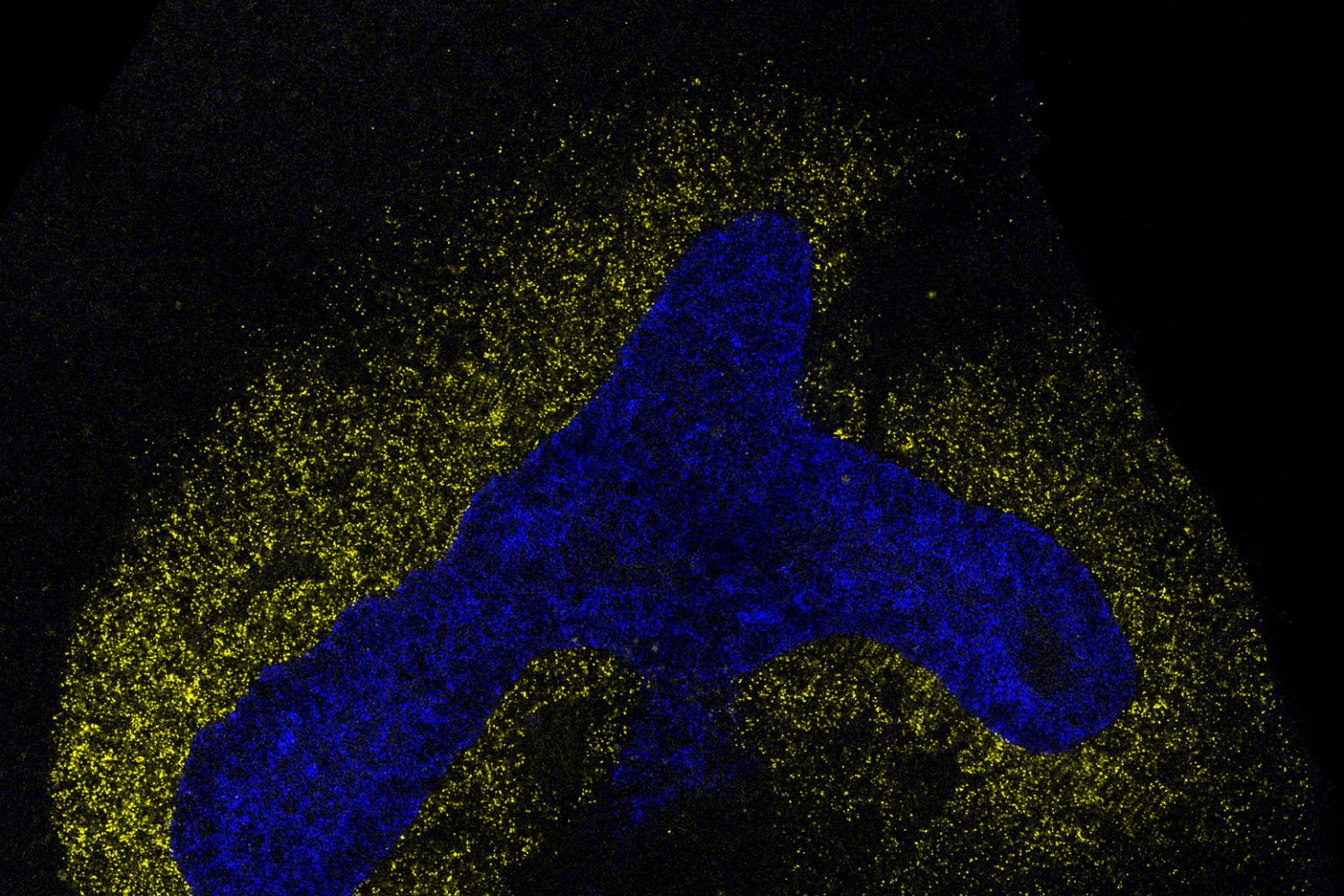
A new computational approach reveals how cells communicate to assemble into tissues. This could accelerate stem cell engineering, improve disease models, and inform therapies.
Microsoft Research Blog· microsoft.comOct 15, 2026
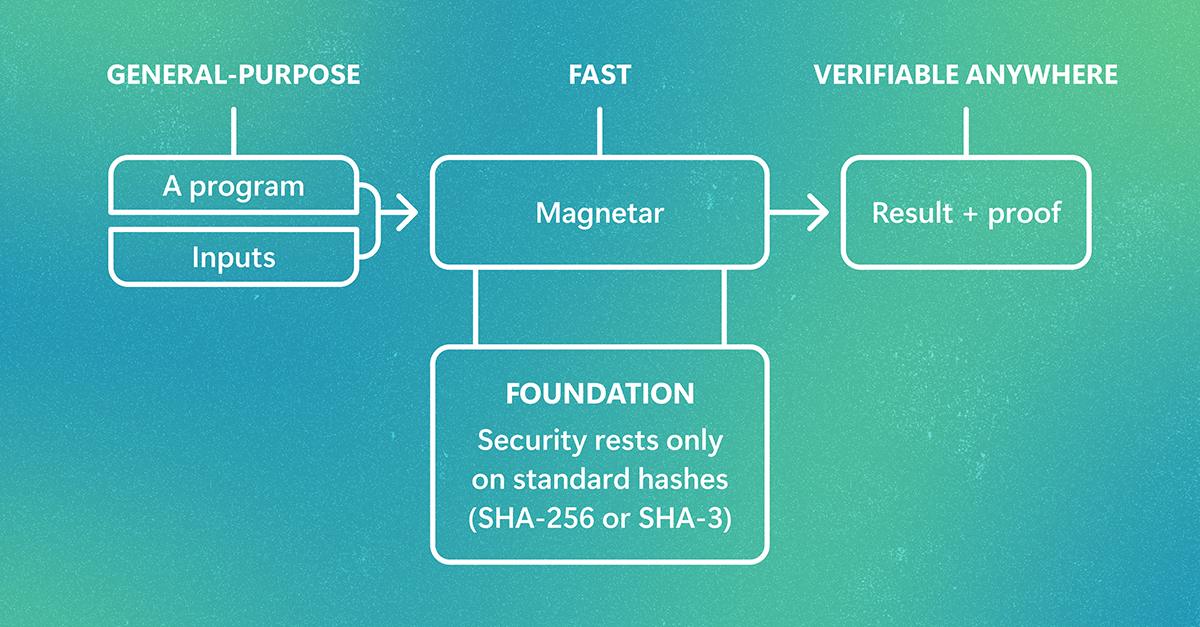
Zero-knowledge proofs can verify computing results without rerunning workloads or exposing sensitive data. Magnetar helps bring them into the mainstream with support for standard programming languages, major speed gains, and quantum-resistant security. The post Proof-based general-purpose computing with Magnetar appeared first on Microsoft Research.
Learn how Google DeepMind and GovTech Singapore uses lightweight on-device Gemma models to intercept conversational scams in private chats with zero cloud data egress.