Skip to content

Category

small language model

442 papers

#small language model Preprint Aug 2026

Identify, Locate, Link: End-to-End Key-Value Extraction from Document Images

SmolDocling, a compact 256M-parameter vision-language model (VLM), is fine-tune to perform end-to-end key-value extraction directly from document images, jointly solving identification, localization, and association in a single pass without OCR preprocessing.

A. Gurbuz, A. Nassar, Christoph Auer et al. · 0 citations
#small language model Open access Aug 2026

GRASSP: RNA Language Model-Enhanced Graph Attention with Adaptive Gating for RNA-Small Molecule Binding Site Prediction.

GRASSP provides a competitive framework for integrating pretrained RNA representations with spatial structural context while reducing reliance on additional handcrafted structural annotations, and is demonstrated to outperform state-of-the-art baselines.

Thi Lan Nguyen, N. Le · 0 citations
#small language model Open access Aug 2026

Co-designed yoga nidra targeting anxiety in autistic children: A mixed methods feasibility study.

The feasibility of yoga nidra as a complementary intervention for autistic children is supported and directions for future research are suggested, including larger trials and further co-design with the autistic community.

Tundi Loftus, Shu H Yau, Sophia Soares et al. · 1 citation
#computer vision Preprint Aug 2026

CodeAssay: A Multi-Metric Benchmark with Audited Ground Truth for LLM Code Generation

These findings show that reliable evaluation of LLM-generated code requires validated ground truth, protected tests, and multiple explicitly interpreted measures, and that CodeAssay provides a reproducible basis for evidence-based model evaluation in AI-augmented software development.

Shahbaz Siddeeq, Muhammad Waseem, Umar Subhan Malhi et al. · 0 citations
#machine learning Open access Jun 2026

Unified heterogeneity-aware benchmark of drug synergy prediction: a cross-study analysis of traditional machine learning and graph deep learning models.

The first comprehensive benchmarking framework specifically designed to accommodate inter-dataset heterogeneity is presented, finding that well-designed small datasets can match or even surpass the performance of larger benchmarks, suggesting that different metrics are applicable to different datasets/testing scenarios.

Yingjuan Cheng, Qing Ye, Linlong Jiang et al. · 0 citations
#artificial intelligence Review Jun 2026

Facilitating structure-based drug discovery with an artificial intelligence-driven virtual screening platform.

The Comprehensive VS Platform with AI Engine (CVSP-AIE) for drug discovery from compound libraries integrates three AI models: KarmaDock, a fast docking model that directly updates atomic coordinates; CarsiDock, an accurate docking model that predicts protein-ligand distances and reconstructs binding poses; and RTMScore, an accurate scoring model that learns residue-atom distance distributions for affinity prediction.

Shu-kai Gu, Xujun Zhang, Mengwu Xiao et al. · 1 citation
#small language model Open access Aug 2026

What Do Little Machines in Spring 2026 Know About Buddhist History?

This paper test representative models regarding their knowledge of Chinese and Japanese Buddhist history on consumer hardware and finds that, in Spring 2026, the Qwen series emerges as a winner for models in the 30B range, while the larger Kimi2.5 models lead in a cloud-based setup.

M. Bingenheimer · 0 citations
#small language model Review Open access Aug 2026

Estonian sign language research 1985–2024: a systematic literature review of methods, data, and research practices

This study presents the first systematic literature review of research on Estonian Sign Language (EVK) published between 1985 and 2024. Using Okoli's eight-step systematic literature review (SLR) model, we identified and screened 52 sources. Twenty-one were excluded on the basis of predefined criteria, leaving 31 studies for analysis. We examined how data-collection methods, annotation practices, and analytical frameworks have shaped the development of EVK linguistics. The findings reveal a gradual shift from descriptive documentation toward more empirical and methodologically reflective research. Many studies reflect the methodological conditions of their time, including a reliance on elicited rather than naturalistic data, non-standardized transcription practices until 2006, and analytical frameworks shaped by earlier linguistic traditions of the 1960s–2000s. Across the reviewed literature, methodological conditions varied considerably, reflecting different historical phases in which formal training opportunities in linguistics, research teams with EVK proficiency and corpus-based infrastructures were not yet consistently available. Only a small number of studies reported the use of ELAN annotation or systematically documented participatory practices involving Deaf collaborators or heritage signers. The review highlights significant progress in methodological awareness but underscores persistent gaps in the Estonian Sign Language research landscape, linguistic infrastructure and involvement of Deaf researchers. By tracing EVK research across historical phases, the review identifies priorities that could inform a collaborative, ethically grounded and corpus-based research agenda. Such an agenda could support cooperation among universities, Deaf community organisations, researchers, educators and language-policy actors, while enhancing data transparency, reproducibility and the sustainable development of EVK research.

Jari Pärgma, Christian Rathmann, Péter Zalán Herbszt-Romanek · 0 citations
#small language model Open access Aug 2026

From Sim to 6DOF: Deep Learning for Real-Time Satellite Pose Estimation from Resolved Ground-Based Imagery

This work presents the first complete system for automated six degrees of freedom (6DOF) satellite pose estimation from spatially resolved, ground-based, adaptive optics (AO)-corrected imagery, addressing a key challenge in Space Domain Awareness (SDA). The approach mitigates the need for human labeling by directly regressing satellite orientation and position from blurry, noisy, and deeply shadowed imagery. A multi-stage deep neural network pipeline localizes the satellite, predicts pose, and optionally applies temporal filtering. Networks are trained exclusively on fully synthetic imagery generated from a CAD model, yet generalize effectively to real data, bridging the Sim2Real domain gap. On 137 real, human-labeled test images of Seasat, the model achieved a mean rotation error of 5° and a mean image-plane translation error of 21 cm. Slant range error was quantitatively evaluated on synthetic data due to unknown real-sensor parameters. Qualitative evaluation of additional real Seasat imagery rated 177 of 199 predicted poses as “ground truth equivalent” or “high-confidence match,” with zero catastrophic failures. The system was extended to seven degrees of freedom (7DOF) for satellites with articulating components and demonstrated on real Hubble Space Telescope (HST) imagery, achieving 5.5° rotation error, 51 cm image-plane translation error, and 8° symmetry-adjusted solar array error on a 249-frame pass with causal temporal filtering. Across 586 real test images from Seasat and HST (captured over multiple decades under diverse conditions) the system consistently performed well. Full 6DOF performance was quantified on a high-fidelity wave optics (HFWO) synthetic test set of Seasat, where the model achieved 8.4° mean rotation error, 34 cm image-plane translation error, and 1.4% line-of-sight range error at r0=6 cm and 1031 km range. In a limited 200-image benchmark, the model demonstrated 48% lower mean rotation error than a single human labeler while operating ∼800× faster. It required <40 h and a single A100 GPU to generate data and train. The approach was also demonstrated for ARGOS, a smaller satellite with highly symmetric geometry. An exploratory General Image-Quality Equation-based image quality metric (AO-IQ) was introduced as an empirical correlate for pose accuracy. General-purpose models like GPT-4o and Depth Anything V2 failed across most SDA tasks, but rapid gains in vision-language models warrant continued monitoring. These results establish a new operational baseline for practical, real-time satellite pose estimation from AO SDA imagery.

Thomas J. Dickinson, Dawson Friesenhahn, Justin Fletcher et al. · 0 citations
#small language model Open access Aug 2026

Evaluation of Small and Large Language Models for Calculation of the ASA Score and Charlson Comorbidity Index in Orthopedic Surgical Patients: A Retrospective Concordance Analysis

Among the six evaluated model configurations, GPT-5.2 achieved significantly higher agreement with the clinician-derived composite reference than the other tested models for both ASA-PS and CCI in post hoc paired analyses with multiplicity correction.

Marco di Maio, G. Stopper, Vincenzo Di Matteo et al. · 0 citations
#small language model Review Aug 2026

Deep Learning for Polymer Informatics: A Critical Analysis of Representations, Architectures, and Evaluation Practices

It is argued that realizing deep learning’s full potential requires not only architectural innovation but also domain-aware representations that encode the statistical ensemble nature of polymers, evaluation protocols aligned with discovery scenarios, and physically grounded inductive biases.

Nassima Aleb · 0 citations

From tech blogs

See all →
Microsoft Research Blog Aug 31, 2026

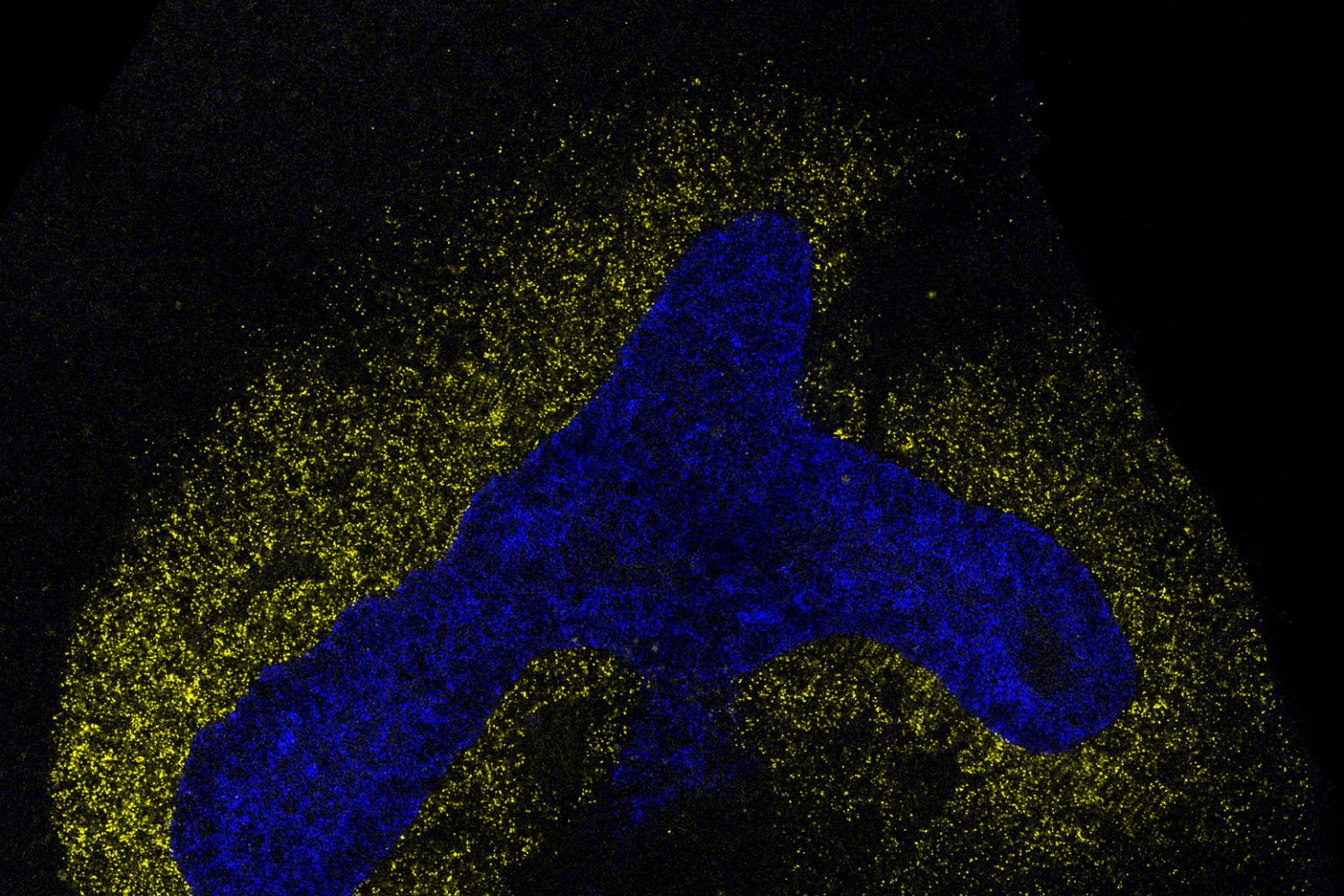
GigaPath-Flash and GigaTIME-Flash: Toward population-scale discovery with efficient pathology foundation models

What if pathology foundation models could do more with less? GigaPath-Flash and GigaTIME-Flash cut computational demands while maintaining strong performance, opening the door to larger studies and broader exploration. The post GigaPath-Flash and GigaTIME-Flash: Toward population-scale discovery with efficient pathology foundation models appeared first on Microsoft Research.