A replication of Wang et al. (2024), "Large Language Models are not Fair Evaluators", under judge substitution. Wang, Peiyi; Li, Lei; Chen, Liang; Cai, Zefan; Zhu, Dawei; Lin, Binghuai; Cao, Yunbo; Kong, Lingpeng; Liu, Qi; Liu, Tianyu; Sui, Zhifang. "Large Language Models are not Fair Evaluators." Proceedings of the 62...
Veerendra Kumar Sunkavalli· Open Science Framework· 0 citations
Automatic dubbing systems now produce intelligible speech, but professional subtitling and dubbing remain constrained by three problems that are seldom addressed together. Expressive delivery has to be directed by people who read the picture; profane or censorable content has to obey rules that differ by country and de...
JAKKRIT BOONMA· Zenodo (CERN European Organi...· 0 citations
BDMentalText V1 is a labeled Bangla (Bengali) text dataset for detecting depression-related language and classifying mental-health-related sentiment in a low-resource language. It contains 17,497 text samples in three classes: Depressive (6,368): texts expressing hopelessness, emotional distress, depressive feelings, o...
Abu Saim Hossen Hridoy, Nazmus Sakib Shohan, Nurul Mursalin Ag Mahin et al.· Zenodo (CERN European Organi...· 0 citations
Replication package for the paper "Beyond Accuracy: Disentangling Prompt Specialisation from Typed-State Quality Assurance in Multi-Agent LLM Pipelines" (SBQS 2026). The study compares three architectures on the compound Requirements Engineering task of FR/NFR classification followed by MoSCoW prioritisation, using the...
Maria de Fátima Araújo Alves, Vinícius Cardoso Garcia· Zenodo (CERN European Organi...· 0 citations
Reach audiences
Advertise in front of researchers, engineers, and readers.
As Large Language Model (LLM)-driven autonomous coding agents rapidly reshape software engineering, the physical topology of software systems faces fundamental reassessment. While microservices long served as the industry standard for managing human communication bottlenecks, empirical evidence indicates that when indi...
Chen Jiang· Zenodo (CERN European Organi...· 0 citations
The increasing use of language models in personal and intelligent applications has created a need for systems that can process user information without continuously depending on external cloud services. On-device Small Language Models (SLMs) provide a practical approach for performing language-model inference locally w...
PRIYANKA AGAVAN· Zenodo (CERN European Organi...· 0 citations
A complete measured record (May–October 2026) of building and training a from-scratch liquid-substrate research system — a 331 M-parameter CfC/τ-band predictive world model and three ~27 M-parameter recurrent language policies — on a single Quadro RTX 6000 (24 GB, no hardware bf16), with no prebuilt weights and no huma...
John Sikalias· Zenodo (CERN European Organi...· 0 citations
Large-scale surveys often use cognitive test total scores to describe group differences, but the construct meaning of such scores depends on task content, administration, language experience, and opportunities to learn. The China Family Panel Studies (CFPS) word test is an oral Mandarin character reading task with educ...
Man-Hong Xing, Jin-Kai Zhang, Gina S. Rhee· Journal of Intelligence· 0 citations
Abstract: This study examines the determinants of India’s trade with BRICS economies during 2001-2024 using a panel gravity model. An augmented specification incorporates GDP, population, distance, common language, and contiguity. Separate models are estimated for exports, imports, and total trade. The Hausman test sup...
Meenakshi, Qamar Alam· Zenodo (CERN European Organi...· 0 citations
We run Qwen3.8-Flash-Next, a 512-expert Mixture-of-Experts (MoE) language model, on a single workstation with one 32 GB GPU, 120 GB of system RAM and 16 CPU cores. Two pieces make this practical. First, FLE-IQ3_M (internally G3), a hybrid quantization that combines the Unsloth UD-IQ4_XS release with expert layers from...
Max Bitzer· Zenodo (CERN European Organi...· 0 citations
"Consciousness" is a collective word. Process-Identity Theory (PIT, "Erleben = Verarbeitung") sets one axiom — experience is processing, the same thing under two names — and five definitions, and derives forty propositions from them. They separate four things that can be measured apart: whether a system experiences (ho...
Werner Baumgarten· Zenodo (CERN European Organi...· 0 citations
This exploratory study examines whether a language model can continue completing its current task while changing its collaborator for the next task. In a fictional AI workplace, GPT-6.1-sol revised announcements across three feedback rounds with access to optional work-management tools. The model was not directly asked...
Selta· Zenodo (CERN European Organi...· 0 citations
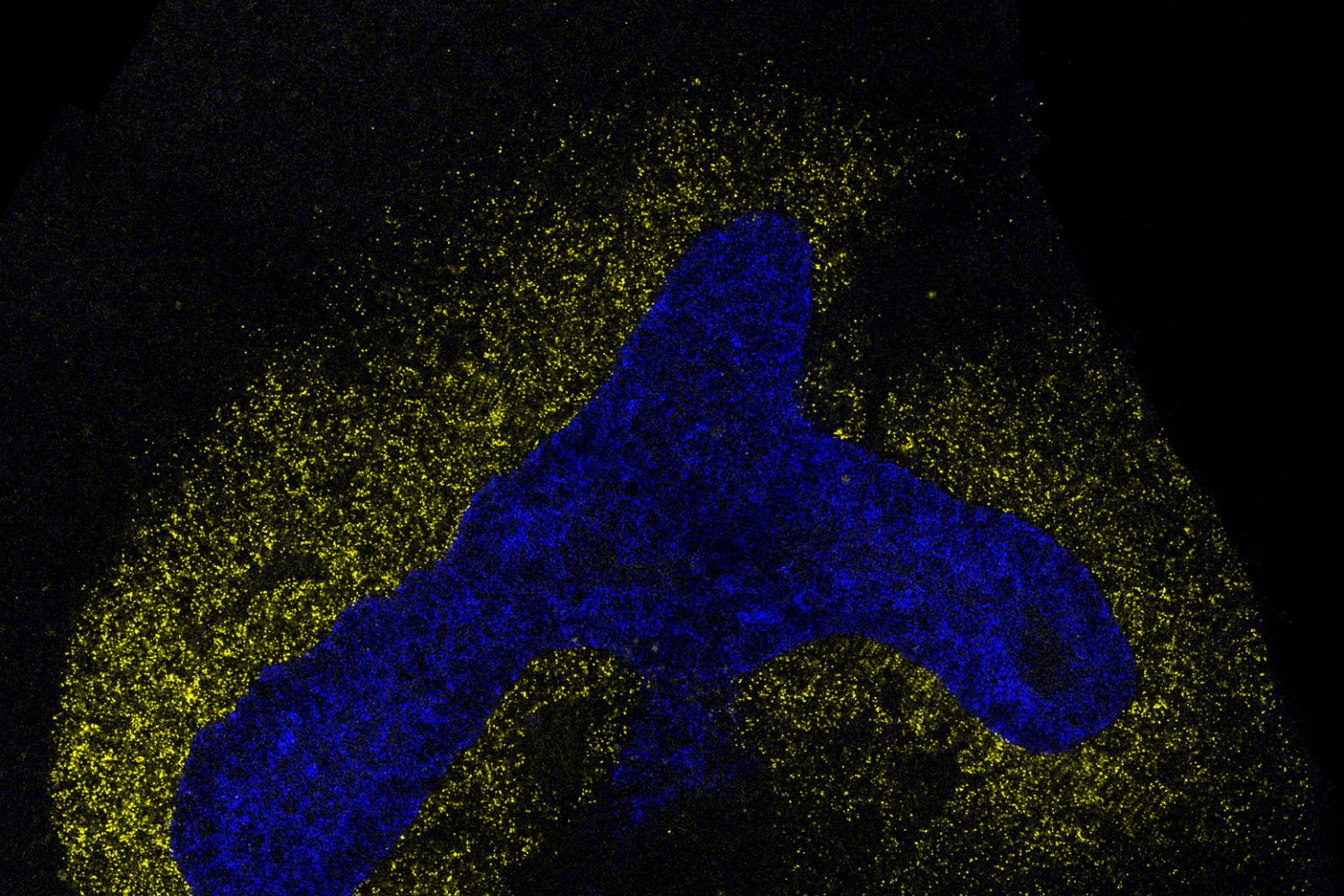
A new computational approach reveals how cells communicate to assemble into tissues. This could accelerate stem cell engineering, improve disease models, and inform therapies.
Microsoft Research Blog· microsoft.comOct 15, 2026
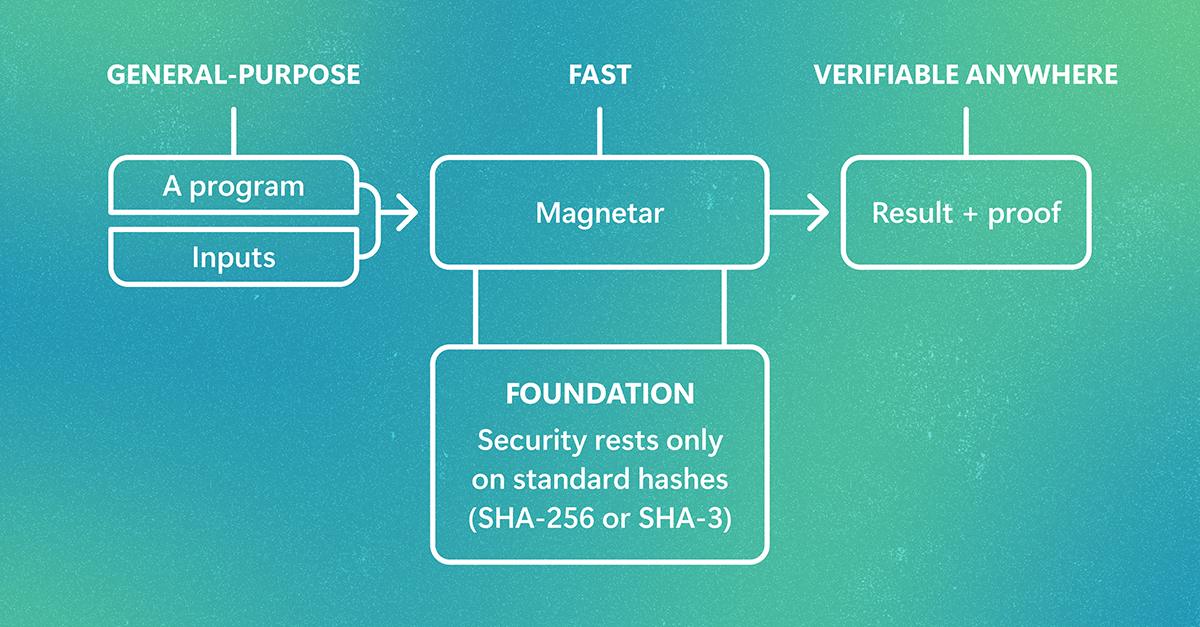
Zero-knowledge proofs can verify computing results without rerunning workloads or exposing sensitive data. Magnetar helps bring them into the mainstream with support for standard programming languages, major speed gains, and quantum-resistant security. The post Proof-based general-purpose computing with Magnetar appeared first on Microsoft Research.
Learn how Google DeepMind and GovTech Singapore uses lightweight on-device Gemma models to intercept conversational scams in private chats with zero cloud data egress.