Scientific summary For a finite partially ordered set (poset), the interval-size distribution counts comparable pairs according to the number of elements strictly between them. We prove that, for posets with at most seven elements and a fixed cardinality, this complete distribution is determined by four statistics: the...
Shigeo Kaneko· Zenodo (CERN European Organi...· 0 citations
# Student Prescription Database A university database project on prescription patterns related to non-medical study-drug use among students. It combines a normalized prescription model, fictional teaching records and real FDA product and recall data. ## Purpose and scope Our societal topic is study-drug use and academi...
Patryk Kolosovski, Mateusz Jedliński, Stefanczak Szymon et al.· Zenodo (CERN European Organi...· 0 citations
High-content imaging-based screens with small molecule or genetic perturbations rely on rich optical phenotypes, yet how distinct subcellular markers contribute complementary biological information remains unclear. Here, we introduce CellMAPP, a multiplexed organelle imaging platform that uses optical pooled screens wi...
Paula Coelho, Ana Carolina Leote, He-Ming Yao et al.· bioRxiv· 0 citations
Abattoir workers in sub-Saharan Africa work where human, animal and environmental health meet. They are in daily contact with live animals, carcasses, blood, offal, hides and contaminated water. This exposes them to zoonotic infections such as brucellosis, Q fever, bovine tuberculosis and leptospirosis. They also face...
Asare-Nkansah Kelvin Yaw· Open Science Framework· 0 citations
Interest in using large language models to generate synthetic survey responses has grown as researchers seek faster, scalable approaches to survey data collection. However, less is known about whether longitudinal probability-based panels improve synthetic-response predictions and whether improvements in predictive acc...
Soubhik Barari, Brandon Sepulvado, Diwas Bhattarai et al.· Zenodo (CERN European Organi...· 0 citations
Spam and phishing email remain a persistent cybersecurity threat and a primary delivery vector for credential theft, malware, and ransomware. Detection accuracies above 99% are routinely reported. Such figures are typically obtained on small, single-source, monolingual corpora in which near-duplicate campaign templates...
Extended abstract 3-063-26
Large language models (LLMs) provide a powerful means to search for and summarise content. However, their training and use is a rapidly growing driver of energy and resource use. In this presentation we describe the development of an LLM-based search tool for the UKRI Energy Demand Research C...
Thorin Daniel, Li-Rong Liu, Michael J. Fell et al.· Eceee ... summer study proce...· 0 citations
Software and Study 1 records for the article “Allocating cognitive work across people, language models and deterministic tools: A task-analytic method” (Simon Vajda, Applied Artificial Intelligence Institute, Deakin University). The runtime allocates the decisions in a cognitive task among deterministic tools, small la...
Simon Vajda· Zenodo (CERN European Organi...· 0 citations
High‐impact tutoring can improve student learning, but scaling tutoring programmes requires large numbers of novice tutors. Developing high‐quality tutor‐training lessons remains a key bottleneck.
This study compared post‐test performance after participants studied human‐created or LLM‐created tutor‐traini...
Jionghao Lin, Sandy Yiyang Zhao, Ashish Gurung et al.· Journal of Computer Assisted...· 0 citations
NumLang is an experimental compiled research language and program optimizer implemented in Rust. It integrates multiple program transformation paradigms into a unified SSA Mid-Level Intermediate Representation (MIR) pipeline: Hamilton-style Global Distillation: Inter-procedural process tree distillation that folds acro...
Rajveersinh Pardeshi· Zenodo (CERN European Organi...· 0 citations
A new computational approach reveals how cells communicate to assemble into tissues. This could accelerate stem cell engineering, improve disease models, and inform therapies.
Microsoft Research Blog· microsoft.comOct 15, 2026
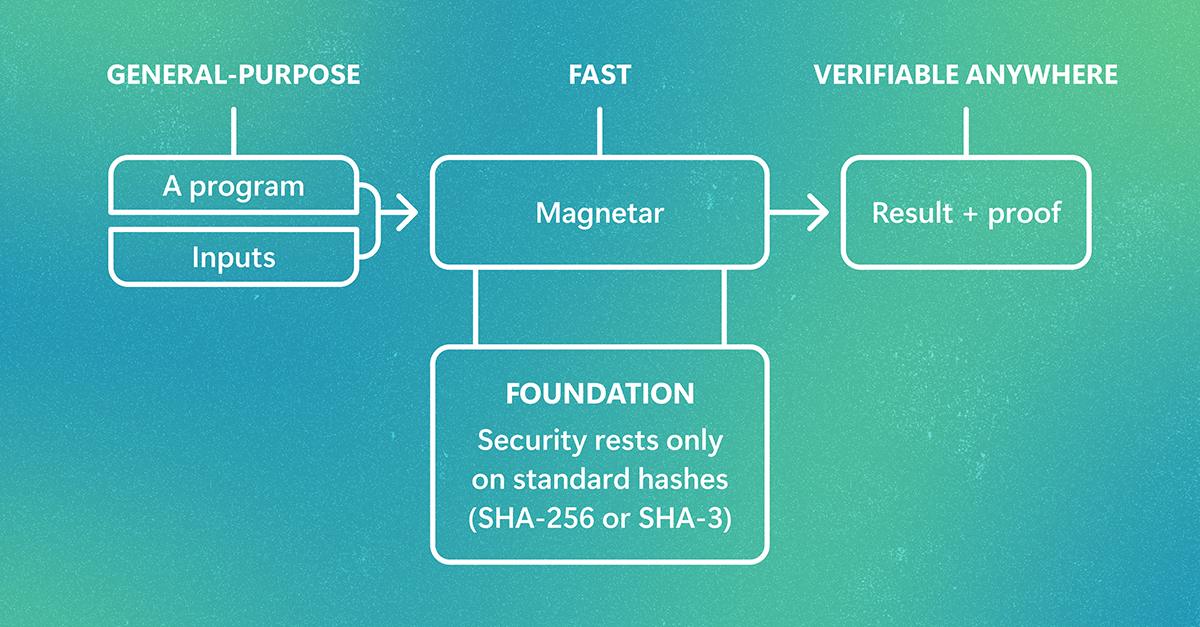
Zero-knowledge proofs can verify computing results without rerunning workloads or exposing sensitive data. Magnetar helps bring them into the mainstream with support for standard programming languages, major speed gains, and quantum-resistant security. The post Proof-based general-purpose computing with Magnetar appeared first on Microsoft Research.
Learn how Google DeepMind and GovTech Singapore uses lightweight on-device Gemma models to intercept conversational scams in private chats with zero cloud data egress.