NumLang is an experimental compiled research language and program optimizer implemented in Rust. It integrates multiple program transformation paradigms into a unified SSA Mid-Level Intermediate Representation (MIR) pipeline: Hamilton-style Global Distillation: Inter-procedural process tree distillation that folds acro...
Rajveersinh Pardeshi· Zenodo (CERN European Organi...· 0 citations
This study examined associations between narcissistic traits and emotional dependence on large language models (LLMs) among adolescents, focusing on anxiety and physical activity.
A multistage stratified sample of 1622 Chinese junior high school students was surveyed in November 2025. Narcissistic traits, an...
Yi-Hang Zhao, Meng-Yu Xu, Ning Wang et al.· Frontiers in Psychiatry· 0 citations
Large language models have created an emergency in open science. People now usemachines to generate unverified papers by the thousands, dumping this junk ontofree archives. Servers like arXiv were built to share genuine discoveries. Today,multi-billion-dollar corporations exploit that free public access, treating acade...
Joshua Walsh· Zenodo (CERN European Organi...· 0 citations
We present The Detect Law, a zero-shot detector of machine-generated text that combines three per-token signals from two small open language models with an exact 32-bit integer sequential decision rule. A base model (Llama-3.2-1B) and its instruction-tuned twin supply a surprise signal (how much more predictable each t...
Devieswar Kancheti· Zenodo (CERN European Organi...· 0 citations
Reach audiences
Advertise in front of researchers, engineers, and readers.
Small and medium enterprises (SMEs) are the driving force of developing economies, yet they remain limited in resources to implement artificial intelligence (AI), and there is little empirical evidence that AI adoption is associated with small business growth in the region, particularly in Central Asia. This research m...
Layli Navruz-zoda, N. Fayzullaev, K. Madrakhimov et al.· Frontiers in Artificial Inte...· 0 citations
This case study documents a free-tier, multi-provider architecture for large language model (LLM) text generation and image generation integrated into local developer tools. The Google image API free tier exhibited a hard limit of zero image quotas, while Groq's free tokens-per-minute (8,000) are smaller than the Gemin...
mustika rionaldy· Zenodo (CERN European Organi...· 0 citations
Hateful memes carry harm through the complex combination of image and text, requiring a detector to analyze both modalities jointly. This study investigates whether a short, text-aware semantic description of each meme, generated once by a small vision-language model, adds complementary information beyond direct image-...
Shalini Chawla, Garima Tyagi· International Journal of Sci...· 0 citations
Voblint is a machine-checked Isabelle/HOL framework for building, running and verifying interprocedural abstract interpreters, modeled on Goblint's D/G architecture. It chains verified compilation of a small imperative language to a procedure-aware control-flow graph, an activation-local operational semantics, executab...
Manuel Lerchner· Zenodo (CERN European Organi...· 0 citations
LoRA-N-Gly, a lightweight and efficient end-to-end approach that leverages Low-Rank Adaptation (LoRA) to fine-tune the ESM2-3B protein language model for direct, residue-level prediction of N-linked glycosylation sites, achieves the best performance among the methods compared on predicting N-linked glycosylation sites.
Zhi-Yong Feng, Xing Zhang, He Wang et al.· Journal of Molecular Biology· 0 citations
Natural language processing followed by simple CART can accurately extract total uterine weight from narrative pathology reports, and a small number of reports with data quality issues specific to low-weight specimens should be excluded or subjected to manual adjudication.
Steven Habbous, Alinah Surani, A. Murji et al.· International journal of gyn...· 0 citations
WARP-VLA is proposed, a camera-view robust VLA for diverse wrist camera configurations that adopts a Mixture-of-Experts (MoE) architecture where individual experts learn view-specific feature transformations, and a router combines them based on implicit view information.
Junmyeong Lee, Dong-Min Shin, Min-Gyu Park et al.· 0 citations
Large language model (LLM)-based multi-agent systems have shown promise in automating software development tasks. However, most vibe-coding systems focus on completing small tasks and incremental code changes, leaving persistent, continuous software development largely unexplored. We present TheBotCompany, an open-sour...
Wenhan Lyu, Yue Xiao, Yixuan Zhang et al.· IEEE/ACM International Confe...· 0 citations
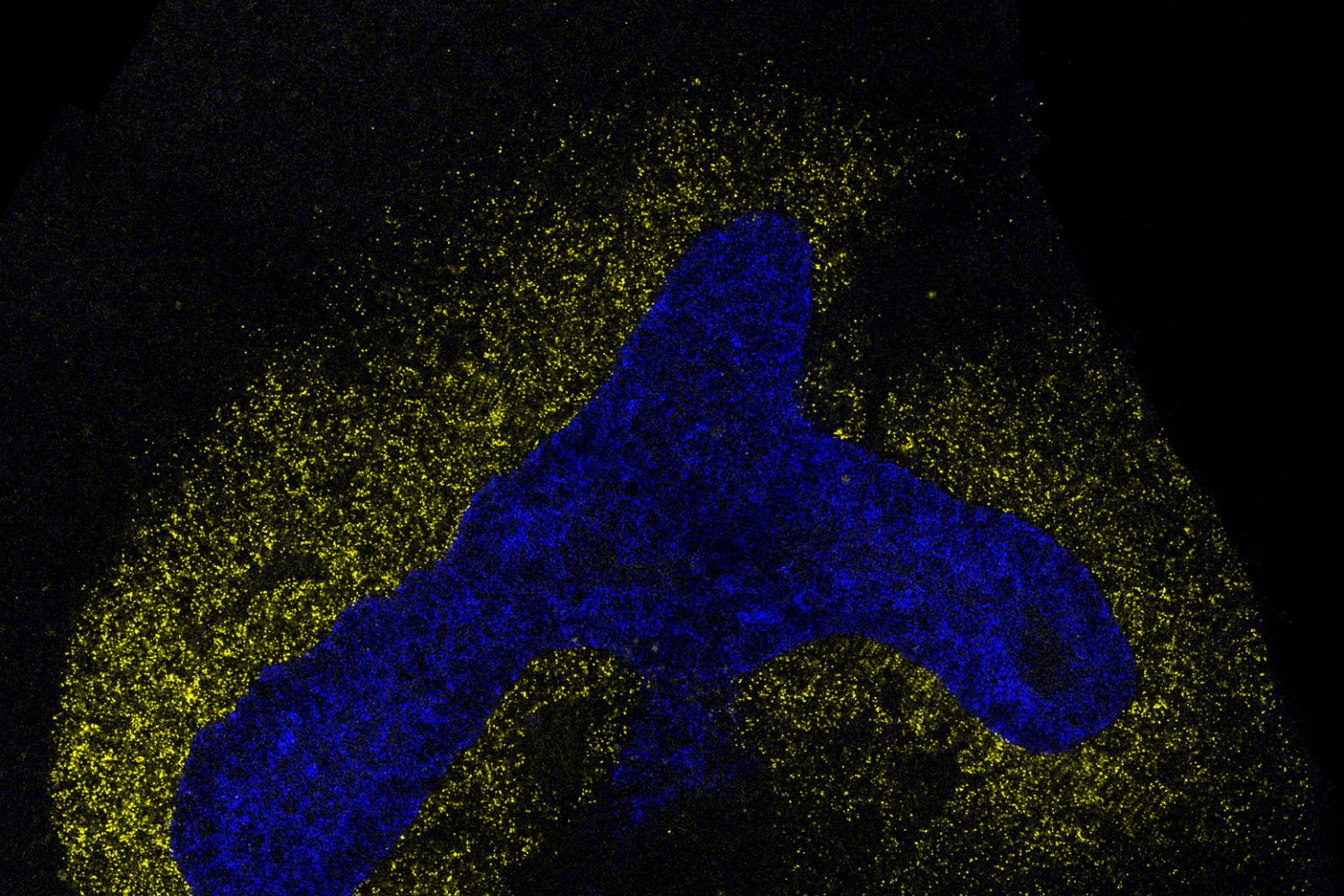
A new computational approach reveals how cells communicate to assemble into tissues. This could accelerate stem cell engineering, improve disease models, and inform therapies.
Microsoft Research Blog· microsoft.comOct 15, 2026
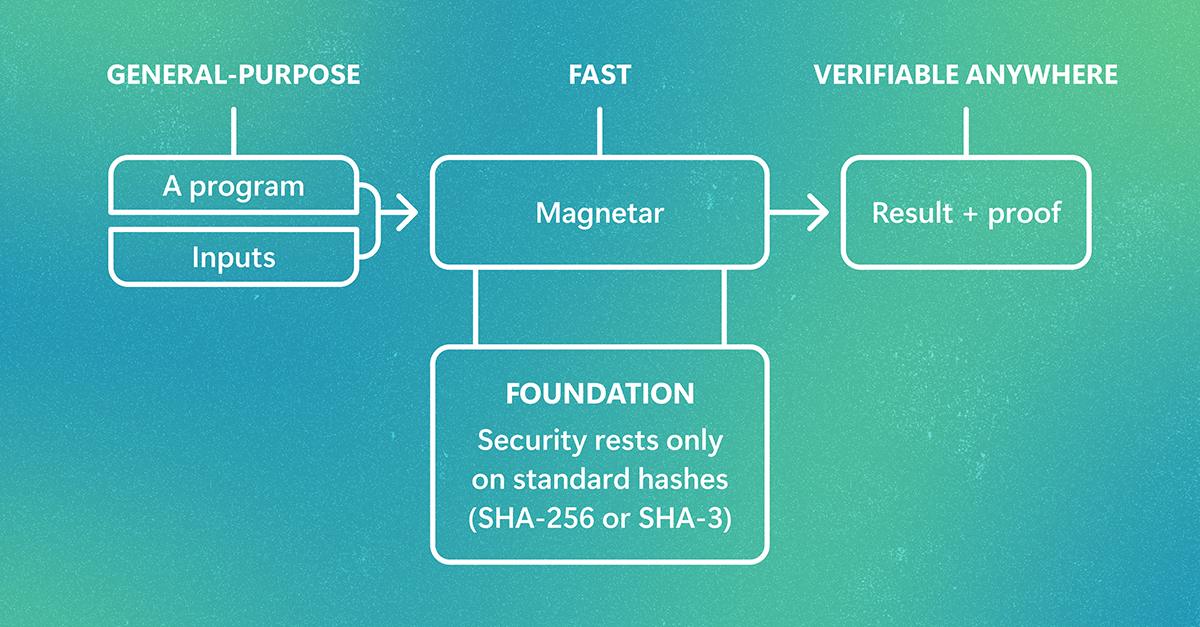
Zero-knowledge proofs can verify computing results without rerunning workloads or exposing sensitive data. Magnetar helps bring them into the mainstream with support for standard programming languages, major speed gains, and quantum-resistant security. The post Proof-based general-purpose computing with Magnetar appeared first on Microsoft Research.
Learn how Google DeepMind and GovTech Singapore uses lightweight on-device Gemma models to intercept conversational scams in private chats with zero cloud data egress.