Large language models (LLMs) are now used to explain intrusion-detection alerts, yet an explanation can sound confident while stating things the evidence does not support. We divide such statements into two tiers. Tier 1 covers unsupported specifics and Tier 2 covers background knowledge that is absent from the evidenc...
Ishita Soryan· Zenodo (CERN European Organi...· 0 citations
Electricity-price dynamics in energy-transitioning power systems reflect the interaction of fuel costs, carbon prices, financial conditions, regulatory information, and market expectations. This study examines whether text-derived news indicators provide incremental predictive information for Polish electricity prices....
A. Manowska, Muhammad Waqar Hassan· Frontiers in Energy Research· 0 citations
With the rapid advancement of the Internet and the emergence and popularity of large language models, the demands for high-quality data, communication capacity and security and privacy have increased significantly. However, a large amount of data is distributed across different devices, and cannot be collected legally...
Zhi-Xin Wang· Applied and Computational En...· 0 citations
Text-to-image (T2I) generation models are increasingly used in industrial design, but assessing the quality of their outputs still depends on slow, small-scale human expert review, which constrains the automation advantage of generative AI and hinders its adoption in this domain. This paper empirically examines whether...
Zai-Xing Liu, Jie-Hong Xie, Peng-Tao Li et al.· Conference on Optics and Com...· 0 citations
Reach audiences
Advertise in front of researchers, engineers, and readers.
While acoustic Voice Activity Detection (VAD) determines the presence of speech, conversational voice pipelines require semantic decision-making to handle turn-taking dynamics. This paper introduces jev-vad, a lightweight, model-agnostic semantic VAD layer that replaces heuristic barge-in and end-of-turn predictions wi...
Daniel García· Zenodo (CERN European Organi...· 0 citations
A fully automatic multi-lingual information extraction pipeline that combines optical character recognition (OCR) libraries and Vision-Language Models (VLM) and a retrieval augmented generation (RAG) conversational interface that gives data-driven and fact-grounded responses about burial culture, community practices, a...
Michael J. May, Jamal Majadle, Libar Vizman et al.· Journal on Computing and Cul...· 0 citations
Added Extensions (yoagent::extension, #241): one plug-in contract for the agent lifecycle. An Extension is installed with Agent::with_extension / SubAgentTool::with_extension (an Arc is one too), and each run gets fresh RunHooks from start_run, so state for one run is isolated. The hooks: tools (once per run); on_input...
Yuanhao Li, Oscar, Andy Gayton et al.· Zenodo (CERN European Organi...· 0 citations
This collection makes works of Carl Friedrich Gauss available as original-language faithful transcriptions, faithful English translations, editable source materials, historical source images and separate AI editorial commentary. Its retained materials cover Bands I, II, III, IV, V, VI, VII, VIII, IX and XI Part I, indi...
Carl Friedrich Gauß· Zenodo (CERN European Organi...· 0 citations
A scalable, privacy-preserving vision-language model (VLM) pipeline is developed that leverages zero-shot CLIP to extract 150+ interpretable urban design features from street-level imagery and enables scalable, evidence-based urban planning across cities.
Malikka Rajshahi, M. Alfonzo, Corey Ashby et al.· Street Art & Urban Creat...· 0 citations
KAIPAL and KENOS: Democratizing Artificial Intelligence Through Privacy-First Local Models and a Unified Chat-Native Operating Interface Kohenoor Labs | Kohenoor Technologies Description This publication presents the technological vision, architectural philosophy, and applied development direction of Kohenoor Labs thro...
Ahmad Bilal Khan· Zenodo (CERN European Organi...· 0 citations
Wordflow 0.7.11 lets you set the order of a category column's values and use it everywhere, including as a Trends axis; converts dates, numbers and text more reliably, checking the whole column first; adds several sheets of a spreadsheet at once; adds an Elapsed time type for transcript timestamps; shows a quick overvi...
Alex Guo, Chao Sun· Zenodo (CERN European Organi...· 0 citations
Purpose: This study seeks to analyze the influence of service, information, and system quality on e-learning quality, and subsequently assess the effect of e-learning quality on learner satisfaction in Punjab, India. Design/Methodology/Approach: The data was gathered from a sample of 506 e-learners using purposive and...
ABHISHEK SAINI, Hazoor Singh· ACR North American Advances· 0 citations
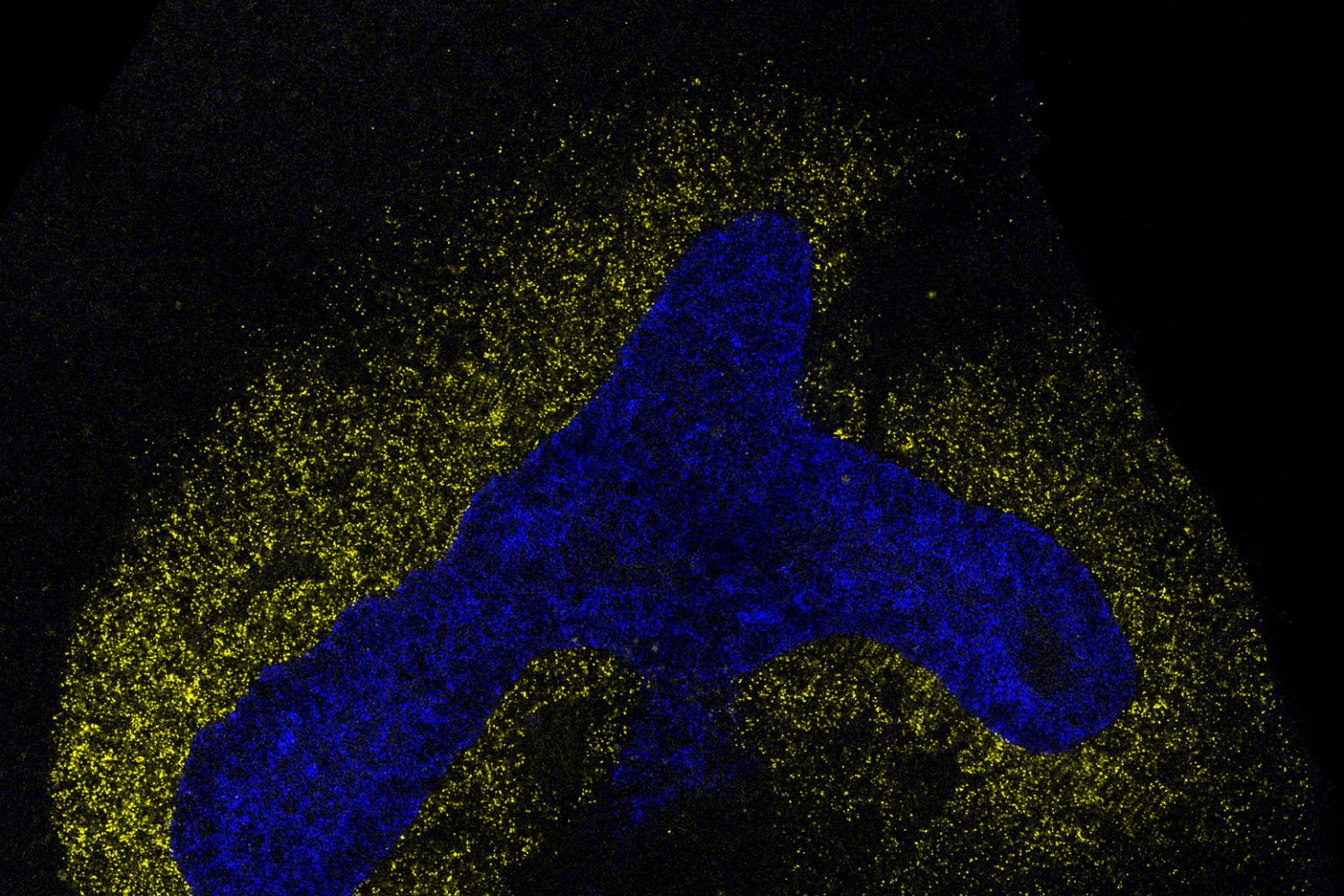
A new computational approach reveals how cells communicate to assemble into tissues. This could accelerate stem cell engineering, improve disease models, and inform therapies.
Microsoft Research Blog· microsoft.comOct 15, 2026
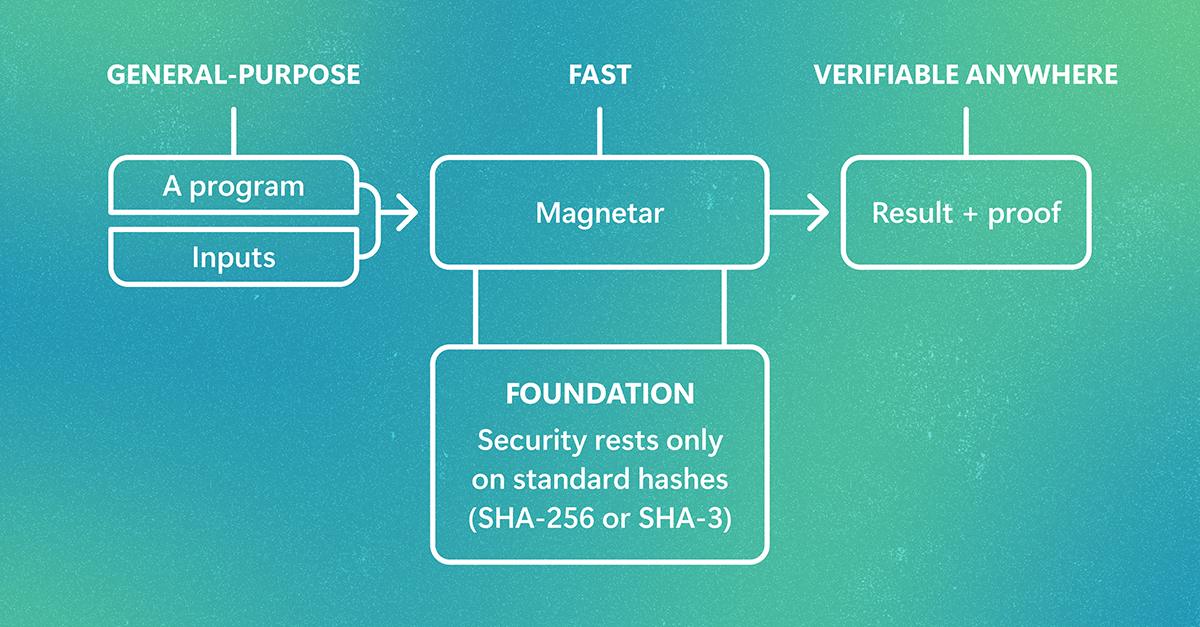
Zero-knowledge proofs can verify computing results without rerunning workloads or exposing sensitive data. Magnetar helps bring them into the mainstream with support for standard programming languages, major speed gains, and quantum-resistant security. The post Proof-based general-purpose computing with Magnetar appeared first on Microsoft Research.
Learn how Google DeepMind and GovTech Singapore uses lightweight on-device Gemma models to intercept conversational scams in private chats with zero cloud data egress.