Overview In this Zenodo upload, we introduce both the code for SCARSE (scarse.zip) and the reproducability code (SCARSE-repro.zip). How SCARSE works SCARSE is designed for peptide property prediction in low-data regimes by combining protein language model embeddings with classical machine learning methods. The workflow...
Leo Andrekson, Robin Rydbergh, Rocío Mercado et al.· Zenodo (CERN European Organi...· 0 citations
Supporting data, adapters, predictions and code for the article *Low-Cost LoRA Fine-Tuning of Small Language Models for Multi-Step Arithmetic Reasoning* by Jake O'Grady, Asena Isik Gürhan, Chee Fong Ting and Effirul Ramlan (University of Galway). We generated 20,000 GSM8K-derived arithmetic problems with step-by-step s...
O'Grady, Jake, Gürhan, Asena Isik, Chee, Fong Ting et al.· Zenodo (CERN European Organi...· 465 citations
Skill-SLM is proposed, a framework that reformulates SLM-driven robot operation as a task-decomposition and skill-composition problem, and employs a progressive skill orchestration strategy to improve the reliability of skill implementation and overall robot operation.
Listen-to-Reason (L2R), an interpretable-by-design pipeline that passes audio to the LLM through an explicit, human-readable tree that outperforms all LALMs the authors compare against on SAKURA and trails them by 6-12 points on MMAU and MMAR, is proposed.
Pooneh Mousavi, M. Ravanelli, Cem Subakan· 0 citations
Reach audiences
Advertise in front of researchers, engineers, and readers.
Large language models (LLMs) exhibit us-vs.-them bias: A behavioral asymmetry in which prompts framed around an ingroup (``we''/``us'') receive systematically more positive continuations than matched prompts framed around an outgroup (``they''/``them''). Using Edge Attribution Patching (EAP), we localize this behavior...
Tabia Tanzin Prama, J. Zimmerman, C. Danforth et al.· 0 citations
AutoSynth, which represents MIDI performance events, fixed synthesizer parameters, and variable-length modulation routes as a unified sequence for a synthesizer, and learns their dependencies with an audio-conditioned autoregressive model, is presented.
Tristan Wu, Daniel Chin, Li-Wei Lin et al.· 0 citations
Artificial intelligence applied to mass spectrometry-based metabolomics and lipidomics has advanced through three technological generations: chemometric and classical machine learning, deep learning, and self-supervised foundation models, with large language models so far entering mainly at the edges. The metabolome an...
Young Cheol Yoon, Seoyeon Choi, C. Jung et al.· Biomolecules & Therapeutics· 0 citations
Jev is a"System One"model that returns a choice among given options instead of generating text. We study how such a specialized decision model compares with general-purpose large language models (LLMs). We evaluate Jev on 13 multiple-choice benchmarks covering knowledge, reasoning, and multilingual understanding, and c...
Xing Li, Qing-Cheng Chang, Jin-Zhong Ning et al.· 0 citations
Byte-level language models such as the Byte Latent Transformer (BLT) group bytes into patches and run their large global model once per patch. BLT starts a patch where a small model's next-byte entropy is high, so global compute goes where the next byte is hard to predict. We show that this rule has a systematic blind...
Speech-to-LLM systems often connect a frozen speech encoder to a frozen large language model (LLM) through a small trainable bridge. The bridge is usually treated as plumbing, but it in fact defines the geometry of the speech-to-LLM interface, and the pretraining objective decides whether that interface provides a reus...
Xin-Nian Zhao, Chia-Hua Wu, Pu Wang et al.· 0 citations
Large Language Models (LLMs) achieve strong performance across many domains, but their efficiency is limited by the quadratic cost of attention with respect to prompt length. Sparse attention reduces this cost by retaining only a small fraction of query-key interactions to approximate the full attention matrix. However...
Watermarking large language models is popular for tracing chatbot and agentic outputs, yet detectors remain unreleased since exposing them could let attackers do targeted edits with the detector's feedback. However, watermarks are already vulnerable to uninformed tampering attacks. We thus first quantify whether a publ...
Georgios Milis, Tom Sander, Tomás Soucek et al.· 0 citations
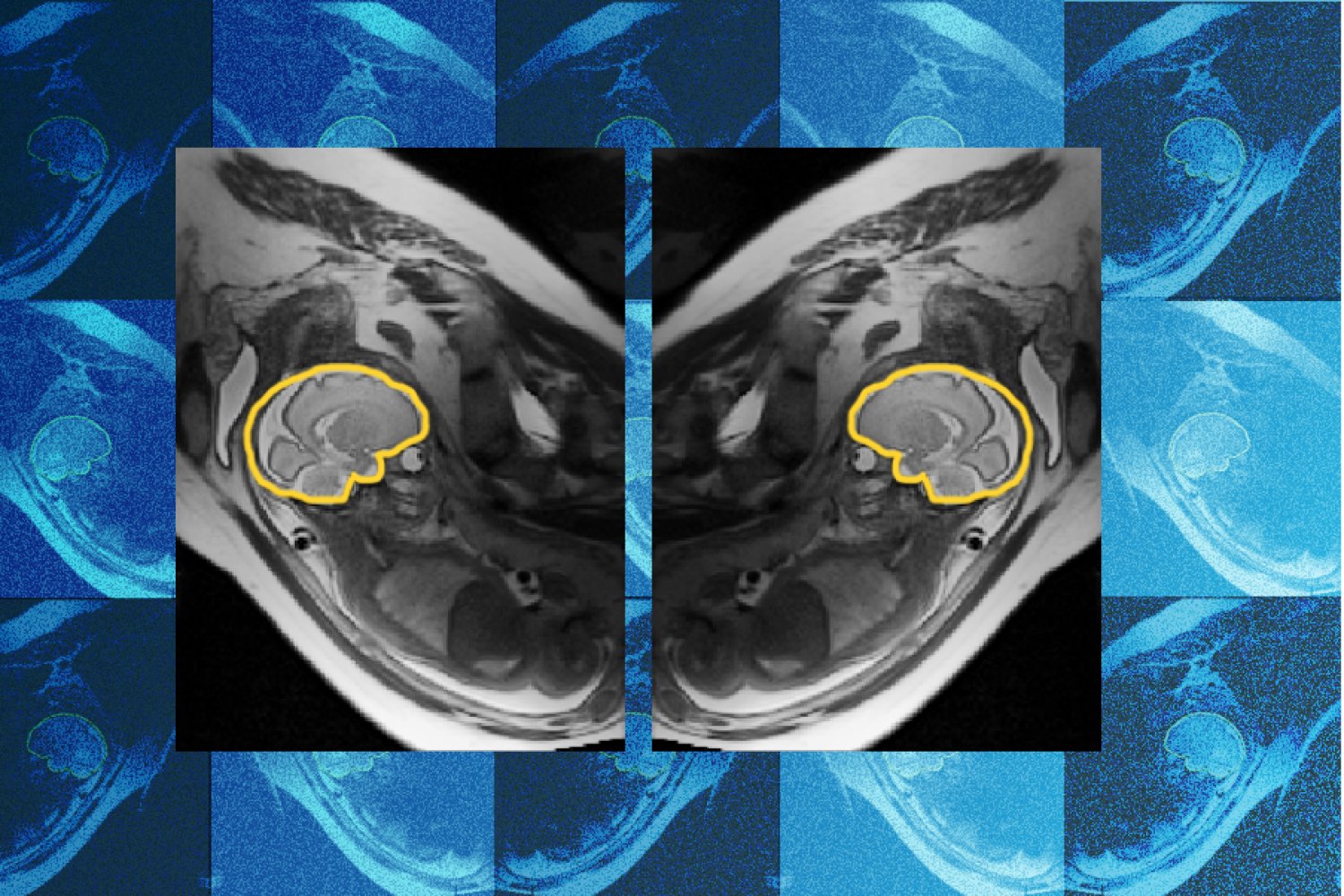
A model developed by researchers at MIT and Boston Children's Hospital adjusts scans on the fly to track fetal movement, potentially sparing families repeat hospital visits.