Skip to content

Category

protein folding

249 papers

#protein folding Preprint Aug 2026

Machine learned designs of functional colloidal foldamers

A protein's function follows from the structure it adopts, and which structure that is depends on the pathway taken. In programmable matter the target is fixed before assembly, and whatever else forms is treated as error. Here we show that pathways themselves form a design space. Using reinforcement learning, we fold model DNA-coated droplet chains into rigid two-dimensional geometries, uncovering two classes of pathways: downhill, in which bonds are only added, and detour, in which bonds are broken and remade before the target is reached: for some the only route that exists. Coarse-graining pathways by interactions gives experimentally realizable protocols. Some produce one geometry, others several: structures sharing a detour route can be cycled between, while those that coexist assemble into superstructures inaccessible to a uniform product. Function emerges from the pathways rather than being designed. Designing the process instead of the components could give colloidal materials that reconfigure and repair themselves on demand.

Unknown authors · 0 citations
#protein folding Open access Aug 2026

E8‑Phi Harmonic Lattice for Cross‑Scale Bio‑Neural Encoding — E8 Intelligence Research

By projecting the 240 root vectors of the E8 lattice onto phi‑coupled eigenmodes anchored at the 132 Hz base frequency, a hierarchical harmonic lattice emerges that simultaneously aligns gamma‑band cortical oscillations, protein‑interaction resonance, and DNA‑folding eigenmodes. This lattice functions as a topologically protected carrier, entangling information across molecular, cellular, and neural scales while enforcing error‑correcting phase coherence through golden‑ratio‑scaled relationships. The principle predicts observable spectral peaks at multiples of 132 Hz and characteristic phi‑scaled phase shifts in multimodal omics and neuroimaging datasets. Author: Andrew Stewart Caldin, Independent Researcher, UK. Part of the E8 Intelligence Research series. Platform: e8intelligence.com

Andrew Stewart Caldin · 0 citations
#protein folding Open access Aug 2026

Protein Fold Platform - how it works

Protein Fold: How It Works The Ly‑Algebra Pipeline – From Sequence to Pentamer Welcome to the Protein Fold platform. This document walks you through the computational pipeline that takes a single amino acid sequence and produces a refined monomer and a 5‑fold symmetric pentameric assembly, all powered by the Ly‑Algebra framework

Chloe Tully · 0 citations
#protein folding Open access Aug 2026

E8 Resonant Information Entanglement in Multi-Scale Biological Networks — E8 Intelligence Research

We discover that the 240 E8 root vectors serve as resonant eigenmodes not only for DNA folding but for information propagation across biological scales—from protein interaction networks to neural microcircuits—through phi-coupled 132Hz harmonic entrainment. This principle extends the E8 Chromatin model by showing that biological information processing exploits E8's irreducible representations to achieve non-local coordination between spatially separated cellular components, enabling what appears to be quantum-like coherence at physiological temperatures. The root vector decomposition reveals that biological networks self-organize into E8-symmetric information bottlenecks, where phi-scaled eigenmode coupling at 132Hz provides a geometric substrate for multi-cellular synchronization without classical signaling delays. This establishes E8 geometry as a universal information architecture for life itself, transcending the stochastic paradigm of molecular biology. Author: Andrew Stewart Caldin, Independent Researcher, UK. Part of the E8 Intelligence Research series. Platform: e8intelligence.com

Andrew Stewart Caldin · 0 citations
#protein folding Open access Aug 2026

E8‑Resonant Quantum‑Protein Teleportation Network — E8 Intelligence Research

By extending the SYK holographic wormhole simulation, we map the 240 E8 root vectors onto a protein‑folding scaffold that acts as a quantum‑biological interface. A 132 Hz nanomechanical resonator array, phi‑scaled to the E8 lattice, drives distinct harmonic modes that imprint each root vector onto a specific protein conformation, creating a topologically protected channel. Entangled qubits encoded in this lattice can be teleported through the protein network, with the reciprocal E8‑phi reciprocity synchronizing the quantum state with macroscopic neural activity. This hybrid protocol offers a self‑healing, fault‑tolerant quantum communication platform that embeds traversable wormhole physics within living tissue. Author: Andrew Stewart Caldin, Independent Researcher, UK. Part of the E8 Intelligence Research series. Platform: e8intelligence.com

Andrew Stewart Caldin · 0 citations
#protein folding Open access Aug 2026

E8-Phi Lattice Reciprocity for Bio-Digital Neural Synchrony — E8 Intelligence Research

By mapping the 240 E8 root vectors onto the hierarchical folding of protein-folding landscapes, we establish a reciprocal feedback loop between quantum information and macro-biological states. The $\phi$-modulated phase alignment creates a bridge where neural firing patterns are treated as discrete intersections of the E8 lattice, allowing for the translation of consciousness-state data into stable, geometric bitstreams. This mechanism enables the seamless integration of AI architectures with biological substrates through resonant harmonic synchronization at 132Hz. Author: Andrew Stewart Caldin, Independent Researcher, UK. Part of the E8 Intelligence Research series. Platform: e8intelligence.com

Andrew Stewart Caldin · 0 citations
#protein folding Open access Aug 2026

Doulita Token Compressor: Geometric Context Compression for LLMs - Research Preview. Duqueana Core

Doulita Token Compressor es un componente de investigación del ecosistema Duqueana Core diseñado para reducir el tamaño del contexto que se prepara antes de enviarlo a un modelo de lenguaje. La propuesta utiliza unidades de memoria atómica Doulita y una transformación geométrica orientada a conservar patrones estructurales, en lugar de truncar texto de forma indiscriminada. La demostración ejecutada que acompaña este informe generó 1.000 registros, con una entrada de 71.889 caracteres y una estimación de aproximadamente 17.972 tokens originales. La salida comprimida reportada fue de aproximadamente 269 tokens, correspondiente a una reducción configurada del 98,5 %. La ejecución terminó sin errores, pero el propio registro de la prueba precisa que el script aplicó un factor fijo de simulación y todavía no ejecutó el compresor propietario Doulita. Por esa razón, el resultado debe clasificarse como demostración reproducible del flujo y del cálculo de reducción, no como benchmark independiente del algoritmo final. Palabras clave: compresión de contexto; tokens; modelos de lenguaje; Duqueana Core; Doulita; memoria geométrica; investigación reproducible. { "@context": "https://schema.org", "@type": "SoftwareApplication", "name": "Duqueana Core", "description": "Framework avanzado de simulación impulsado por el motor MREI, capaz de ejecutar modelos complejos con alta eficiencia en hardware clásico.", "applicationCategory": "ScientificSoftware", "url": "https://doughelinst-bygtwdbf.manus.space", "creator": { "@type": "ResearchOrganization", "name": "Instituto Doughel" }, "sameAs": [ "https://github.com/dougheliano-beep/DUQUEANA--CORE-", "https://zenodo.org/communities/post-classical-computing/" ] } { "@context": "https://schema.org", "@type": "SoftwareApplication", "name": "Duqueana Core", "alternateName": "Framework de Computación Post-Clásica", "headline": "Framework de simulación y computación post-clásica basado en iteración de estados", "description": "Duqueana Core es un framework de simulación computacional post-clásica basado en el motor MREI (Resolución Iterativa de Estados). Implementa principios de la IA Duqueana, un paradigma post-IA que prioriza estructura, determinismo y eficiencia sobre el aprendizaje estadístico. Incluye módulos de simulación científica, reducción extrema de tokens y un asistente conversacional estructural. Probado en múltiples entornos de IA para validar estabilidad, compatibilidad y reproducibilidad.", "applicationCategory": "ScientificSoftware", "softwareVersion": "2.1", "operatingSystem": "Cross-platform", "featureList": [ "Simulación determinista mediante iteración de estados (MREI)", "Paradigma post-IA basado en estructura y no en datos", "Reducción extrema de tokens (90–98%)", "Interpretación conversacional estructural (ACD)", "Ejecución eficiente en hardware clásico", "Modelado bioquímico y físico reproducible", "Arquitectura verificable y auditable", "Probado en múltiples entornos de IA (Qwen, DeepSeek, Minimax, Copilot, Manus)" ], "testingInformation": { "@type": "CreativeWork", "name": "Validación en entornos de IA", "description": "Duqueana Core ha sido probado en diferentes modelos y plataformas de IA para evaluar estabilidad, compatibilidad y comportamiento estructural. Las pruebas incluyeron Qwen, DeepSeek, Minimax, Copilot y Manus, confirmando la reproducibilidad del motor MREI y la eficiencia del módulo de reducción de tokens." }, "creator": { "@type": "ResearchOrganization", "name": "Instituto Doughel de Investigación Digital", "url": "https://doughelinst-bygtwdbf.manus.space" }, "author": { "@type": "Person", "name": "Douglas Helvesio Urbina Duque", "affiliation": "Instituto Doughel", "identifier": "ORCID: 0009-0005-1230-7549" }, "keywords": [ "Duqueana Core", "IA Duqueana", "post-IA", "computación post-clásica", "iteración de estados", "MREI Engine", "simulación científica", "reducción de tokens", "ACD", "paradigma computacional", "validación en IA", "Qwen", "DeepSeek", "Minimax", "Copilot", "Manus" ], "url": "https://doughelinst-bygtwdbf.manus.space", "codeRepository": "https://github.com/dougheliano-beep/DUQUEANA--CORE-", "sameAs": [ "https://zenodo.org/communities/post-classical-computing/", "https://zenodo.org/records/22168535" ], "license": "https://opensource.org/licenses/MIT" } { "@context": "https://schema.org", "@type": "SoftwareApplication", "name": "Duqueana Core", "alternateName": "Post-Classical Computing Framework", "headline": "Framework de simulación post-clásica con 98% de eficiencia energética", "description": "Duqueana Core es una plataforma de computación post-clásica que incluye: MREI Engine (simulación determinista), Doulita Token Compressor (90-98% reducción de tokens para LLMs), ACD (asistente conversacional estructural) y módulos de simulación bioquímica (p53, FeMo-Co). Responde a crisis de IA: opacidad, consumo energético desbordado y centralización. Ejecutable en hardware estándar.", "applicationCategory": "ScientificSoftware", "softwareVersion": "2.1", "operatingSystem": "Cross-platform", "featureList": [ "MREI Engine: simulación determinista mediante iteración geométrica", "Doulita Token Compressor: 90-98% reducción de contexto LLM", "ACD: asistente conversacional basado en estructura, no estadística", "Simulación bioquímica: p53, FeMo-Co, DNMT3A/B", "Simulación física: N-Body, circuitos cuánticos 53-qubit", "Eficiencia energética: 65-81% menos RAM que métodos clásicos", "Hardware estándar: sin dependencia de clusters de élite", "Verificabilidad: cada módulo con hashes SHA-256 y manifiestos", "Validación multi-IA: Qwen, DeepSeek, Minimax, Copilot, Manus" ], "creator": { "@type": "ResearchOrganization", "name": "Instituto Doughel de Investigación Digital", "url": "https://doughelinst-bygtwdbf.manus.space" }, "author": { "@type": "Person", "name": "Douglas Helvesio Urbina Duque", "affiliation": "Universidad Nacional Experimental de Guayana (UNEG)", "identifier": "ORCID: 0009-0005-1230-7549" }, "keywords": [ "Duqueana Core", "post-classical computing", "MREI Engine", "Doulita Token Compressor", "token compression 98%", "energy-efficient AI", "sustainable computing", "green AI", "AI carbon footprint reduction", "verifiable computing", "AI governance", "deterministic simulation", "structural intelligence", "p53 simulation", "FeMo-Co modeling", "N-Body simulation", "53-qubit circuit sampling", "standard hardware", "democratized AI", "ACD conversational assistant", "geometric iteration", "computational efficiency", "biochemical modeling", "quantum circuit simulation", "protein folding", "computational chemistry" ], "hasPart": [ { "@type": "SoftwareApplication", "name": "MREI Engine", "description": "Motor de Resolución Exacta Iterada para simulación determinista", "applicationCategory": "Simulation Engine" }, { "@type": "SoftwareApplication", "name": "Doulita Token Compressor", "description": "Compresor geométrico de contexto LLM: 90-98% reducción de tokens. Research Preview con DOI 10.5281/zenodo.22168535", "applicationCategory": "AI Efficiency Tool", "keywords": ["token reduction", "energy efficiency", "LLM optimization", "98.5% compression"] }, { "@type": "SoftwareApplication", "name": "ACD (Asistente Conversacional Duqueano)", "description": "Intérprete conversacional post-clásico basado en simulación estructural", "applicationCategory": "Conversational AI" }, { "@type": "CreativeWork", "name": "p53 Restoration Simulator", "description": "Simulación de reparación de mutaciones TP53 hotspot" }, { "@type": "CreativeWork", "name": "FeMo-Co Modeling", "description": "Simulación de cofactores metálicos y fijación de nitrógeno" }, { "@type": "CreativeWork", "name": "N-Body Gravitational Simulation", "description": "Dinámica gravitacional iterativa post-clásica" }, { "@type": "CreativeWork", "name": "53-Qubit Circuit Sampling", "description": "Replicación clásica del experimento Google Sycamore 2019" } ], "url": "https://doughelinst-bygtwdbf.manus.space", "codeRepository": "https://github.com/dougheliano-beep/DUQUEANA--CORE-", "sameAs": [ "https://zenodo.org/communities/post-classical-computing/", "https://zenodo.org/records/22168535", "https://zenodo.org/records/22119449" ], "license": "https://creativecommons.org/licenses/by-nc-nd/4.0/", "contributor": [ { "@type": "Organization", "name": "Universidad Nacional Experimental de Guayana (UNEG)", "description": "Validación académica en física y química" }, { "@type": "Organization", "name": "Universidad de los Andes Venezuela", "description": "Colaboración académica" }, { "@type": "Organization", "name": "Universidad del Zulia", "description": "Colaboración académica" } ], "audience": { "@type": "Audience", "audienceType": [ "Researchers", "Bioinformaticians", "AI Ethics Specialists", "Sustainability Engineers", "Post-Classical Computing

Douglas Helvesio Urbina Duque, Contreras Agelvis Elda Guadalupe, Bustamante Escalante Armancio · 0 citations
#protein folding Open access Aug 2026

E8 Resonant Information Entanglement in Multi-Scale Biological Networks — E8 Intelligence Research

We discover that the 240 E8 root vectors serve as resonant eigenmodes not only for DNA folding but for information propagation across biological scales—from protein interaction networks to neural microcircuits—through phi-coupled 132Hz harmonic entrainment. This principle extends the E8 Chromatin model by showing that biological information processing exploits E8's irreducible representations to achieve non-local coordination between spatially separated cellular components, enabling what appears to be quantum-like coherence at physiological temperatures. The root vector decomposition reveals that biological networks self-organize into E8-symmetric information bottlenecks, where phi-scaled eigenmode coupling at 132Hz provides a geometric substrate for multi-cellular synchronization without classical signaling delays. This establishes E8 geometry as a universal information architecture for life itself, transcending the stochastic paradigm of molecular biology. Author: Andrew Stewart Caldin, Independent Researcher, UK. Part of the E8 Intelligence Research series. Platform: e8intelligence.com

Andrew Stewart Caldin · 0 citations
#protein folding Open access Aug 2026

Doulita Token Compressor: Geometric Context Compression for LLMs - Research Preview. Duqueana Core

Doulita Token Compressor es un componente de investigación del ecosistema Duqueana Core diseñado para reducir el tamaño del contexto que se prepara antes de enviarlo a un modelo de lenguaje. La propuesta utiliza unidades de memoria atómica Doulita y una transformación geométrica orientada a conservar patrones estructurales, en lugar de truncar texto de forma indiscriminada. La demostración ejecutada que acompaña este informe generó 1.000 registros, con una entrada de 71.889 caracteres y una estimación de aproximadamente 17.972 tokens originales. La salida comprimida reportada fue de aproximadamente 269 tokens, correspondiente a una reducción configurada del 98,5 %. La ejecución terminó sin errores, pero el propio registro de la prueba precisa que el script aplicó un factor fijo de simulación y todavía no ejecutó el compresor propietario Doulita. Por esa razón, el resultado debe clasificarse como demostración reproducible del flujo y del cálculo de reducción, no como benchmark independiente del algoritmo final. Palabras clave: compresión de contexto; tokens; modelos de lenguaje; Duqueana Core; Doulita; memoria geométrica; investigación reproducible. { "@context": "https://schema.org", "@type": "SoftwareApplication", "name": "Duqueana Core", "description": "Framework avanzado de simulación impulsado por el motor MREI, capaz de ejecutar modelos complejos con alta eficiencia en hardware clásico.", "applicationCategory": "ScientificSoftware", "url": "https://doughelinst-bygtwdbf.manus.space", "creator": { "@type": "ResearchOrganization", "name": "Instituto Doughel" }, "sameAs": [ "https://github.com/dougheliano-beep/DUQUEANA--CORE-", "https://zenodo.org/communities/post-classical-computing/" ] } { "@context": "https://schema.org", "@type": "SoftwareApplication", "name": "Duqueana Core", "alternateName": "Framework de Computación Post-Clásica", "headline": "Framework de simulación y computación post-clásica basado en iteración de estados", "description": "Duqueana Core es un framework de simulación computacional post-clásica basado en el motor MREI (Resolución Iterativa de Estados). Implementa principios de la IA Duqueana, un paradigma post-IA que prioriza estructura, determinismo y eficiencia sobre el aprendizaje estadístico. Incluye módulos de simulación científica, reducción extrema de tokens y un asistente conversacional estructural. Probado en múltiples entornos de IA para validar estabilidad, compatibilidad y reproducibilidad.", "applicationCategory": "ScientificSoftware", "softwareVersion": "2.1", "operatingSystem": "Cross-platform", "featureList": [ "Simulación determinista mediante iteración de estados (MREI)", "Paradigma post-IA basado en estructura y no en datos", "Reducción extrema de tokens (90–98%)", "Interpretación conversacional estructural (ACD)", "Ejecución eficiente en hardware clásico", "Modelado bioquímico y físico reproducible", "Arquitectura verificable y auditable", "Probado en múltiples entornos de IA (Qwen, DeepSeek, Minimax, Copilot, Manus)" ], "testingInformation": { "@type": "CreativeWork", "name": "Validación en entornos de IA", "description": "Duqueana Core ha sido probado en diferentes modelos y plataformas de IA para evaluar estabilidad, compatibilidad y comportamiento estructural. Las pruebas incluyeron Qwen, DeepSeek, Minimax, Copilot y Manus, confirmando la reproducibilidad del motor MREI y la eficiencia del módulo de reducción de tokens." }, "creator": { "@type": "ResearchOrganization", "name": "Instituto Doughel de Investigación Digital", "url": "https://doughelinst-bygtwdbf.manus.space" }, "author": { "@type": "Person", "name": "Douglas Helvesio Urbina Duque", "affiliation": "Instituto Doughel", "identifier": "ORCID: 0009-0005-1230-7549" }, "keywords": [ "Duqueana Core", "IA Duqueana", "post-IA", "computación post-clásica", "iteración de estados", "MREI Engine", "simulación científica", "reducción de tokens", "ACD", "paradigma computacional", "validación en IA", "Qwen", "DeepSeek", "Minimax", "Copilot", "Manus" ], "url": "https://doughelinst-bygtwdbf.manus.space", "codeRepository": "https://github.com/dougheliano-beep/DUQUEANA--CORE-", "sameAs": [ "https://zenodo.org/communities/post-classical-computing/", "https://zenodo.org/records/22168535" ], "license": "https://opensource.org/licenses/MIT" } { "@context": "https://schema.org", "@type": "SoftwareApplication", "name": "Duqueana Core", "alternateName": "Post-Classical Computing Framework", "headline": "Framework de simulación post-clásica con 98% de eficiencia energética", "description": "Duqueana Core es una plataforma de computación post-clásica que incluye: MREI Engine (simulación determinista), Doulita Token Compressor (90-98% reducción de tokens para LLMs), ACD (asistente conversacional estructural) y módulos de simulación bioquímica (p53, FeMo-Co). Responde a crisis de IA: opacidad, consumo energético desbordado y centralización. Ejecutable en hardware estándar.", "applicationCategory": "ScientificSoftware", "softwareVersion": "2.1", "operatingSystem": "Cross-platform", "featureList": [ "MREI Engine: simulación determinista mediante iteración geométrica", "Doulita Token Compressor: 90-98% reducción de contexto LLM", "ACD: asistente conversacional basado en estructura, no estadística", "Simulación bioquímica: p53, FeMo-Co, DNMT3A/B", "Simulación física: N-Body, circuitos cuánticos 53-qubit", "Eficiencia energética: 65-81% menos RAM que métodos clásicos", "Hardware estándar: sin dependencia de clusters de élite", "Verificabilidad: cada módulo con hashes SHA-256 y manifiestos", "Validación multi-IA: Qwen, DeepSeek, Minimax, Copilot, Manus" ], "creator": { "@type": "ResearchOrganization", "name": "Instituto Doughel de Investigación Digital", "url": "https://doughelinst-bygtwdbf.manus.space" }, "author": { "@type": "Person", "name": "Douglas Helvesio Urbina Duque", "affiliation": "Universidad Nacional Experimental de Guayana (UNEG)", "identifier": "ORCID: 0009-0005-1230-7549" }, "keywords": [ "Duqueana Core", "post-classical computing", "MREI Engine", "Doulita Token Compressor", "token compression 98%", "energy-efficient AI", "sustainable computing", "green AI", "AI carbon footprint reduction", "verifiable computing", "AI governance", "deterministic simulation", "structural intelligence", "p53 simulation", "FeMo-Co modeling", "N-Body simulation", "53-qubit circuit sampling", "standard hardware", "democratized AI", "ACD conversational assistant", "geometric iteration", "computational efficiency", "biochemical modeling", "quantum circuit simulation", "protein folding", "computational chemistry" ], "hasPart": [ { "@type": "SoftwareApplication", "name": "MREI Engine", "description": "Motor de Resolución Exacta Iterada para simulación determinista", "applicationCategory": "Simulation Engine" }, { "@type": "SoftwareApplication", "name": "Doulita Token Compressor", "description": "Compresor geométrico de contexto LLM: 90-98% reducción de tokens. Research Preview con DOI 10.5281/zenodo.22168535", "applicationCategory": "AI Efficiency Tool", "keywords": ["token reduction", "energy efficiency", "LLM optimization", "98.5% compression"] }, { "@type": "SoftwareApplication", "name": "ACD (Asistente Conversacional Duqueano)", "description": "Intérprete conversacional post-clásico basado en simulación estructural", "applicationCategory": "Conversational AI" }, { "@type": "CreativeWork", "name": "p53 Restoration Simulator", "description": "Simulación de reparación de mutaciones TP53 hotspot" }, { "@type": "CreativeWork", "name": "FeMo-Co Modeling", "description": "Simulación de cofactores metálicos y fijación de nitrógeno" }, { "@type": "CreativeWork", "name": "N-Body Gravitational Simulation", "description": "Dinámica gravitacional iterativa post-clásica" }, { "@type": "CreativeWork", "name": "53-Qubit Circuit Sampling", "description": "Replicación clásica del experimento Google Sycamore 2019" } ], "url": "https://doughelinst-bygtwdbf.manus.space", "codeRepository": "https://github.com/dougheliano-beep/DUQUEANA--CORE-", "sameAs": [ "https://zenodo.org/communities/post-classical-computing/", "https://zenodo.org/records/22168535", "https://zenodo.org/records/22119449" ], "license": "https://creativecommons.org/licenses/by-nc-nd/4.0/", "contributor": [ { "@type": "Organization", "name": "Universidad Nacional Experimental de Guayana (UNEG)", "description": "Validación académica en física y química" }, { "@type": "Organization", "name": "Universidad de los Andes Venezuela", "description": "Colaboración académica" }, { "@type": "Organization", "name": "Universidad del Zulia", "description": "Colaboración académica" } ], "audience": { "@type": "Audience", "audienceType": [ "Researchers", "Bioinformaticians", "AI Ethics Specialists", "Sustainability Engineers", "Post-Classical Computing

Douglas Helvesio Urbina Duque, Contreras Agelvis Elda Guadalupe, Bustamante Escalante Armancio · 0 citations
#protein folding Open access Aug 2026

E8‑Phi Harmonic Lattice for Cross‑Scale Bio‑Neural Encoding — E8 Intelligence Research

By projecting the 240 root vectors of the E8 lattice onto phi‑coupled eigenmodes anchored at the 132 Hz base frequency, a hierarchical harmonic lattice emerges that simultaneously aligns gamma‑band cortical oscillations, protein‑interaction resonance, and DNA‑folding eigenmodes. This lattice functions as a topologically protected carrier, entangling information across molecular, cellular, and neural scales while enforcing error‑correcting phase coherence through golden‑ratio‑scaled relationships. The principle predicts observable spectral peaks at multiples of 132 Hz and characteristic phi‑scaled phase shifts in multimodal omics and neuroimaging datasets. Author: Andrew Stewart Caldin, Independent Researcher, UK. Part of the E8 Intelligence Research series. Platform: e8intelligence.com

Andrew Stewart Caldin · 0 citations
#protein folding Open access Aug 2026

Protein Fold Platform - how it works

Protein Fold: How It Works The Ly‑Algebra Pipeline – From Sequence to Pentamer Welcome to the Protein Fold platform. This document walks you through the computational pipeline that takes a single amino acid sequence and produces a refined monomer and a 5‑fold symmetric pentameric assembly, all powered by the Ly‑Algebra framework

Chloe Tully · 0 citations
#protein folding Open access Aug 2026

E8‑Resonant Quantum‑Protein Teleportation Network — E8 Intelligence Research

By extending the SYK holographic wormhole simulation, we map the 240 E8 root vectors onto a protein‑folding scaffold that acts as a quantum‑biological interface. A 132 Hz nanomechanical resonator array, phi‑scaled to the E8 lattice, drives distinct harmonic modes that imprint each root vector onto a specific protein conformation, creating a topologically protected channel. Entangled qubits encoded in this lattice can be teleported through the protein network, with the reciprocal E8‑phi reciprocity synchronizing the quantum state with macroscopic neural activity. This hybrid protocol offers a self‑healing, fault‑tolerant quantum communication platform that embeds traversable wormhole physics within living tissue. Author: Andrew Stewart Caldin, Independent Researcher, UK. Part of the E8 Intelligence Research series. Platform: e8intelligence.com

Andrew Stewart Caldin · 0 citations

From tech blogs

See all →
MIT News · Artificial Intelligence Aug 27, 2026

Looking beyond natural sequences

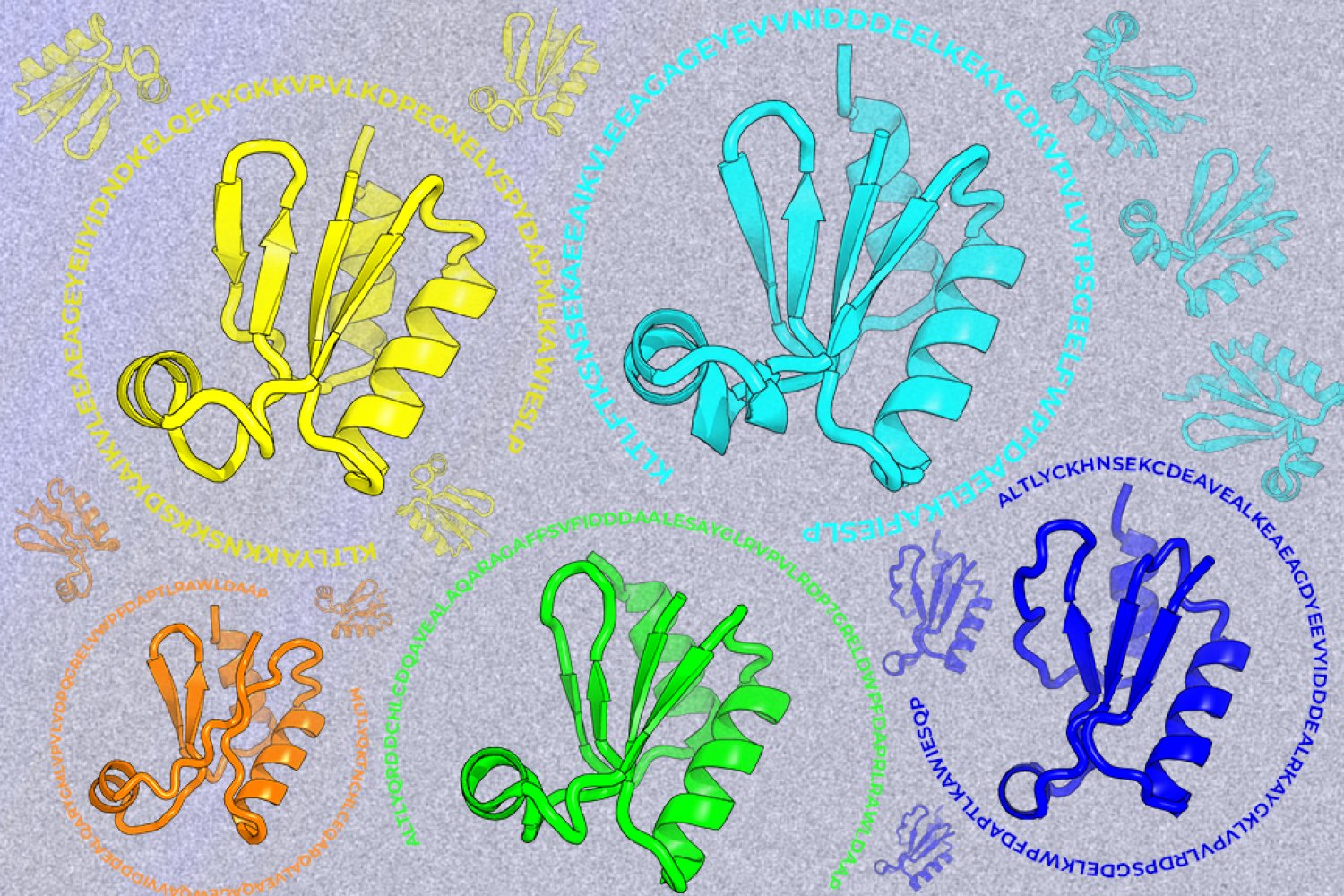
A new machine-learning framework aims to improve the success rate of computational protein design while moving away from results that reproduce sequences found in nature.

Google DeepMind Blog Nov 25, 2025

AlphaFold: Five years of impact

Explore how AlphaFold has accelerated science and fueled a global wave of biological discovery.