This reproducibility-focused software archive provides Pico-Former, an on-device curve–event glucose Transformer for ESP32-S3. It accompanies the manuscript Pico-Former: a curve–event glucose Transformer on ESP32-S3. The repository supports independent audit of four connected device designs: (1) a 96-token, width-48 en...
Qiang Liu, Ming Yang, Zijiaqi Wang et al.· Zenodo (CERN European Organi...· 0 citations
This study examines the relationships between curiosity and soft skills levels in pre-service teachers (N = 560) studying in six different teacher training programs, using multigroup structural equation modeling via academic achievement (grade point average, GPA). Based on Kashdan et al.'s (2018, 2020) Revised Five-Dim...
Türker Sezer, E. Özlem Yiğit, Necip Döner· ODÜ Sosyal Bilimler Araştırm...· 0 citations
Preregistration of a diagnostic accuracy study (STARD 2015) of Prostate Commander, a rule-based, explainable implementation of PI-RADS 2.1 for prostate MRI (AI used only for gland segmentation; ADC from measured b-values; rule-based lesion detection and categorisation). Index test: frozen software (11 Oct 2026, SHA-256...
Herbert Schuster· Open Science Framework· 0 citations
This independent technical note documents a reproducible reconstruction study based on the complete 100,000-event educational CMS W-to-muon-and-neutrino sample published through CERN Open Data (record 5205). All published event rows were analyzed without additional selection cuts. Under a fixed W-boson mass input of 80...
cxclrfx· Zenodo (CERN European Organi...· 0 citations
Reach audiences
Advertise in front of researchers, engineers, and readers.
Trust in a proof is supposed to rest on a kernel small enough to read by hand. The formal-methods ecosystem has instead grown a dozen large, mutually opaque kernels—one per proof assistant—and now machine learning floods all of them with proofs and programs no human can eyeball. We report a working demonstration that t...
The Institute for Applied Ontological Mathematics· Zenodo (CERN European Organi...· 0 citations
Summits on the Air (SOTA) certification in Austria requires a minimum topographic prominence of 150 m. This work presents an automated, reproducible workflow that computes national prominence directly on a raster digital terrain model, together with the post-computation review layers needed to reconcile the computed re...
Erwin Grabler· Zenodo (CERN European Organi...· 0 citations
Abstract. We introduce an extension of the Higher Order Methods Modeling Environment (HOMME) dynamical core that solves the non-hydrostatic deep-atmosphere equations of motion. We call this extension NHD HOMME. Our extension satisfies analogs of the mimetic properties obeyed by the operational non-hydrostatic shallow-a...
Owen Hughes, Oksana Guba, Mark A. Taylor et al.· 0 citations
Probabilistic cloud state machine (PCSM) theory [1] formalises the classical control layer of quantum computation as a geometric model on the space of stable probability distributions. This paper reports the implementation path from that theory to a usable Python programming interface, together with hardware-validation...
kaifa chen· Zenodo (CERN European Organi...· 0 citations
Connections: neighbouring differences, distant likenesses is a standalone excerpt from The Toasty Book of Bread: An Illustrated Guide to the World's Greatest Loaves by Austin Welsh-Graham, part of the Toasty Panetteria book series. These six illustrated essays explore bread through the work it does. They follow neighbo...
Austin Welsh-Graham· Zenodo (CERN European Organi...· 0 citations
BiCalc is an Android calculator that shows every number and every calculation result at the same time as digits and as words in the Biak language (Wos Byak), so that everyday arithmetic becomes a way to learn Biak numerals. This study aims to design and implement the calculator with an ethnomathematics approach, that i...
Nicole Koburger· Zenodo (CERN European Organi...· 0 citations
Per-unit results of the SIR test against Bliss independence for the two largest dose-matrix studies in DrugCombDB: 23,052 O'Neil units (drug pair x cell line x batch, four replicate 5 x 5 blocks; reported single-agent curves held fixed) and 227,323 NCI-ALMANAC 4 x 4 plates (single agents measured on the same plate). Ea...
Amir Asiaee, James P. Long, Samhita Pal et al.· Zenodo (CERN European Organi...· 0 citations
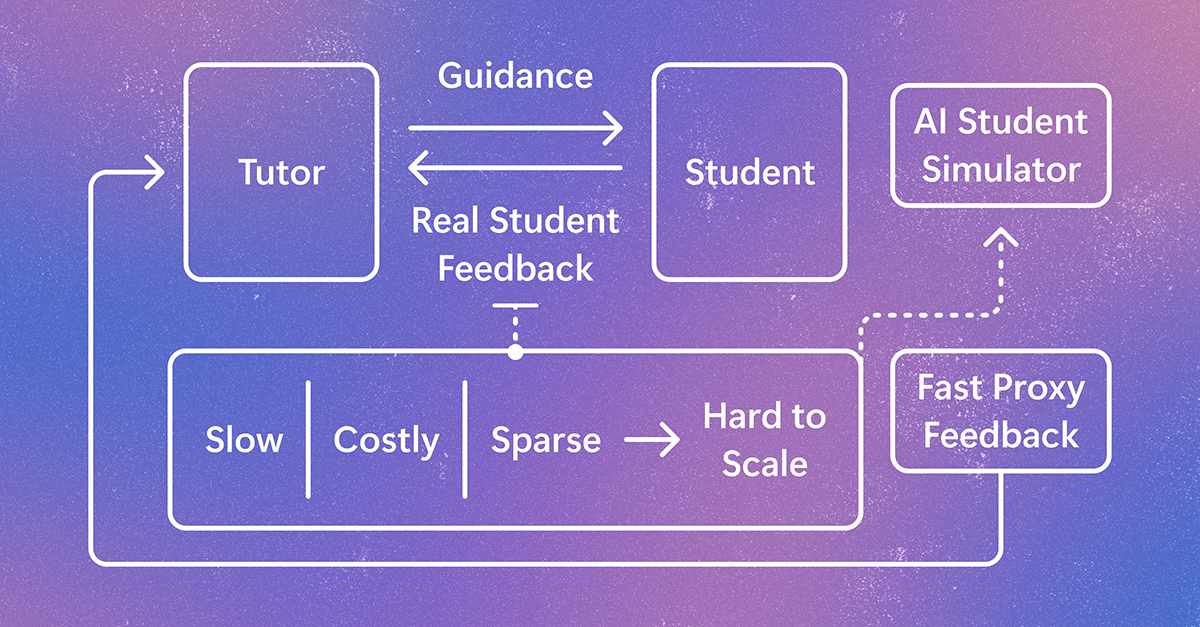
StudentSim is a research system for evaluating and improving AI tutoring tools before they are tested with learners. It models how individuals may engage with tutors, giving feedback to improve tutor performance across subjects like chess, writing, and mathematics. The post Simulating student learning for better AI tutoring appeared first on Microsoft Research.
MIT News · Artificial Intelligence· news.mit.eduOct 6, 2026
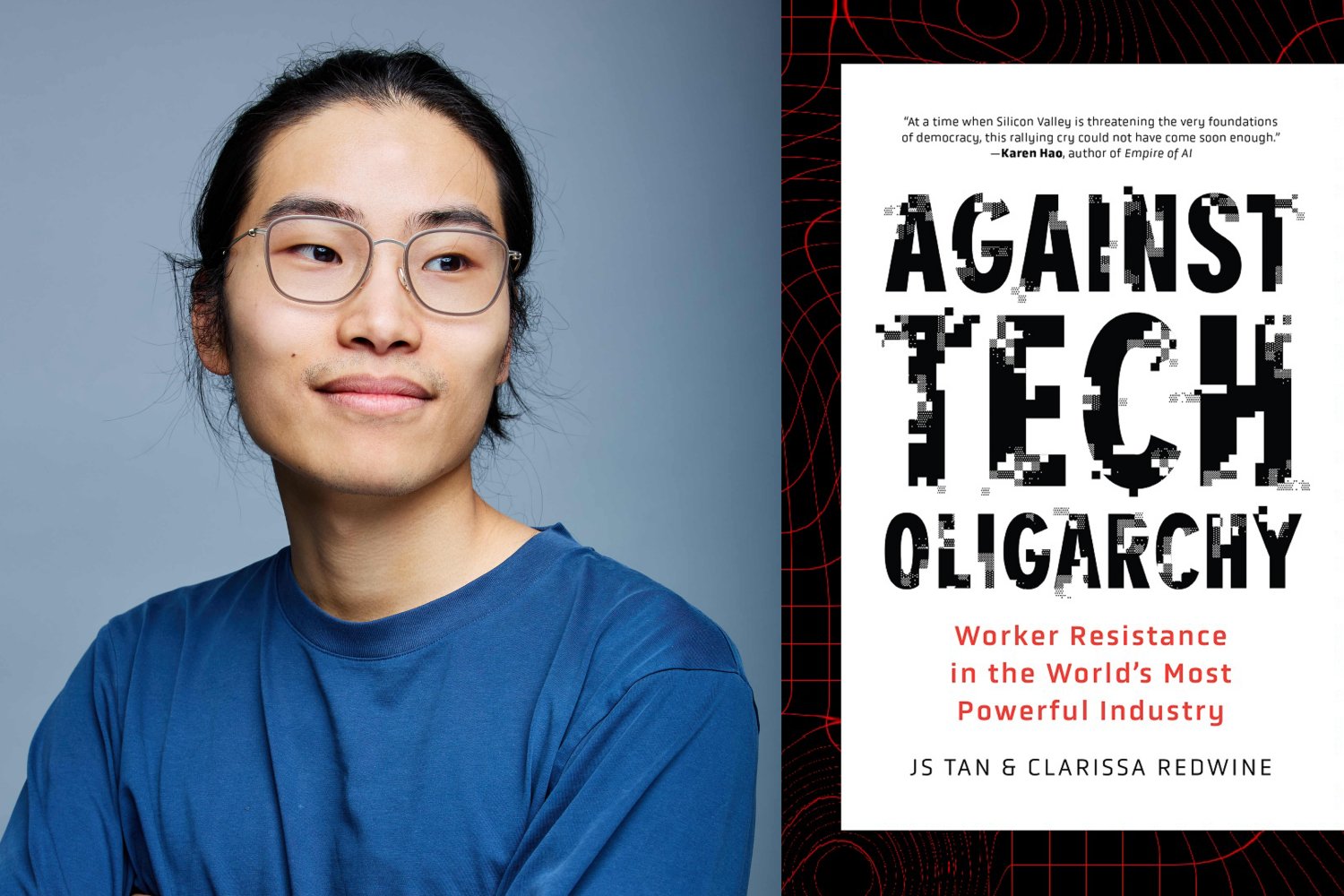
Writing as a participant and researcher, PhD student JS Tan SM ’22 has co-authored a new book about the rise of tech worker protests and the employer backlash that followed.
MIT News · Artificial Intelligence· news.mit.eduOct 2, 2026
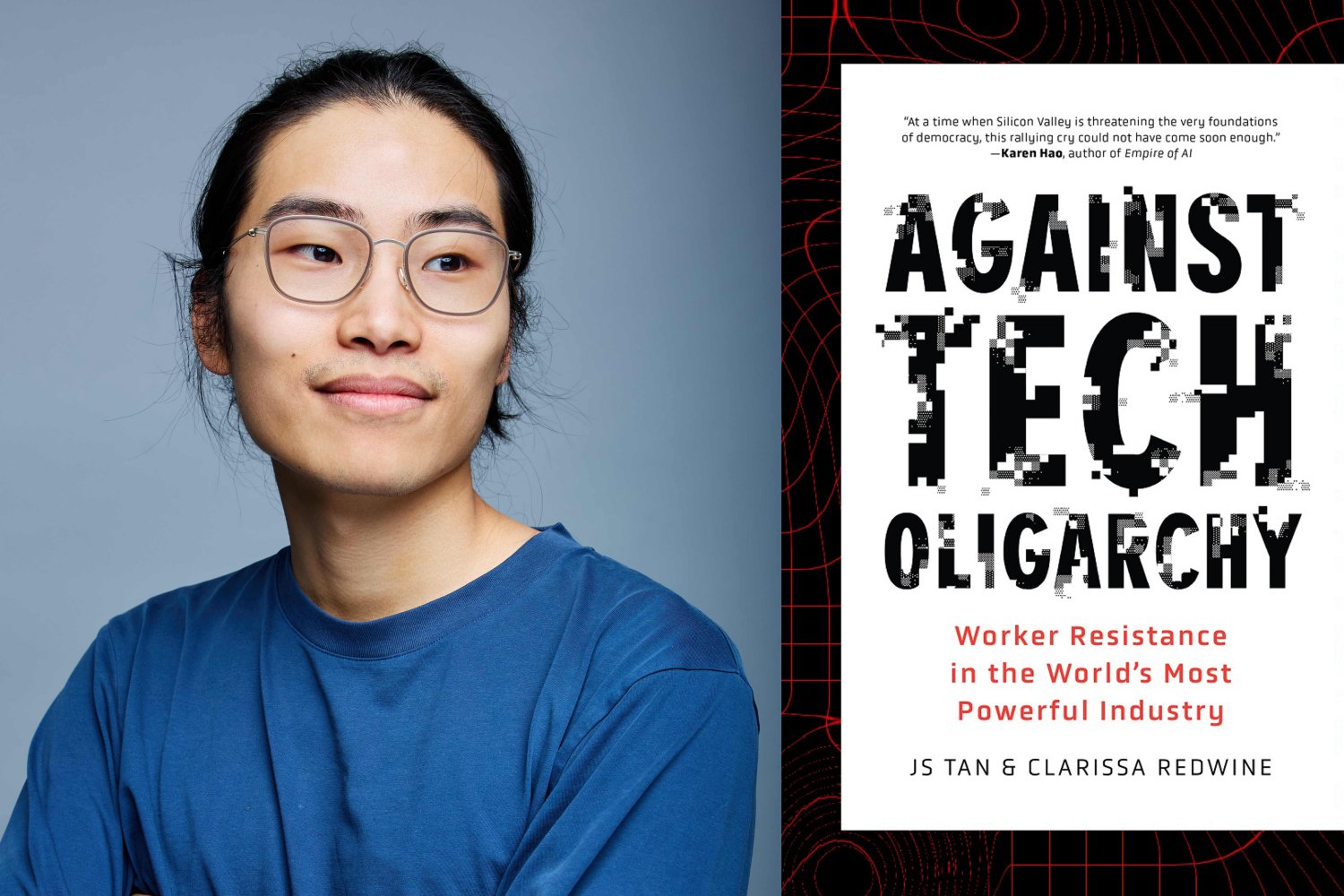
Writing as a participant and researcher, PhD student JS Tan SM ’22 has co-authored a new book about the rise of tech worker protests and the employer backlash that followed.
Requirements in large systems rarely exist in isolation. Their meaning depends on the wider project context - other requirements, policies, decisions, tests, and implementation details. That becomes especially important when AI is used for review, because spotting a possible conflict or gap is only the beginning. ReqSpace explores how AI, visualisation, and connected project context can help reviewers understand those findings, trace the relationships behind them, and focus on the questions that…
We use cookies to run the site and, with your consent, for analytics and to show ads.
See our Cookie Policy.