Analysis code, frozen derived results and figure source data for "Genetic and ovarian multiomics prioritize tissue-informed regulatory candidates for polycystic ovary syndrome" by Liqiao Huang, Xiaohui Bi and Ran Chen. Version 2026.10.11.3 synchronizes the Scientific Reports writing revision, current main-figure labels...
LIqiao Huang, Xiaohui Bi, Ran Chen· Zenodo (CERN European Organi...· 0 citations
This spreadsheet serves as the primary data repository and artifacts log for the execution of a Systematic Mapping Study (SMS) on Software Product Discovery, developed for the accompanying paper submitted to the Brazilian Symposium on Software Quality (SBQS). The dataset documents the end-to-end execution of the system...
Daniel Kuhn· Zenodo (CERN European Organi...· 0 citations
Abstract Adjacent building clusters with narrow separation gaps are vulnerable to large relative seismic responses and pounding. To address this issue, this study investigates a velocity-amplified torsional eddy current damper (VATECD) for vibration control of adjacent structures. The VATECD combines a torsional eddy c...
Wenxi Wang, Zhiwei TANG, Zihao Cao et al.· Smart Materials and Structur...· 0 citations
English AC136 AUX Federator v1.0 is an autonomous, read-only auxiliary research toolkit developed to support the AC136 Causal Solver framework without modifying, installing, or activating its sovereign execution environment. The release consolidates 25 cumulative development passes (PASS001–PASS025) into a reproducible...
Son David Bolduc· Zenodo (CERN European Organi...· 0 citations
Reach audiences
Advertise in front of researchers, engineers, and readers.
Shopping spaces, serving not only as centers of commerce but also as key areas promoting social interaction, are environments where users spend significant amounts of time. In such spaces, the limited capacity of buildings to utilize natural daylight poses challenges in terms of energy efficiency and design. To address...
This is a PRE-EXECUTION PROTOCOL and local preflight artifact, NOT a completed three-host validation result. The archived local smoke test executed 25 checks successfully on a single host with two localhost service processes. A separate local role-scoping test was reported as 13/13 successful during artifact preparatio...
Burak Oktenli· Zenodo (CERN European Organi...· 0 citations
Cultural heritage preservation in Papua is constrained by uneven internet connectivity and by the scarcity of interactive media that carry local cultural knowledge. This article reports the design and analysis of Biak Art Gallery, an Android application that presents nine cultural objects of the Biak-Numfor people as i...
Nico Koibur· Zenodo (CERN European Organi...· 0 citations
This preprint proposes a three-layer architectural model of consciousness — Avatar (Hardware), Interface (Software), and Processor (Core) — and argues that the current race toward AGI is architecturally incomplete. Silicon Valley builds increasingly sophisticated Interfaces (LLMs, multimodal models, agentic systems) bu...
Evr Hanna· Zenodo (CERN European Organi...· 0 citations
Version 1.0.0 of research software and auditable development records, not a validated fundamental theory. Candidate A investigates a geometric/energy re-description within GR; no precise universal functional is established. Real-data work includes SPARC penalized profiles and covariance-aware Pantheon+/DESI baselines....
Kirk LaSalle· Zenodo (CERN European Organi...· 0 citations
This research software archive provides ROS 2 Jazzy simulation code, configuration files, occupancy-grid maps, TUM trajectory data, and EVO evaluation artifacts for four experimental configurations: GMapping GMapping with YOLOv8n Cartographer Cartographer with YOLOv8n The project uses TurtleBot3, Gazebo Sim, and ROS 2...
Eslam Ibrahem Hamed· Zenodo (CERN European Organi...· 0 citations
MIC-50-90 1.0.0 combines MIC50/MIC90, observed extremes, exact or bounded counts and explicitly rounded percentages to describe MIC distributions compatible with incomplete laboratory reports. The Windows application and command line produce graphical HTML reports, CSV/JSON results and reusable settings. Users can dist...
Maciej Kochanowski· Zenodo (CERN European Organi...· 0 citations
The integration of high precision orientation sensors into resilient communication infrastructures is a key requirement for next-generation autonomous systems. Digital compass sensors typically generate data in the NMEA format, whereas distributed control architectures in mobile robotics predominantly utilize the CAN 2...
İ̇lker Ünal, Osman Eceoğlu· Turkish Journal of Agricultu...· 0 citations
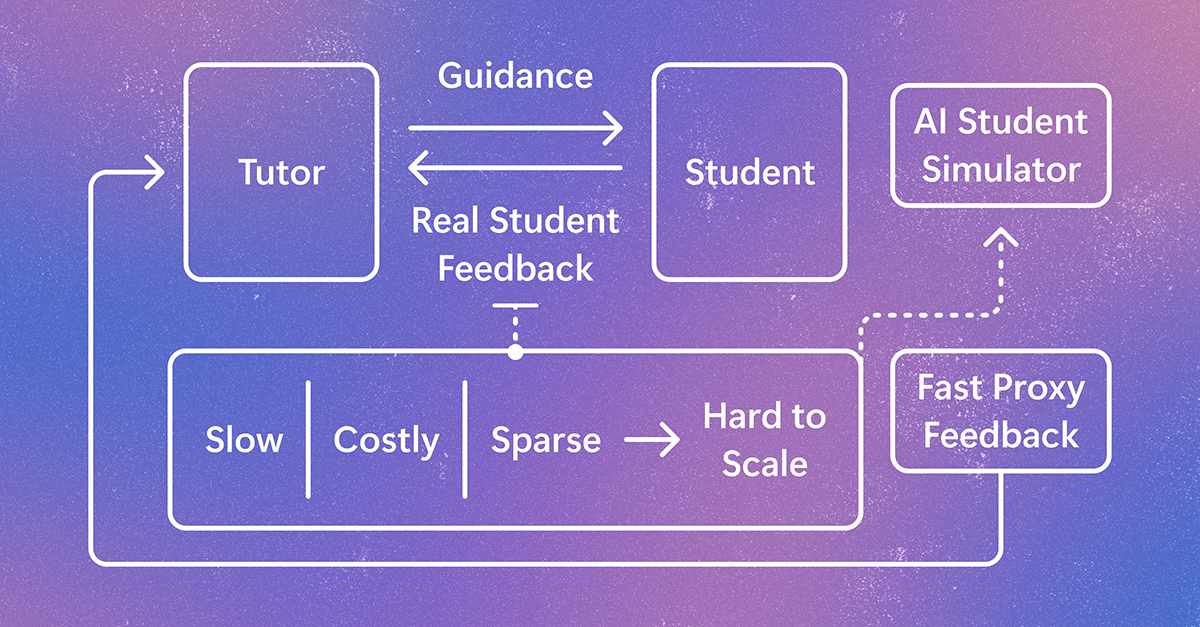
StudentSim is a research system for evaluating and improving AI tutoring tools before they are tested with learners. It models how individuals may engage with tutors, giving feedback to improve tutor performance across subjects like chess, writing, and mathematics. The post Simulating student learning for better AI tutoring appeared first on Microsoft Research.
MIT News · Artificial Intelligence· news.mit.eduOct 6, 2026
Writing as a participant and researcher, PhD student JS Tan SM ’22 has co-authored a new book about the rise of tech worker protests and the employer backlash that followed.
MIT News · Artificial Intelligence· news.mit.eduOct 2, 2026
Writing as a participant and researcher, PhD student JS Tan SM ’22 has co-authored a new book about the rise of tech worker protests and the employer backlash that followed.
Requirements in large systems rarely exist in isolation. Their meaning depends on the wider project context - other requirements, policies, decisions, tests, and implementation details. That becomes especially important when AI is used for review, because spotting a possible conflict or gap is only the beginning. ReqSpace explores how AI, visualisation, and connected project context can help reviewers understand those findings, trace the relationships behind them, and focus on the questions that…
We use cookies to run the site and, with your consent, for analytics and to show ads.
See our Cookie Policy.