In this paper we present synthetic Very Long Baseline Interferometry (VLBI) observations of M87 between a near-future configuration of the Event Horizon Telescope (EHT) and one or multiple 2.5 m-class balloon-borne VLBI stations on a northern transatlantic flight trajectory launching from Kiruna, Sweden. These balloon-...
Felix M. Thiel, D. Pesce, Mayukh Bagchi et al.· 0 citations
Agentic capabilities are increasingly important for modern LLMs, yet remain difficult to evaluate during pretraining. Existing approaches typically rely on static trajectory-derived tasks or likelihood-based proxies, which are lightweight but provide limited visibility into how base models behave in interactive environ...
Jia-Rui Qin, Jun-Jie Huang, Yun-Jia Xi et al.· 0 citations
Transistor-level SKY130 simulations show that the second run gives the gradient within 1.9%; that hardware linearisation permits large, noise-robust error signals; that a 13-cell network learns the Iris data set; and that learning in situ restores mismatched circuits on which software-trained weights fail, from 53-63%...
P2Patch is presented, a generative adversarial repair system that treats each patch as a new attack target and shows that adversarial testing and independent security oracles expose repair gaps that one-shot validation misses.
M. Iranmanesh, S. Sabet, Sina Marefat et al.· 0 citations
Reach audiences
Advertise in front of researchers, engineers, and readers.
Impossible Mission Finder is presented, a multi-agent system combining static analysis, dynamic execution and log analysis, that supports fully automated identify, test, and validate logic flaws in autonomous vehicles, leading to 105 previously unknown logic flaws.
Zi-Yi Liang, Zi-Chuan Li, Bin Yuan et al.· 0 citations
SWE-Stream is presented, a system for scaling executable SWE training data through progressive construction and elastic streaming execution, which progressively validates and refines task candidates, reusing existing artifacts when possible and applying targeted completion only when necessary.
Cheng-Yang Liu, Wen Yang, Shi-Feng Chen et al.· 0 citations
An automated approach to inject unsafe code coverage oracles, which require no forward porting, avoid overfitting, and allow updating test sets in the future are introduced, to quantify the performance of a security tool.
Results indicate that cross-OS migration is a challenging and underexplored capability, and OS-Bench is a testbed for improving platform-aware SWE agents.
Generating datasets with audio plugins requires preserving how each audio observation was produced. vst-bench-ml is a Python package that samples plugin parameters, coordinates rendering through a separately installed host, and records software identities, rendering settings, and output hashes for later verification. A...
Recovered artefacts convey design that tests do not capture, offering a scalable source of design-level data for agents that design before they implement, and the round trip measures this without human references.
Cezar Sas, Sandra Mitrović, Fabio Barth et al.· 0 citations
SWE-Nexus enables task construction from validated behavior beyond individual historical changes, a fully automated pipeline that constructs repository-level implementation tasks from test execution from test execution.
Song-Wei Yu, Zi-Qi Miao, Jing-Xuan Xu et al.· 0 citations
What this is. The complete, unfiltered result of the Phygas search for the pulsar PSR J0931-1902: for each of 4,085 young open clusters and moving groups (of 4,087 in the catalogue; the others were excluded by a distance prefilter) it records how close, how long ago and at what relative speed the pulsar and the cluster...
Alperen Yavuz· Zenodo (CERN European Organi...· 0 citations
StudentSim is a research system for evaluating and improving AI tutoring tools before they are tested with learners. It models how individuals may engage with tutors, giving feedback to improve tutor performance across subjects like chess, writing, and mathematics. The post Simulating student learning for better AI tutoring appeared first on Microsoft Research.
MIT News · Artificial Intelligence· news.mit.eduOct 6, 2026
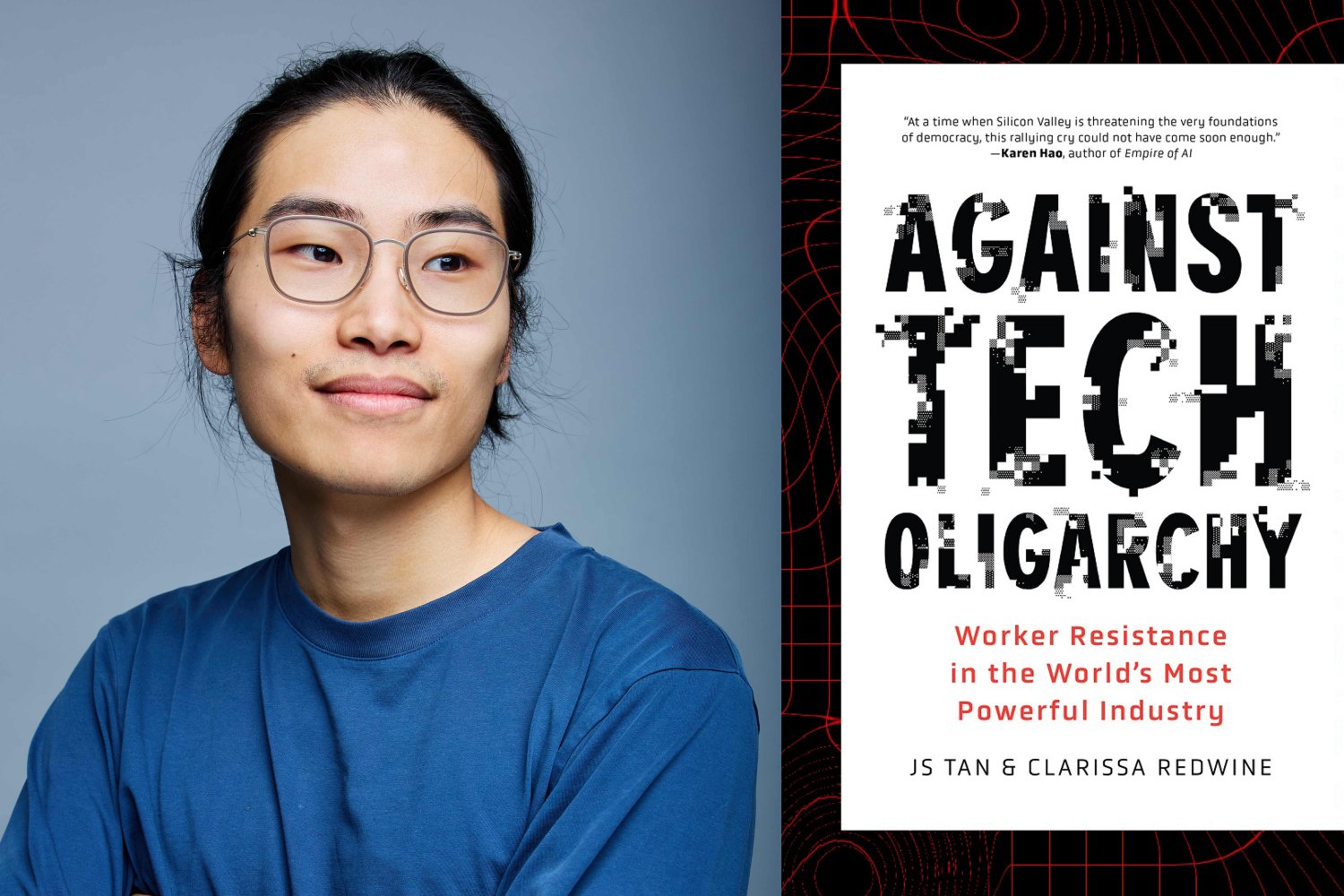
Writing as a participant and researcher, PhD student JS Tan SM ’22 has co-authored a new book about the rise of tech worker protests and the employer backlash that followed.
MIT News · Artificial Intelligence· news.mit.eduOct 2, 2026
Writing as a participant and researcher, PhD student JS Tan SM ’22 has co-authored a new book about the rise of tech worker protests and the employer backlash that followed.
Requirements in large systems rarely exist in isolation. Their meaning depends on the wider project context - other requirements, policies, decisions, tests, and implementation details. That becomes especially important when AI is used for review, because spotting a possible conflict or gap is only the beginning. ReqSpace explores how AI, visualisation, and connected project context can help reviewers understand those findings, trace the relationships behind them, and focus on the questions that…
AI is making software generation faster, but speed does not remove the need for expertise. As more work is delegated to AI, tacit knowledge may become one of the most important human advantages in software engineering. The post Beyond Prompt Engineering: The Role of Tacit Knowledge in Software Engineering appeared first on GPT-Lab.
We use cookies to run the site and, with your consent, for analytics and to show ads.
See our Cookie Policy.