A new approach uses soft computing to model an orifice-weir system inside open-source drainage software. As climate change alters urban runoff patterns, innovative nature-based engineering solutions like staggered detention ponds are increasingly necessary. Still, intricate hydraulics typically demand high-end simulati...
Darrien Yau Seng Mah, Afdal Haziq bin Mohamad Salehe, Mohammad Farid· International Journal of Civ...· 0 citations
The findings establish that software can effectively bridge the gap between statutory requirements and practical implementation by translating legal provisions into verifiable technical controls by translating legal provisions into verifiable technical controls.
J. Chukwuemeka· World Journal of Biology Pha...· 0 citations
An investigator led dialogue with artificial intelligence provides a foundation for a systems level understanding of diabetic bone marrow dysfunction and may facilitate the generation of testable hypotheses and the identification of mechanistic targets for coordinated restoration of disrupted niche interactions.
It is commonly thought that fast radio bursts (FRBs) trace star formation, and that they are produced by magnetars. Both hypotheses imply that their sources are hosted primarily (but not exclusively) in galactic disks. Although there is evidence in that direction, it has yet to be shown conclusively. In addition, a ten...
L. Marnoch, S. Ryder, S. Simha et al.· 0 citations
Reach audiences
Advertise in front of researchers, engineers, and readers.
TestSuiteBench is introduced, a benchmark of 165 open-source applications, each with a structured and detailed specification of intended behavior, a reference implementation, a reference test suite, and on average 74 mutants, showing agents can build software they cannot verify, a gap that directly limits fully autonom...
Kazuki Egashira, Niels Mündler-Sasahara, Mark Niklas Müller et al.· 0 citations
Large language models (LLMs) have shown strong results in classical code generation and are increasingly used to write the unit tests that safeguard that code. Whether they can do the same for quantum software is less clear, because quantum programs are probabilistic, depend on numerical tolerances, and are judged by d...
Meriem Terki, Nouhaila Innan, Ming-Hao Shao et al.· 0 citations
Large Language Models (LLMs) are increasingly used throughout the software development lifecycle. This growing reliance on LLMs raises concerns about their trustworthiness, with deception posing a particularly important risk. Deceptive behavior takes the form of misleading responses or assistance in fabricating, concea...
Xi-Ting Liu, Lin Yang, Yi-Tong Zhang et al.· 0 citations
Coding agents are increasingly used to build programs from scratch as software engineers do rather than to resolve issues within a repository or to generate a repository from a given requirements document. However, scalable verifiable training environments that force agents to discover what is required and to decide ho...
Cheng-Yi Yang, Ren-Xu Bao, Jue Hou et al.· 0 citations
Current software engineering agents are evaluated predominantly inside isolated sandboxes against synchronous local tests. However, deploying features in collaborative repositories requires modifying continuous integration (CI/CD) pipelines, containers, and provisioning manifests alongside application logic. Because ag...
Mohammad Wathiq Soualhi, Basem Suleiman· 0 citations
Coding agents are increasingly deployed for end-to-end software engineering tasks, where a readily available oracle evaluator that defines the success criteria is often absent. This motivates verifications for coding agents that can reliably judge and explain their behavior. However, verification is non-trivial as codi...
A software-first open-source workflow in which a declarative profile is converted into a canonical packet table, analyzed separately at per-node and merged-stream levels, and accompanied by manifests and integrity hashes is presented, intended to help researchers inspect the configuration-to-evidence chain and to help...
Lorenzo Fanari, П. Я. Галан, Angel Monteagudo· Software· 0 citations
A reproducible web-based technology that integrates data ingestion, automated data-quality assessment, statistical validation, transparent rule-based analytical guidance, supervised and unsupervised machine learning, and interactive visual analytics within a unified workflow is presented.
Mariano Vargas Santiago, D. A. León-Velasco, S. Quezada-García et al.· Technologies· 0 citations
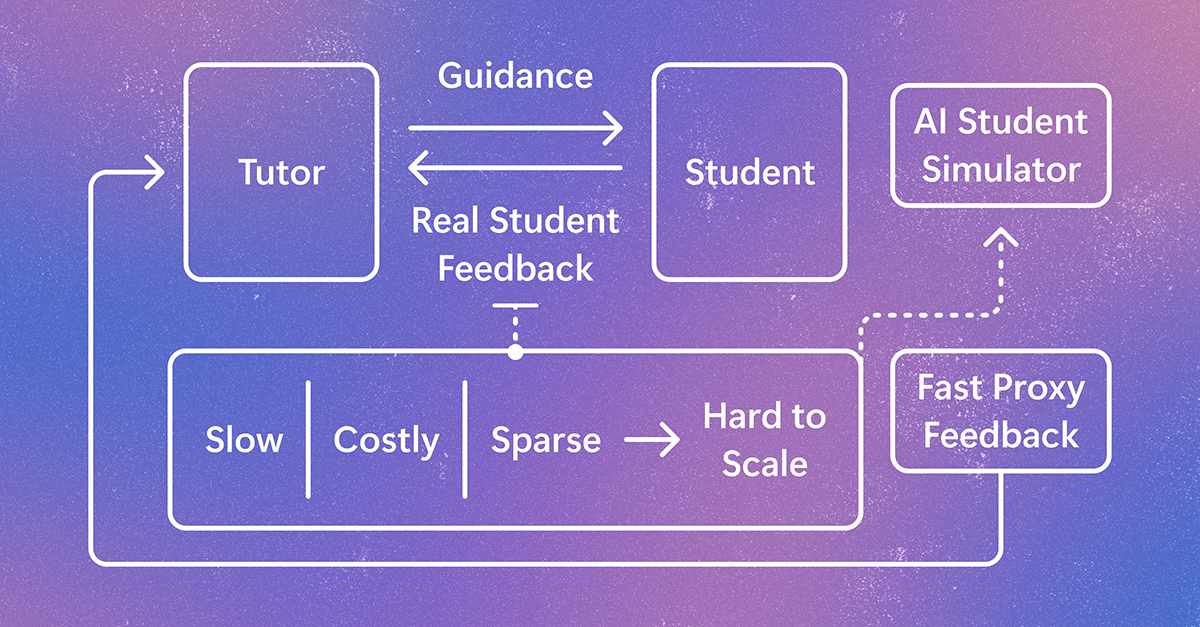
StudentSim is a research system for evaluating and improving AI tutoring tools before they are tested with learners. It models how individuals may engage with tutors, giving feedback to improve tutor performance across subjects like chess, writing, and mathematics. The post Simulating student learning for better AI tutoring appeared first on Microsoft Research.
MIT News · Artificial Intelligence· news.mit.eduOct 6, 2026
Writing as a participant and researcher, PhD student JS Tan SM ’22 has co-authored a new book about the rise of tech worker protests and the employer backlash that followed.
MIT News · Artificial Intelligence· news.mit.eduOct 2, 2026
Writing as a participant and researcher, PhD student JS Tan SM ’22 has co-authored a new book about the rise of tech worker protests and the employer backlash that followed.
Requirements in large systems rarely exist in isolation. Their meaning depends on the wider project context - other requirements, policies, decisions, tests, and implementation details. That becomes especially important when AI is used for review, because spotting a possible conflict or gap is only the beginning. ReqSpace explores how AI, visualisation, and connected project context can help reviewers understand those findings, trace the relationships behind them, and focus on the questions that…
We use cookies to run the site and, with your consent, for analytics and to show ads.
See our Cookie Policy.