It is suggested that physics-guided synthetic HFUS images contain transferable anatomical and textural cues for real-domain skin layer segmentation, although further reduction of the synthetic-real appearance gap is needed to enable greater gains.
Abstract
High-frequency ultrasound (HFUS) enables noninvasive visualization of superficial skin structures, but automated skin-layer analysis is limited by the scarcity of densely annotated data. Existing real HFUS datasets commonly provide annotations for superficial targets such as the epidermis and subepidermal low-echogenic band (SLEB), while dense labels for deeper structures such as dermis, subcutaneous tissue, fascia, and muscle are rarely available. We propose a physics-guided synthetic HFUS generation framework for skin layer segmentation. The framework constructs multilayer acoustic skin phantoms, assigns layer dependent acoustic properties, and uses k-Wave simulation to generate paired synthetic HFUS images, dense layer masks, and simulation metadata. To evaluate whether the generated data provide transferable supervision, we use it for downstream segmentation pretraining and fine-tune the models on real Mendeley HFUS data. Synthetic pretraining followed by real fine-tuning achieved real-domain performance comparable to real-only training and improved mean Dice/IoU in three of four evaluated trainable architectures. These results suggest that physics-guided synthetic HFUS images contain transferable anatomical and textural cues for real-domain skin layer segmentation, although further reduction of the synthetic-real appearance gap is needed to enable greater gains. The code and data are available at: https://github.com/Finn-02/synthetic-hfus-skin-layer-segmentation.
This publication proposes a definition and a classification of agile software development approaches and analyses ten software development methods that can be characterized as being "agile" against the defined criterion.
P. Abrahamsson, O. Salo, Jussi Ronkainen et al.· arXiv.org· 727 citations· ⚡54
The study shows that agile practices improve both informal and formal communication, but indicates that, in larger development situations involving multiple external stakeholders, a mismatch of adequate communication mechanisms can sometimes even hinder the communication.
M. Pikkarainen, Jukka Haikara, O. Salo et al.· Empirical Software Engineeri...· 401 citations· ⚡48
The results indicate that software engineering work practices are chosen opportunistically, adapted and configured to provide value under the constrains imposed by the startup context.
Nicolò Paternoster, Carmine Giardino, M. Unterkalmsteiner et al.· Information and Software Tec...· 394 citations· ⚡54
The possibility of inferring high-dimensional data inference in a model that consists of a prior and an auxiliary differentiable constraint given some additional information is considered, thereby allowing a range of potential applications in adapting models to new domains and tasks.
Alexandros Graikos, Esmeralda S. Whitammer, N. Jojic et al.· Neural Information Processin...· 316 citations· ⚡15
Exploring how generative AI could make machine vision more accessible to businesses. The post GenEye in a Box: Making Machine Vision Something You Can Just Ask For appeared first on GPT-Lab.
Microsoft Research Blog· microsoft.comAug 11, 2026
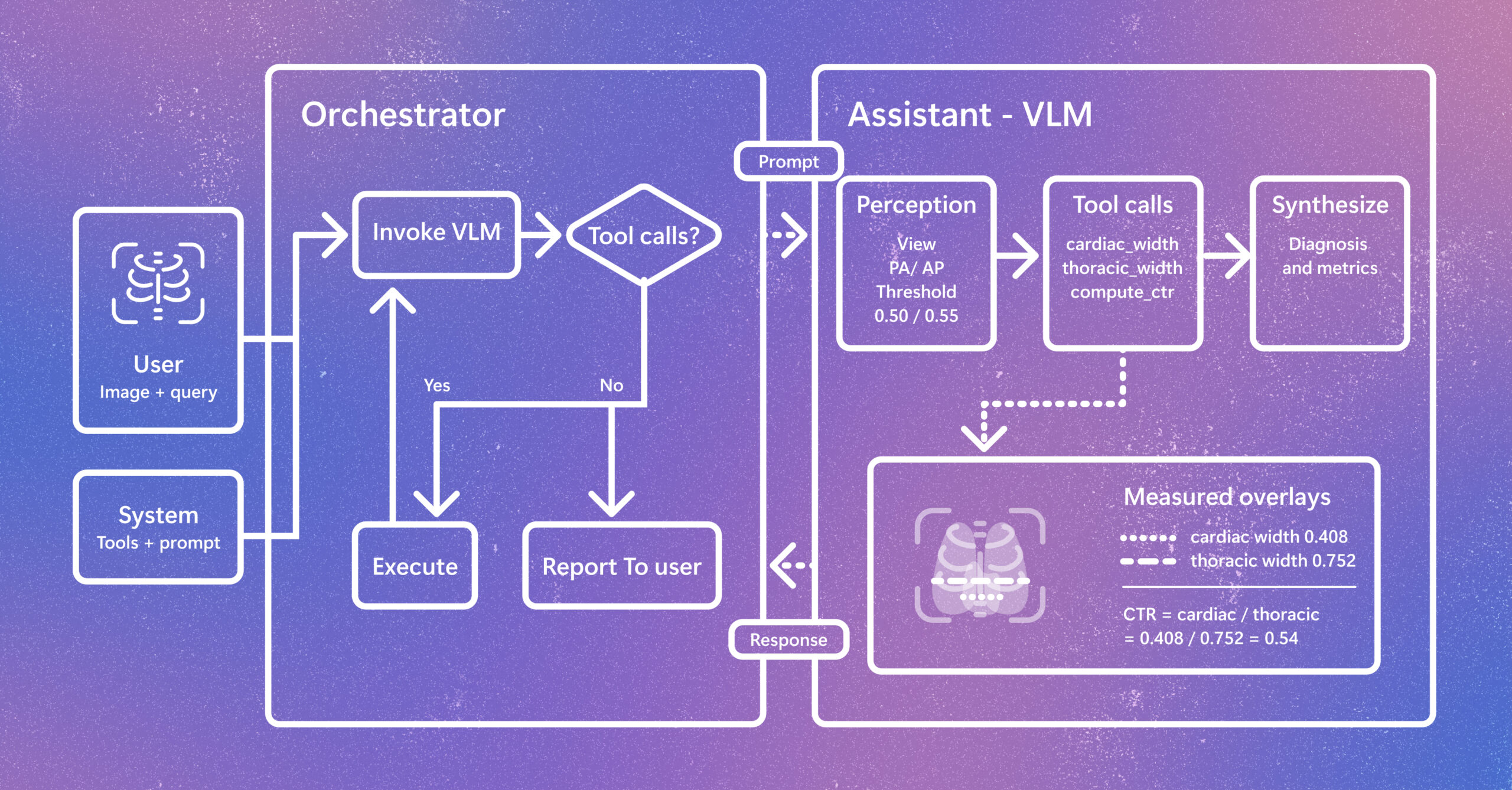
Radiology AI is evolving beyond report generation. CARE-X explores a unified approach that combines flexible reasoning, calibrated predictions, and measurement-based tools for chest X-ray interpretation. The post Introducing CARE-X: Towards Clinically Useful Radiology VLMs with Auxiliary Supervision, Reward-Aligned Learning, and Tool-Augmented Measurement appeared first on Microsoft Research.
StudentSim is a research system for evaluating and improving AI tutoring tools before they are tested with learners. It models how individuals may engage with tutors, giving feedback to improve tutor performance across subjects like chess, writing, and mathematics. The post Simulating student learning for better AI tutoring appeared first on Microsoft Research.
We use cookies to run the site and, with your consent, for analytics and to show ads.
See our Cookie Policy.