Foundational frameworks in visualization have operationalized literacy as an individual competency, measured through chart-comprehension tasks. This focus raises a question: why has measurement become the dominant frame for understanding literacy? Rather than asking whether literacy should be measured, we ask how measurement became the field's way of understanding it. We trace visualization literacy back through the history of textual literacy and argue that in adopting the term, the field imported three values rooted in early government statistics: quantification, individualization, and binary classification. To mark the shift this history makes possible, we distinguish two waves: a first centered on assessment and individual proficiency, and a second that treats literacy as a situated practice, attentive to how people use visualizations in context and to the purposes they serve. Examining the construct this way suggests that refining assessment instruments does not, by itself, settle what literacy is, and points to directions for second-wave research: formative studies of literacy in context, culturally grounded instruments, and critical reading. This paper shows that visualization literacy inherited its measurement frame rather than discovering it, offers a two-wave vocabulary distinguishing assessment-based literacy from situated practice, and connects the field to a critical-literacy tradition with concrete alternatives to measurement. These contributions allow us to treat measurement and meaning as two parts of a single question, shifting attention from who counts as literate to what literacy is meant to do.

This integrative research review panel examines how literacy researchers can cultivate more productive scholarship by working across, between, and against the methodological and theoretical boundaries that have traditionally organized our field. Each paper takes up a different dimension of this challenge. Jang introduc...
Bong-Gee Jang, Corrine M. Wickens, D. Townsend· Literacy Research Theory Met...· 0 citations
Pedagogical visualizations are not neutral tools of communication: they shape what they seek to make understandable. On this premise, this article introduces the research tree as a pedagogical visualization of the relationship between central components of the theory of science, and examines how such representations ca...
The review finds that AI literacy should not be reduced to technical competence alone and is best understood as a context-sensitive form of literacy that combines foundational knowledge, practical engagement, critical evaluation, ethical awareness, and pedagogical judgment.
Educational data literacy (EDL) has become a central concern for European schools as digitalization generates unprecedented volumes of sensitive data on minors, while the GDPR and AI Act impose constitutive constraints on data use. The conceptual landscape, however, remains fragmented: several traditions have proposed...
Flavio Manganello, G. Boccuzzi, Giancarlo Masi et al.· European Conference on e-Lea...· 0 citations
As generative artificial intelligence (GenAI) becomes embedded in educational evaluation, a key question arises: how are evaluative criteria for technology-integrated instruction constructed? This is particularly relevant when evaluating pre-service teachers' lesson plans, where assessment is shaped not only by the cri...
Chen Bitton, Guy Cohen, Anat Cohen· Ubiquity Proceedings· 0 citations
AI agents can generate code at a scale that’s hard for humans to review line-by-line. PDD Kit helps ensure the code is doing what the developer intended by creating formal specifications and testing against them. It converts developer intent into a Verus specification, proves AI-generated code meets it for every input, and uses tests where proofs aren't practical. Developers review intent, not every line. The post Formally verifying agent-written full-stack web apps with PDD Kit appeared first o…
Professor Paris Smaragdis develops computers with superhuman hearing for applications like speech recognition, music understanding, and environmental monitoring.
MIT News · Artificial Intelligence· news.mit.eduOct 23, 2026
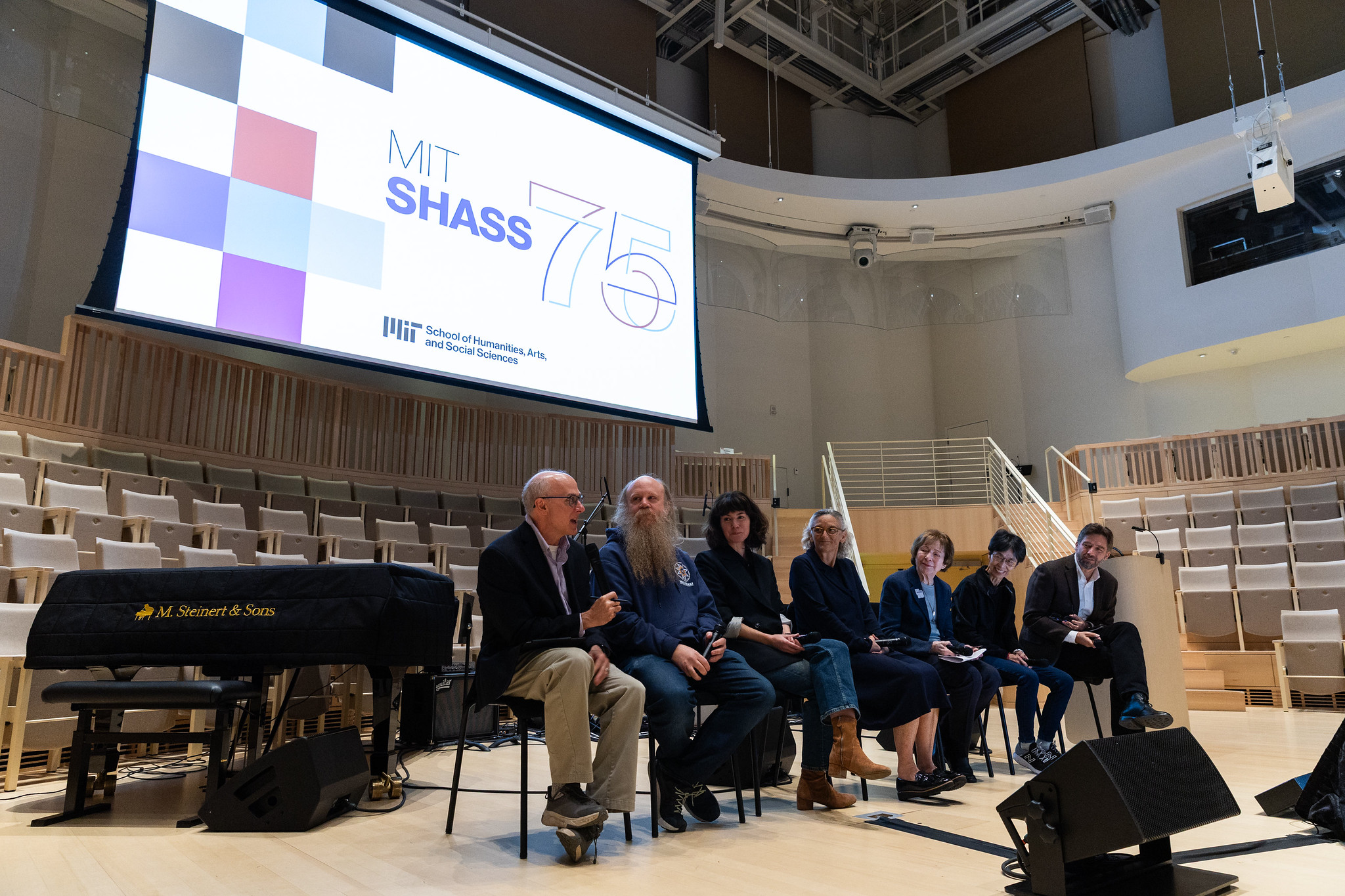
During the School of Humanities, Arts, and Social Sciences’ 75th Anniversary Symposium, President Sally Kornbluth said “MIT has never needed your particular insight and guidance more than we do now.”
We use cookies to run the site and, with your consent, for analytics and to show ads.
See our Cookie Policy.