Skip to content
#reinforcement learning Review Open access

A Systematic Survey of Smart Contract Fuzzing: Methods, Techniques, and Architectures for Ethereum and Beyond

Sep 2026 · Applied Sciences · Vol 16, pp. 9106 · 0 citations · 62 references

TL;DR

A conceptual taxonomy establishing an explicit correspondence between classical and smart contract fuzzing is developed and an architectural taxonomy of representative fuzzers unified under a generalised waypoint architecture is presented that exposes key feedback domains and composition gaps.

Abstract

Blockchain architectures increasingly rely on smart contracts as programmable execution components, yet the security challenges they introduce remain only partially addressed. Fuzz testing has emerged as one of the leading automated techniques for smart contract vulnerability discovery; however, a systematic treatment linking classical fuzzing concepts to the specific architectural constraints of smart contract execution environments has remained elusive. We conduct a large-scale systematic review of 258 publications collected from Scopus and Google Scholar. The review is structured around four research questions covering general fuzzing limitations, EVM execution constraints, cross-contract interaction challenges, and technique transferability. The contributions are fourfold. First, we develop a conceptual taxonomy establishing an explicit correspondence between classical and smart contract fuzzing. Second, we present an architectural taxonomy of representative fuzzers unified under a generalised waypoint architecture that exposes key feedback domains and composition gaps. Third, we provide a categorised technique review spanning coverage-guided, hybrid, and learning-based approaches. Fourth, we offer a reproducibility critique with a structured research roadmap. Coverage-guided greybox fuzzing emerges as the dominant paradigm (51.2% of the 121 SC fuzzer tools); learning-based approaches (machine learning, reinforcement learning, and LLMs) are a small but emerging class, with LLM-guided fuzzing the fastest-emerging subcategory by recency. Feedback-domain composition remains sparse: most surveyed fuzzers combine only a few of the eight identified feedback domains, and none approaches the full set, leaving several high-value multi-domain compositions unexplored. Open challenges include scalable stateful exploration, standardised benchmarks and oracles, and EVM-specific architectural optimisations. The complete categorised corpus, coding, and search strategy are openly available.
Read PDF

Similar papers

High Level Synthesis and Verification of Solidity Smart Contracts

This paper presents a framework where programmers can use schemas and reusable constructs for a given domain, which domain experts can then use to specify smart contracts in familiar terms and concepts rather than in a specialized programming language.

Yun-Tao Cai, Keerthi Nelaturu, A. Veneris · 0 citations
Conference Aug 2026

Blockchain-Enabled Smart Contracts: Architecture, Applications, Security Challenges, and Future Directions

Blockchain technology has expanded from a system of verifying and recording peer-to-peer cryptocurrency transactions to a general-purpose system that has the capability to execute self-enforcing agreements in a digital form, called a smart contract. Smart Contracts remove the need for a trusted third party by decentral...

Harshraj N. Gadbail, Rajendra M. Rewatkar, Nupur G. Kamdi et al. · 0 citations
Open access Aug 2026

Adaptive Multi-Agent Explainable Smart Contract Auditing Framework (AMESCAF): A Hybrid Approach Integrating Static Analysis, Symbolic Execution, Formal Verification, and Explainable Artificial Intelligence for Next-Generation Blockchain Security

 Smart contracts are a crucial element in blockchain technology, enabling the decentralisation and automation of digital transactions. However, re-entrancy, access control, integer overflows and logic errors all pose a danger to their security and reliability. Previously available audit solutions rely on a single analy...

Alfiya Sayyad, Tushar H. Ghorpade, Vanita Mane et al. · 0 citations
Preprint Sep 2026

IntentFuzz: A Protocol-Aware Fuzzer for Automated Invariant Violation Detection in Intent-Based Cross-Chain Bridges

This work proposes IntentFuzz: a protocol-aware fuzzer that recovers a bridge's intent structure and deposit/fill function roles directly from unannotated Solidity source, then synthesizes multi-step fuzz sequences using an LLM-based fallback to help build call arguments.

André Augusto, Christof Ferreira Torres, André Vasconcelos et al. · 0 citations

Related blog posts

Microsoft Research Blog Sep 30, 2026

Forecasting space weather risks on power grids

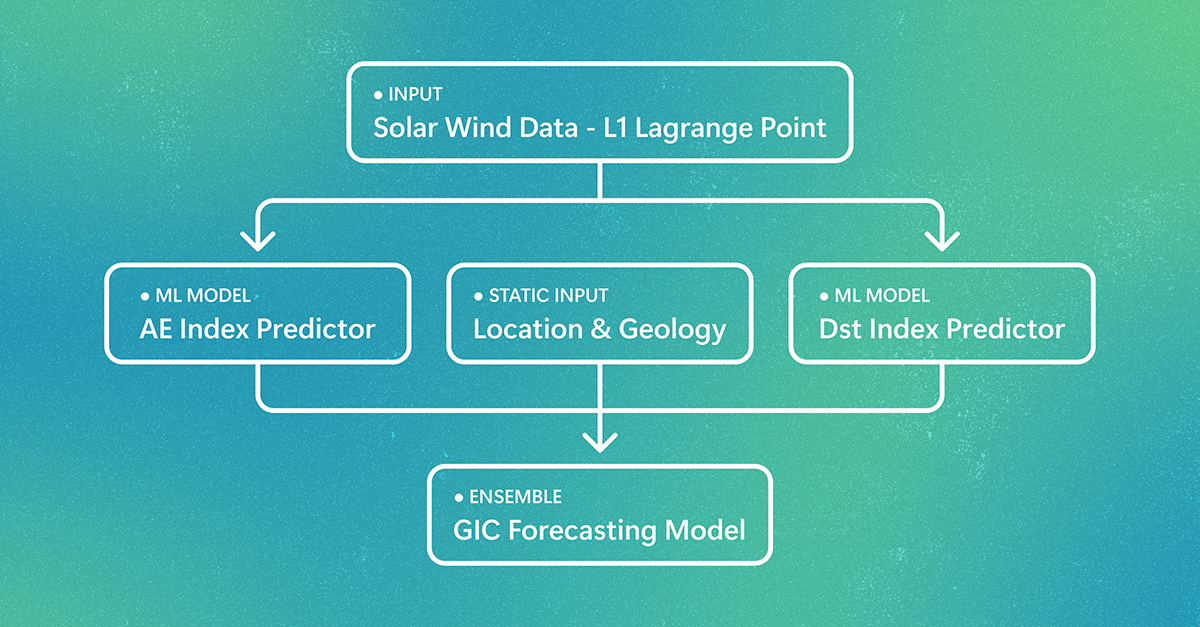
Extreme space-weather events can damage power systems on Earth and degrade GPS accuracy and satellite operations. A new machine learning system can predict where damage is likely to occur 30-60 minutes before a storm arrives. The post Forecasting space weather risks on power grids appeared first on Microsoft Research.

We use cookies to run the site and, with your consent, for analytics and to show ads. See our Cookie Policy.