LWVIC4Code is proposed, a non-contrastive representation learning approach specifically designed for Type-IV clone detection that achieves competitive or superior performance without negative samples, benefits from layer-wise supervision, and generalizes effectively from Python to other languages, particularly Java and C#.
Abstract
Software clones are fragments of code that are similar or functionally equivalent to each other. They pose significant challenges for maintenance, refactoring, and bug detection. Detecting Type-IV clones, which are semantically equivalent but may differ syntactically, is particularly difficult for traditional token- or syntax-based methods. Recent machine learning approaches rely on contrastive learning, which requires careful negative sampling and can introduce bias. In this paper, we propose LWVIC4Code, a non-contrastive representation learning approach specifically designed for Type-IV clone detection. Building on the Variance-Invariance-Covariance Regularization (VICReg) framework and prior layer-wise VICReg training, LWVIC4Code introduces cross-layer consistency regularization and depth-dependent layer weighting to progressively refine semantic information across transformer layers, producing robust and discriminative code representations. We conduct an empirical study comparing LWVIC4Code against a contrastive learning baseline and zero-shot large language models on Python (Kamino) and multi-language (GPTCloneBench) datasets. Results show that LWVIC4Code achieves competitive or superior performance without negative samples, benefits from layer-wise supervision, and generalizes effectively from Python to other languages, particularly Java and C#. These results demonstrate that non-contrastive, layer-wise representation learning is a promising direction for robust semantic code clone detection.
This work presents a deep learning approach for multilingual vulnerability detection that emphasizes semantic transfer rather than architectural complexity and suggests that stabilizing semantic representations during transfer is key to improving generalization while maintaining practical efficiency under moderate comp...
Tuan Nguyen Kim, Nin Ho Le Viet, Chieu Ta Quang· Engineering, Technology &...· 0 citations
Findings indicate that ensembling approaches can be statistically significant and effective on larger datasets, where the best-performing ensemble improved performance by 37% over its individual LLMs on the commercial large-scale code.
M. Chochlov, Gul Aftab Ahmed, J. Patten et al.· ACM Transactions on Software...· 1 citation
JavaScript and TypeScript are widely used in modern web development, making their security critical; however, automated vulnerability detection is often constrained by the availability of high-quality training data. Here we present JsVul, a dataset curated from seven major sources. Unlike generic multi-language dataset...
This paper introduces a programming language-agnostic, transferable, adversarial attack that exploits this CLM vulnerability and demonstrates that this attack, even when computed using smaller code embedding models, is highly effective and transferable to larger, closed-source embedding models.
Kaicheng Wang, Liyan Huang, Jesse Thomason et al.· 0 citations
Bug localization is the task of automatically identifying the source files responsible for a reported defect. It is a critical step in software maintenance that accelerates defect resolution. Information retrieval (IR) methods are simple and effective at exploiting historical signals such as bug-fixing recency and freq...
Amany AlBatlaa, M. Abdullah-Al-Wadud· Electronics· 0 citations
LLM-based code generation is now embedded in mission-critical pipelines, but defenses against vulnerable output remain post-hoc -- static analyzers, fine-tuned classifiers, or an LLM judge that screen completed code, ignoring the generating model's own internal state. We test a narrower, directly measurable question: w...
Martin Trust Center Managing Director Bill Aulet introduces Dear Dreamer, a free platform for middle and high school students who want to learn about entrepreneurship.
Microsoft Research Blog· microsoft.comSep 30, 2026
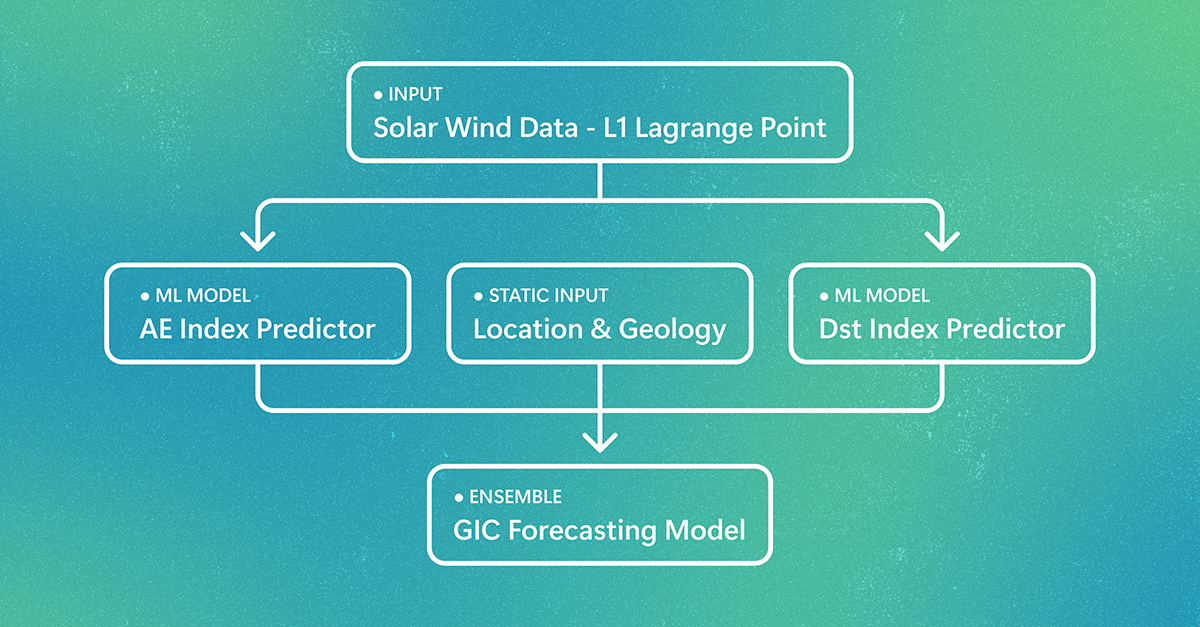
Extreme space-weather events can damage power systems on Earth and degrade GPS accuracy and satellite operations. A new machine learning system can predict where damage is likely to occur 30-60 minutes before a storm arrives. The post Forecasting space weather risks on power grids appeared first on Microsoft Research.
MIT News · Artificial Intelligence· news.mit.eduSep 29, 2026
Professor Sherry Turkle’s new book, “Artificial Intimacy,” offers a withering critique of chatbots and the antisocial dynamics she believes they encourage.
We use cookies to run the site and, with your consent, for analytics and to show ads.
See our Cookie Policy.