Skip to content

Assurance Envelopes for Autonomous Coding Agents: Minimum-Cost Evidence for Software Change

Sep 2026 · 0 citations · 50 references
Computer Science

TL;DR

The contribution is a bounded application of established optimization to selecting assurance context for a software change; discovering the obligations and downstream agent benefit remain open.


Abstract

When a coding agent returns to existing software, it inherits evidence from earlier engineering work: tests, type checks, proofs, static analyses, and traces. Reloading all of it is wasteful, but dropping a piece the change depends on can leave a required property unsupported. Given the properties a change must preserve, its obligations, we ask which least-cost subset of the available evidence re-establishes them, and we call such a subset a task-conditioned assurance envelope. Evidence and the rules that combine it form a typed inference graph; an obligation is met when forward chaining from the selected evidence reaches it, and we validate every selection by that closure rather than by trusting the optimizer. The software-derived graphs in our evaluation come from preserved outcomes of prior AI coding-agent runs; we freeze those artifacts and ask which accumulated evidence should be restored for a later task. Small graphs from Rust, IronBlocks, and Pong outcomes show that the minimum envelope depends on the task, that none may exist when current evidence cannot re-establish a required property, that some properties need several pieces of evidence together, and that expanding the requirements adds evidence rather than replacing it. A prespecified synthetic benchmark of 249 instances characterizes computation: a baseline that discards the'several pieces together'structure necessarily fails to re-derive them; every completed exact cross-check agreed with the CP-SAT optimizer; and median solve time stayed below 20 ms at 500-evidence graphs, except that graphs with many alternative derivations per target timed out at far smaller sizes, so structure, not raw size, drives difficulty. The contribution is a bounded application of established optimization to selecting assurance context for a software change; discovering the obligations and downstream agent benefit remain open.
View source

Similar papers

#computer vision Review Sep 2017

Agile Software Development Methods: Review and Analysis

This publication proposes a definition and a classification of agile software development approaches and analyses ten software development methods that can be characterized as being "agile" against the defined criterion.

P. Abrahamsson, O. Salo, Jussi Ronkainen et al. · 727 citations · ⚡54
#computer vision Jun 2008

The impact of agile practices on communication in software development

The study shows that agile practices improve both informal and formal communication, but indicates that, in larger development situations involving multiple external stakeholders, a mismatch of adequate communication mechanisms can sometimes even hinder the communication.

M. Pikkarainen, Jukka Haikara, O. Salo et al. · 401 citations · ⚡48
#machine learning Review Open access Oct 2014

Software development in startup companies: A systematic mapping study

The results indicate that software engineering work practices are chosen opportunistically, adapted and configured to provide value under the constrains imposed by the startup context.

Nicolò Paternoster, Carmine Giardino, M. Unterkalmsteiner et al. · 394 citations · ⚡54
#computer vision Review Mar 2008

Agile methods in European embedded software development organisations: a survey on the actual use and usefulness of Extreme Programming and Scrum

The results show that the embedded industry has been able to apply agile methods in its development processes and that the appreciation of the agile methods and their individual practices appears to increase once adopted and applied in practice.

O. Salo, P. Abrahamsson · 238 citations · ⚡9
#computer vision Open access Jul 2017

What happens when software developers are (un)happy

Consequences of happiness and unhappiness that are beneficial and detrimental for developers' mental well-being, the software development process, and the produced artifacts are found.

D. Graziotin, Fabian Fagerholm, Xiaofeng Wang et al. · 236 citations · ⚡13
#computer vision Open access Oct 2004

Mobile-D: an agile approach for mobile application development

The Mobile-D approach is briefly outlined here and the experiences gained from four case studies are discussed, which helped develop an agile development approach for mobile application development.

P. Abrahamsson, Antti Hanhineva, H. Hulkko et al. · 225 citations · ⚡18

Related blog posts

GPT-Lab Sep 23, 2026

Requirements Don’t Live in Isolation: What We’re Exploring with Req-Space

Requirements in large systems rarely exist in isolation. Their meaning depends on the wider project context - other requirements, policies, decisions, tests, and implementation details. That becomes especially important when AI is used for review, because spotting a possible conflict or gap is only the beginning. ReqSpace explores how AI, visualisation, and connected project context can help reviewers understand those findings, trace the relationships behind them, and focus on the questions that…

GPT-Lab Sep 17, 2026

Beyond Prompt Engineering: The Role of Tacit Knowledge in Software Engineering

AI is making software generation faster, but speed does not remove the need for expertise. As more work is delegated to AI, tacit knowledge may become one of the most important human advantages in software engineering. The post Beyond Prompt Engineering: The Role of Tacit Knowledge in Software Engineering appeared first on GPT-Lab.

MIT News · Artificial Intelligence Aug 17, 2026

Q&A: Rethinking how innovation happens

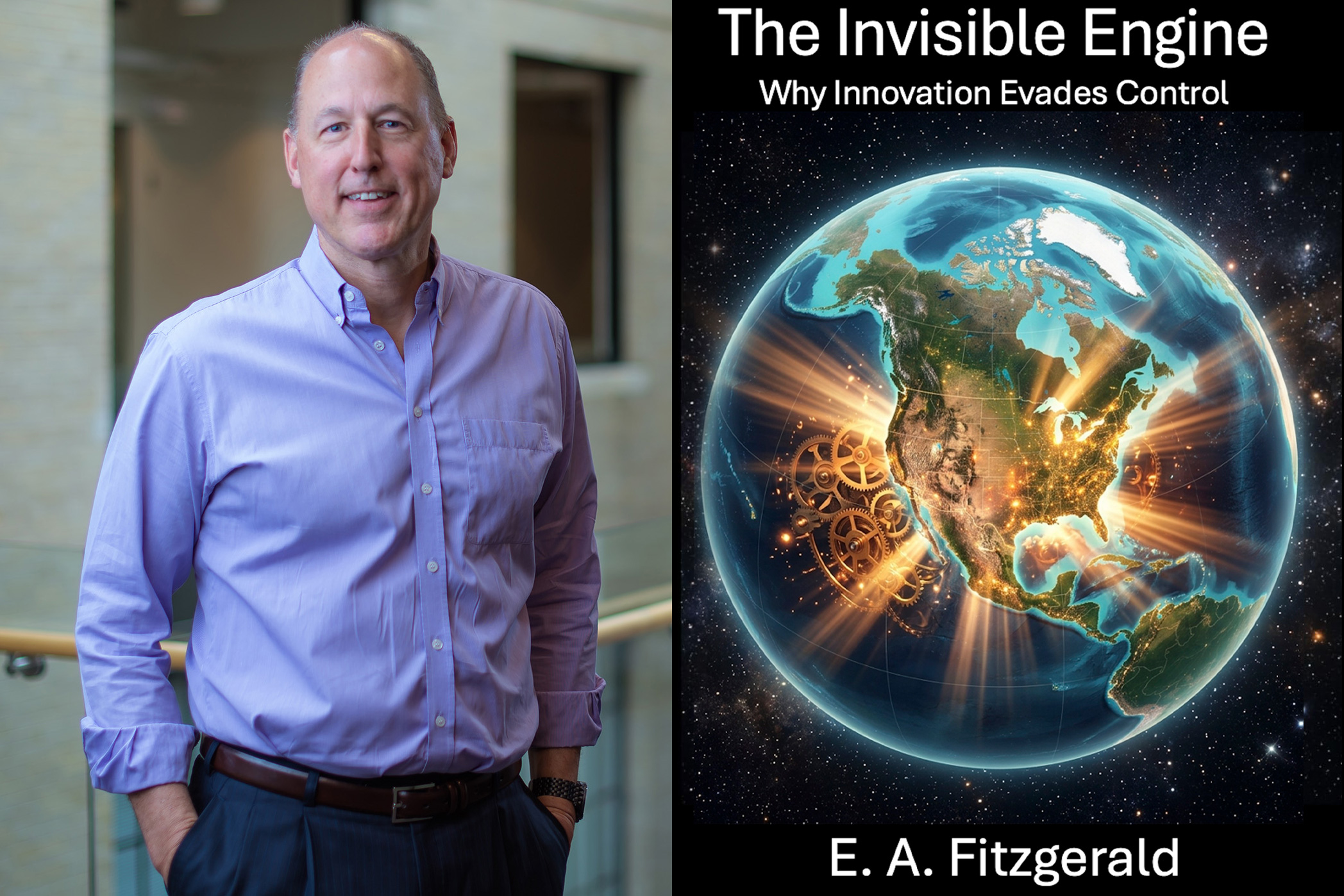
In his latest book, Professor Eugene Fitzgerald examines the forces that turn breakthroughs into value — and why innovation resists simple formulas.

We use cookies to run the site and, with your consent, for analytics and to show ads. See our Cookie Policy.