Background/Objectives: Large language model (LLM) chatbots are increasingly used for dental information and decision support, yet their accuracy and short-term reproducibility in endodontics remain insufficiently established. This study compared five chatbots using open-ended questions derived from established AAE and ESE endodontic guidelines. Methods: Twenty-six guideline-based questions were content-validated by five endodontists using Lawshe's Content Validity Ratio. ChatGPT-4o, Gemini 2.5 Pro, DeepSeek-V3-0324, ScholarGPT (academic version built on OpenAI's GPT-4 architecture), and MedGebra GPT-4 answered each question across three days and three sessions per day, yielding 1170 responses. Two blinded endodontists scored responses on a 5-point guideline-concordance scale. Brunner-Langer LD-F2 analyses assessed model and temporal effects, while weighted kappa evaluated response consistency. Results: The overall model effect was significant (p < 0.001). ChatGPT-4o, Gemini 2.5 Pro, DeepSeek-V3-0324, and ScholarGPT showed comparable performance, whereas MedGebra GPT-4 performed significantly lower after Bonferroni correction. The day effect was not significant (p = 0.054), while the session effect (p = 0.048) and model × session interaction (p = 0.030) were significant. Weighted kappa values varied across models and assessment days, ranging from 0.689-0.730 for Gemini 2.5 Pro, 0.606-0.662 for ChatGPT-4o, 0.520-0.645 for DeepSeek-V3-0324, 0.458-0.592 for ScholarGPT, and 0.240-0.739 for MedGebra GPT-4. Conclusions: Guideline-aligned performance and short-term reproducibility differed across the evaluated chatbots, showing that accuracy and consistency represent distinct aspects of performance. Repeated assessment captured variation missed by single-session testing. These findings support guideline-based evaluation and clinician verification when generative AI chatbots are used to provide endodontic information relevant to decision support or dental education.
The results are packaged in the Greenfield Startup Model (GSM), which explains the priority of startups to release the product as quickly as possible, and the need to shorten time-to-market, by speeding up the development through low-precision engineering activities.
Carmine Giardino, Nicolò Paternoster, M. Unterkalmsteiner et al.· IEEE Transactions on Softwar...· 178 citations· ⚡14
Software startup companies develop innovative, software-intensive products within limited timeframes and with few resources, searching for sustainable and scalable business models.
M. Unterkalmsteiner, P. Abrahamsson, Xiaofeng Wang et al.· e-Informatica Software Engin...· 157 citations· ⚡17
This study conducts a case survey study based on the secondary data of the major pivots happened in 49 software startups, and demonstrates that customer need pivot is the most common among all pivot types.
Sohaib Shahid Bajwa, Xiaofeng Wang, Anh Nguyen-Duc et al.· Empirical Software Engineeri...· 127 citations· ⚡15
The comparison of adopter and non-adopter sample reveals three potential adoption inhibitor, security, data privacy, and portability, which underlines the importance of the technical and security perspectives for research investigating the adoption of technology.
Nattakarn Phaphoom, Xiaofeng Wang, S. Samuel et al.· Journal of Systems and Softw...· 111 citations· ⚡8
The ongoing work building a Raspberry Pi cluster consisting of 300 nodes is presented, with potential use cases being an inexpensive and green test bed for cloud computing research and a robust and mobile data center for operating in adverse environments.
P. Abrahamsson, S. Helmer, Nattakarn Phaphoom et al.· IEEE International Conferenc...· 110 citations· ⚡7
The findings show that speed related agile practices are used to a greater extent in comparison to quality practices, and that software startups who adopt the Lean Startup approach do not sacrifice quality for speed more than other startups do.
Jevgenija Pantiuchina, Marco Mondini, Dron Khanna et al.· International Conference on...· 84 citations· ⚡4
Related blog posts
MIT News · Artificial Intelligence· news.mit.eduOct 1, 2026
Able to defeat top-ranked human players and more efficient than other models, the new system could help decision-makers in military maneuvers or business negotiations.
Microsoft Research Blog· microsoft.comSep 29, 2026
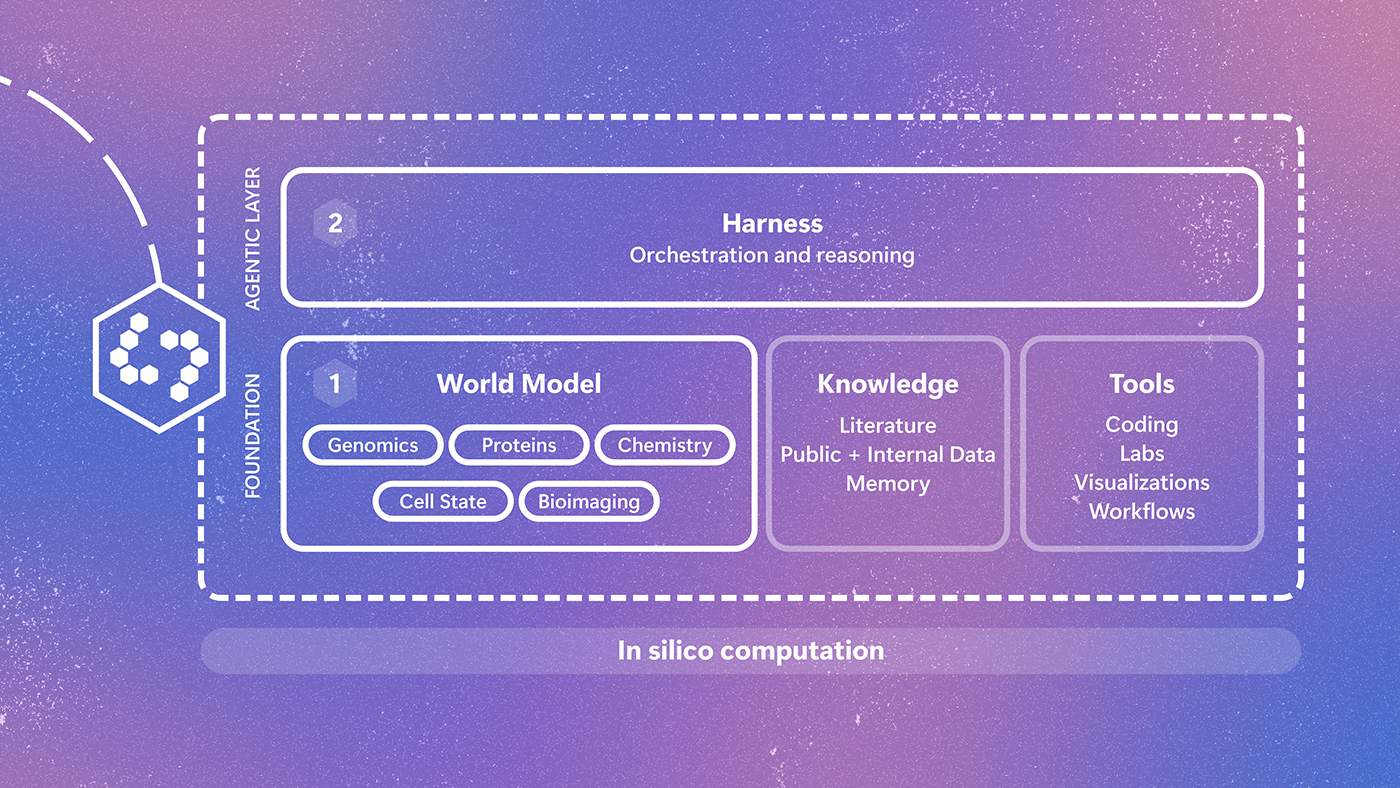
Biology doesn't operate in silos, and neither should the AI representation of it. Quine is an early-stage research effort to create a multimodal world model of biology. By connecting insights across biological scales and modalities, Quine helps scientists computationally search a space far larger than intuition allows and prioritize hypotheses before they reach the lab. Experimental results provide important feedback, helping researchers sharpen future research directions. The post Introducing Q…