Skip to content

The Post-ChatGPT Surge: Does AI-Health-Education Research Growth Reflect Evidence or Enthusiasm

Sep 2026 · Brain: Broad Research in Artificial Intelligence and Neuroscience · 0 citations
Artificial Intelligence in Healthcare and Education

Abstract

Artificial intelligence (AI) research in health education has grown exponentially since the public release of ChatGPT in November 2022. However, questions remain regarding whether this growth represents a mature scholarly field or simply a self-feeding loop of publication growth. This bibliometric study examines the relationship between the increase in publications, citation impacts, and the thematic reorientation towards generative artificial intelligence after the launch of ChatGPT. Bibliographic records were extracted from Web of Science, Scopus, and PubMed and combined into one dataset comprising 4,358 publications after removing duplicates to address the limitation of the previous bibliometric analysis (based on only one bibliographic database). The R packages bibliometrix and biblioshiny were used to visualise and analyse the bibliometric data. Annual publications and citations, distribution of sources and authors, and thematic structure based on Author’s Keywords (with keyword-field cleaning to eliminate indexing inconsistencies and combine related terms) were explored. The number of publications increased from 228 in 2022 to 1,550 in 2025, with an average annual growth of 56.48%. The growth peak was observed roughly one year after the release of ChatGPT, not right away, from 2023 to 2024. The average citation impact per document peaked in 2023, and it dropped steadily in all the following years, both for raw and time-normalised citation impact, with citation-impact concentration remaining locked onto the year immediately following ChatGPT's release. Thematic analysis revealed that in 2024, ChatGPT and other large language models started to dominate over machine learning, which previously accounted for the majority of publications. By employing factorial analysis, another cluster emerged from the documents, which associated particular Generative AI tools with measures of information quality (accuracy, readability). AI in health education research since ChatGPT's appearance may not only exhibit characteristics of either the evidence-generating or the enthusiastic type but also demonstrates tendencies suggesting that the former currently outweighs the latter. The results suggest a possible gap between the quantitative expansion of the literature and the consolidation of the field. The article explores the implications of these findings for research, funding, and health-education practice and outlines several productive directions for future bibliometric analysis.

Read PDF

Similar papers

#computer vision Open access Jun 2016

Software Development in Startup Companies: The Greenfield Startup Model

The results are packaged in the Greenfield Startup Model (GSM), which explains the priority of startups to release the product as quickly as possible, and the need to shorten time-to-market, by speeding up the development through low-precision engineering activities.

Carmine Giardino, Nicolò Paternoster, M. Unterkalmsteiner et al. · 178 citations · ⚡14
#computer vision Open access Oct 2016

Software Startups - A Research Agenda

Software startup companies develop innovative, software-intensive products within limited timeframes and with few resources, searching for sustainable and scalable business models.

M. Unterkalmsteiner, P. Abrahamsson, Xiaofeng Wang et al. · 157 citations · ⚡17
#machine learning Review Open access Oct 2016

“Failures” to be celebrated: an analysis of major pivots of software startups

This study conducts a case survey study based on the secondary data of the major pivots happened in 49 software startups, and demonstrates that customer need pivot is the most common among all pivot types.

Sohaib Shahid Bajwa, Xiaofeng Wang, Anh Nguyen-Duc et al. · 127 citations · ⚡15
#computer vision Review Open access May 2015

A survey study on major technical barriers affecting the decision to adopt cloud services

The comparison of adopter and non-adopter sample reveals three potential adoption inhibitor, security, data privacy, and portability, which underlines the importance of the technical and security perspectives for research investigating the adoption of technology.

Nattakarn Phaphoom, Xiaofeng Wang, S. Samuel et al. · 111 citations · ⚡8
#computer vision Conference Open access Dec 2013

Affordable and Energy-Efficient Cloud Computing Clusters: The Bolzano Raspberry Pi Cloud Cluster Experiment

The ongoing work building a Raspberry Pi cluster consisting of 300 nodes is presented, with potential use cases being an inexpensive and green test bed for cloud computing research and a robust and mobile data center for operating in adverse environments.

P. Abrahamsson, S. Helmer, Nattakarn Phaphoom et al. · 110 citations · ⚡7
#computer vision Book Open access Mar 2017

On the Unhappiness of Software Developers

The results indicate that software developers are a slightly happy population, but the need for limiting the unhappiness of developers remains, and 219 factors representing causes of unhappiness while developing software are identified.

D. Graziotin, Fabian Fagerholm, Xiaofeng Wang et al. · 84 citations · ⚡6

Related blog posts

MIT News · Artificial Intelligence Sep 30, 2026

This game-playing AI is the new champ at Stratego

Able to defeat top-ranked human players and more efficient than other models, the new system could help decision-makers in military maneuvers or business negotiations.

Microsoft Research Blog Sep 29, 2026

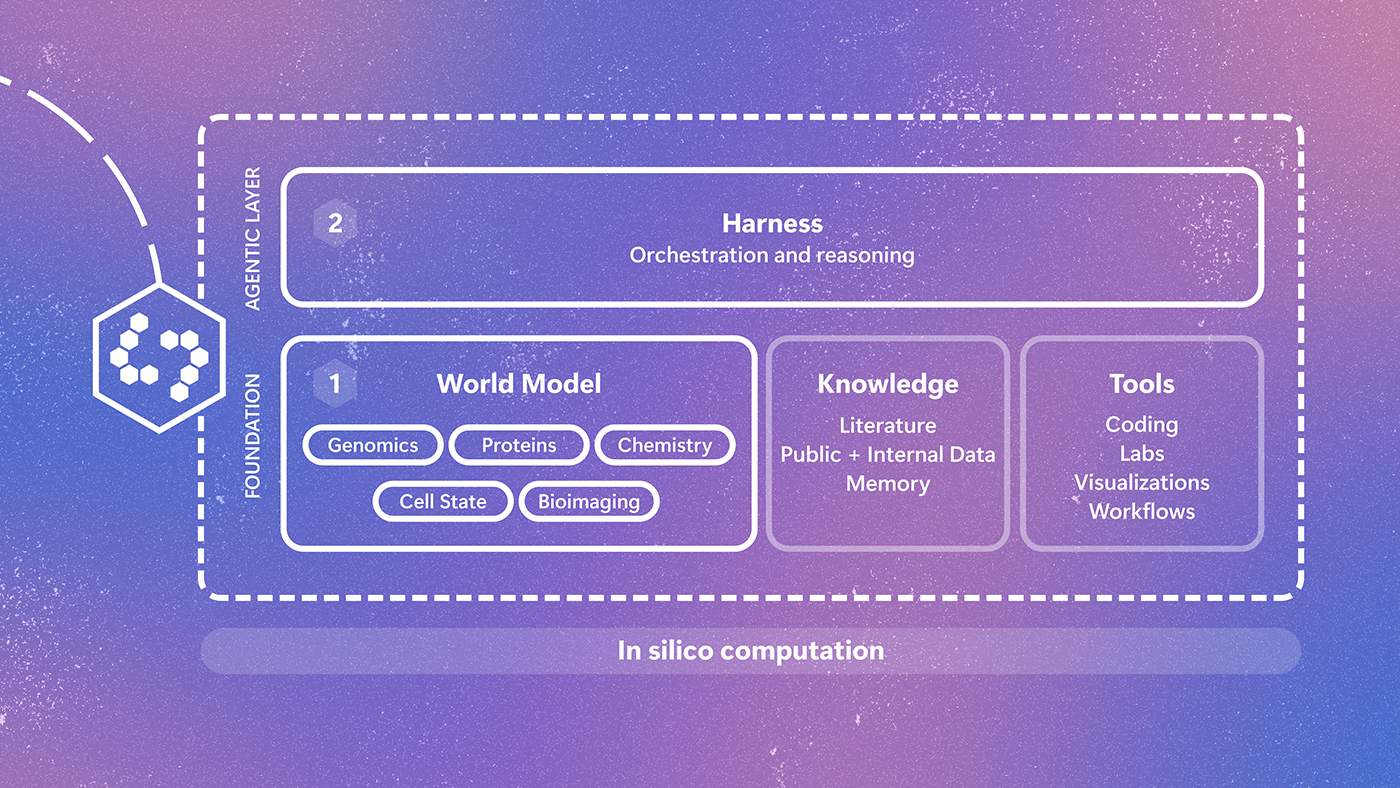
Introducing Quine: An AI research system designed for the complexity of biology

Biology doesn't operate in silos, and neither should the AI representation of it. Quine is an early-stage research effort to create a multimodal world model of biology. By connecting insights across biological scales and modalities, Quine helps scientists computationally search a space far larger than intuition allows and prioritize hypotheses before they reach the lab. Experimental results provide important feedback, helping researchers sharpen future research directions. The post Introducing Q…

We use cookies to run the site and, with your consent, for analytics and to show ads. See our Cookie Policy.