Skip to content

Research on Multi-Objective Task Scheduling Optimization and Reinforcement Learning Decision-Making Methods for Edge-Cloud Collaborative Scalable Information Systems

Sep 2026 · ICST Transactions on Scalable Information Systems · 0 citations · 8 references
Cloud Computing and Resource Management IoT and Edge/Fog Computing

Abstract

INTRODUCTION: Edge-cloud schedulers must coordinate latency, energy, load balance, and deadline compliance under changing demand while keeping task-arrival and throughput units physically consistent.

Objective

This study evaluates MORL-ECSO under an auditable, paired-seed simulation protocol and compares it with tuned heuristic, metaheuristic, value-based, actor-critic, and entropy-regularized baselines.

Methods

A custom Python discrete-event simulator processes individual tasks in 0.1-s event windows. Offered load is 500-2000 tasks/s, with 4-20 edge nodes and four cloud nodes. DQN, A2C, discrete SAC, and MORL-ECSO receive the same 12,000 training transitions; GA and PSO use a population of 40, 30 iterations, and a common objective. Each reported test point uses 30 independent workload seeds after a 10-s warm-up and a 60-s measurement window. Means, standard deviations, 95% confidence intervals, paired Wilcoxon tests, Holm correction, and rank-biserial effects are reported.

Results

At 2000 tasks/s, MORL-ECSO produced 103.16 ms mean latency, 88.80 kJ energy over 60 s, 94.18% on-time success, and 1947.56 tasks/s throughput. Relative to validation-tuned GA, latency was 18.53% lower, and success was 0.89 percentage points higher. 

Conclusion

Compared to the optimal baseline, MORL-ECSO improves latency and deadline success rate under high loads without significantly altering energy consumption or throughput. In low-capacity scenarios with four nodes, the genetic algorithm remains superior.
Read PDF

Similar papers

#machine learning Review Open access Oct 2014

Software development in startup companies: A systematic mapping study

The results indicate that software engineering work practices are chosen opportunistically, adapted and configured to provide value under the constrains imposed by the startup context.

Nicolò Paternoster, Carmine Giardino, M. Unterkalmsteiner et al. · 394 citations · ⚡54
#machine learning Review Open access Jun 2014

Why Early-Stage Software Startups Fail: A Behavioral Framework

This state-of-practice investigation was performed using a literature review followed by a multiple-case study approach and presents how inconsistency between managerial strategies and execution can lead to failure by means of a behavioral framework.

Carmine Giardino, Xiaofeng Wang, P. Abrahamsson · 175 citations · ⚡19
#machine learning Review Open access Oct 2016

“Failures” to be celebrated: an analysis of major pivots of software startups

This study conducts a case survey study based on the secondary data of the major pivots happened in 49 software startups, and demonstrates that customer need pivot is the most common among all pivot types.

Sohaib Shahid Bajwa, Xiaofeng Wang, Anh Nguyen-Duc et al. · 127 citations · ⚡15
#machine learning Review Open access May 2016

Key Challenges in Software Startups Across Life Cycle Stages

It is found that what perceived as biggest challenges by software startups do vary across different life cycle stages, even though its significance decreases when the learning focuses of the startups move from problem to solution and their products mature.

Xiaofeng Wang, Henry Edison, Sohaib Shahid Bajwa et al. · 62 citations · ⚡6

Related blog posts

Microsoft Research Blog Sep 30, 2026

Forecasting space weather risks on power grids

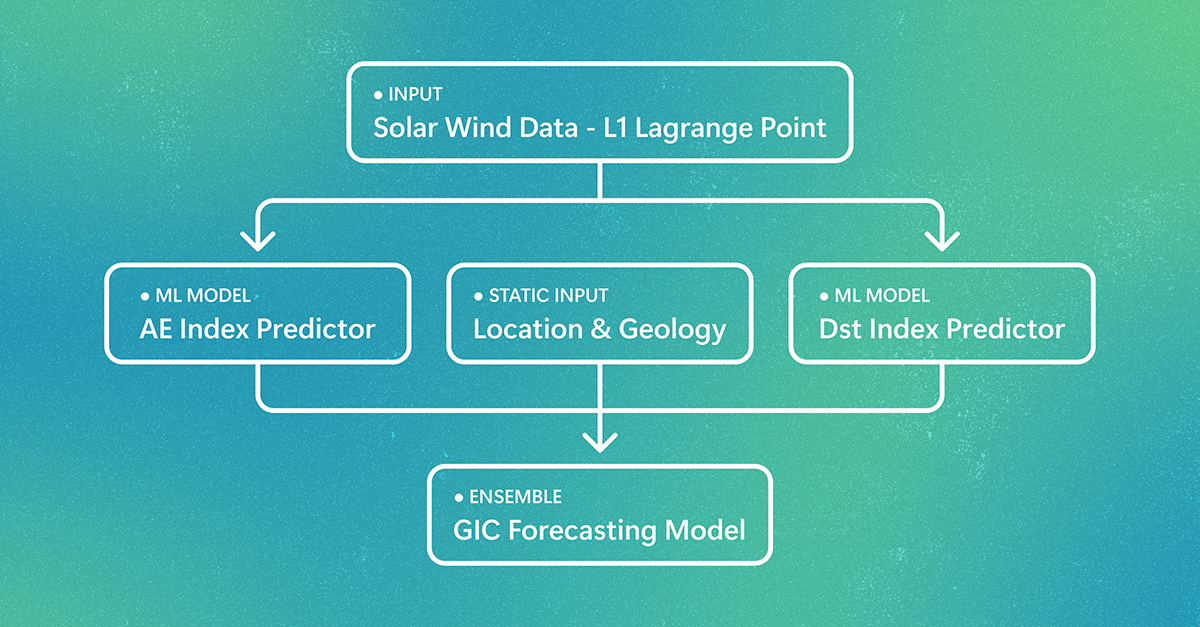
Extreme space-weather events can damage power systems on Earth and degrade GPS accuracy and satellite operations. A new machine learning system can predict where damage is likely to occur 30-60 minutes before a storm arrives. The post Forecasting space weather risks on power grids appeared first on Microsoft Research.

We use cookies to run the site and, with your consent, for analytics and to show ads. See our Cookie Policy.