Skip to content

Artificial Intelligence in Dementia with Lewy Bodies — Current Applications, Diagnostic Challenges, and Future Perspectives

Sep 2026 · Brain: Broad Research in Artificial Intelligence and Neuroscience · 0 citations
Dementia and Cognitive Impairment Research

Abstract

Dementia with Lewy bodies (DLB) is a clinically and biologically heterogeneous neurodegenerative disorder characterised by cognitive impairment together with variable combinations of cognitive fluctuations, recurrent visual hallucinations, rapid eye movement sleep behaviour disorder, parkinsonism, autonomic dysfunction, and other neurological and neuropsychiatric manifestations. Diagnostic uncertainty remains substantial because DLB overlaps clinically with Alzheimer’s disease (AD), Parkinson’s disease dementia, vascular cognitive impairment, and other neurodegenerative disorders, while mixed neuropathology is common. Artificial intelligence (AI), including machine-learning and deep-learning approaches, offers an opportunity to integrate heterogeneous clinical, neuropsychological, neuroimaging, molecular, electrophysiological, and longitudinal data. Current research has investigated AI for differential diagnosis, neuroimaging analysis, multimodal biomarker integration, prodromal risk prediction, prognosis, and digital monitoring. More recently, multimodal biomarker studies in mild cognitive impairment with Lewy bodies have suggested that combinations of MRI, EEG, and plasma markers may provide additional prognostic information beyond cognitive testing alone. However, these findings should not be interpreted as evidence that AI is ready for autonomous clinical diagnosis. Explainable AI may improve transparency and facilitate clinical interpretation, but explanations themselves require validation and should not be regarded as evidence of causality. Future research should prioritise large multicentre longitudinal cohorts, biologically informed reference standards, multimodal and federated learning, calibrated probabilistic prediction, digital biomarkers, and prospective evaluation of clinical utility.

Read PDF

Similar papers

#machine learning Review Open access Oct 2014

Software development in startup companies: A systematic mapping study

The results indicate that software engineering work practices are chosen opportunistically, adapted and configured to provide value under the constrains imposed by the startup context.

Nicolò Paternoster, Carmine Giardino, M. Unterkalmsteiner et al. · 394 citations · ⚡54
#machine learning Review Open access Jun 2014

Why Early-Stage Software Startups Fail: A Behavioral Framework

This state-of-practice investigation was performed using a literature review followed by a multiple-case study approach and presents how inconsistency between managerial strategies and execution can lead to failure by means of a behavioral framework.

Carmine Giardino, Xiaofeng Wang, P. Abrahamsson · 175 citations · ⚡19
#machine learning Review Open access Oct 2016

“Failures” to be celebrated: an analysis of major pivots of software startups

This study conducts a case survey study based on the secondary data of the major pivots happened in 49 software startups, and demonstrates that customer need pivot is the most common among all pivot types.

Sohaib Shahid Bajwa, Xiaofeng Wang, Anh Nguyen-Duc et al. · 127 citations · ⚡15
#artificial intelligence Conference Open access Apr 2020

ECCOLA - a Method for Implementing Ethically Aligned AI Systems

The method, ECCOLA, is presented, which aims at making the high-level AI ethics principles more practical, making it possible for developers to more easily implement them in practice.

Ville Vakkuri, Kai-Kristian Kemell, P. Abrahamsson · 64 citations · ⚡6
#computer vision Review Apr 2024

AI-powered Code Review with LLMs: Early Results

The goal is to not only refine the accuracy of the LLM-based tool but also to underscore its potential in streamlining the software development lifecycle through proactive code improvement and education.

Z. Rasheed, Malik Abdul Sami, Muhammad Waseem et al. · 62 citations · ⚡3

Related blog posts

GPT-Lab Aug 28, 2026

We built an AI factory for HVAC control

What does it take to trust AI-driven HVAC optimization? Our AI Model Factory combines agents, machine learning, reinforcement learning and deterministic checks in a governed workflow designed for messy, real-world building data. The post We built an AI factory for HVAC control appeared first on GPT-Lab.

Microsoft Research Blog Aug 11, 2026

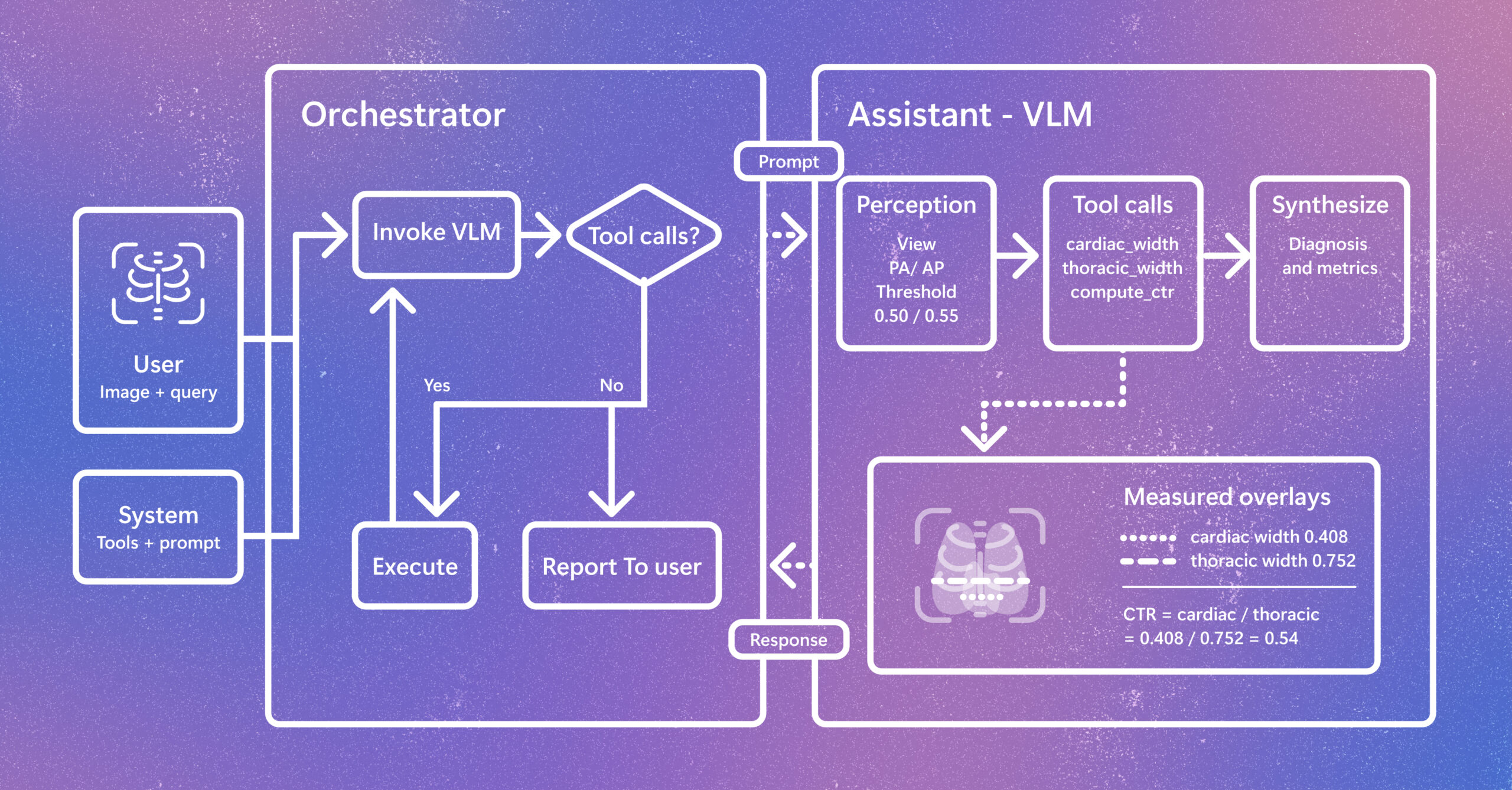
Introducing CARE-X: Towards Clinically Useful Radiology VLMs with Auxiliary Supervision, Reward-Aligned Learning, and Tool-Augmented Measurement

Radiology AI is evolving beyond report generation. CARE-X explores a unified approach that combines flexible reasoning, calibrated predictions, and measurement-based tools for chest X-ray interpretation. The post Introducing CARE-X: Towards Clinically Useful Radiology VLMs with Auxiliary Supervision, Reward-Aligned Learning, and Tool-Augmented Measurement appeared first on Microsoft Research.

We use cookies to run the site and, with your consent, for analytics and to show ads. See our Cookie Policy.