This work introduces Adaptive Agents via Latent Topologies (AALT), which requests demonstrations that maximize expected gains in start-goal connectivity and shows that this objective is formally tied to information gain about task reachability.
Abstract
Active imitation learning reduces expert effort by allowing a learner to request the demonstrations it needs. Existing methods typically select these requests for their expected information gain about the expert policy. In structured multi-task domains, however, the number of start-goal tasks may grow combinatorially despite their solutions sharing reusable behavior. This makes composable behaviors especially valuable, since a single demonstration may help solve many tasks at once. Prior methods do not explicitly account for this value when selecting which demonstration to request. We introduce Adaptive Agents via Latent Topologies (AALT), which requests demonstrations that maximize expected gains in start-goal connectivity. We further show that this objective is formally tied to information gain about task reachability. AALT organizes existing demonstrations into a topology of latent hub states connected by learned behaviors, identifies high-value bridge demonstrations that are likely to enable many tasks at once, and grounds each to an expert query. At inference, it plans through the resulting topology and conditions a diffusion policy on each successive hub transition. In a simulated UR5e robot ordered-retrieval domain with 72 tasks, AALT improved from 42/72 to 72/72 (100%) successful tasks consistently using only 3 demonstrations totaling 5 transitions beyond the initial dataset. After 20 demonstrations, the strongest baseline averaged 88.6% success using 98 transitions.

GAOKAO-Bench is introduced, an intuitive benchmark that employs questions from the Chinese GAOKAO examination as test samples, including both subjective and objective questions that contribute a robust evaluation benchmark for future large language models and offers valuable insights into the advantages and limitations...
Xiaotian Zhang, Chun-yan Li, Yi Zong et al.· arXiv.org· 216 citations· ⚡17
An algorithm is proposed which leverages disentangled semantic factors to generate adversarial perturbation by altering controlled semantic attributes to fool the learner towards various "adversarial" targets.
Haonan Qiu, Chaowei Xiao, Lei Yang et al.· arXiv.org· 208 citations· ⚡17
This work proposes a HALO that directly maximizes the utility of generations instead of maximizing the log-likelihood of preferences, and suggests that the best loss depends on the inductive biases most appropriate for a given setting, an oft-overlooked consideration.
This work investigates the possibilities of using LLMs in a resume screening setting via a document retrieval framework that simulates job candidate selection and finds that the MTEs are biased, significantly favoring White-associated names in 85% of cases and female-associated names in only 11.1% of cases.
This work shows that orders of magnitude enhancement in performance could be obtained by a combination of hardware improvements and tight quantum-HPC integration and introduces high-performance architectures for quantum-probabilistic computing with custom-designed accelerators to tackle today's industry-scale classical...
Masoud Mohseni, Artur Scherer, K. Johnson et al.· arXiv.org· 121 citations· ⚡9
This paper presents a comprehensive overview of the Ultralytics YOLO family, emphasizing architectural evolution, benchmarking, deployment, and emerging directions from YOLOv5 through YOLO27, and examines detection, segmentation, depth, classification, pose, oriented detection, tracking, export, quantization, and deplo...
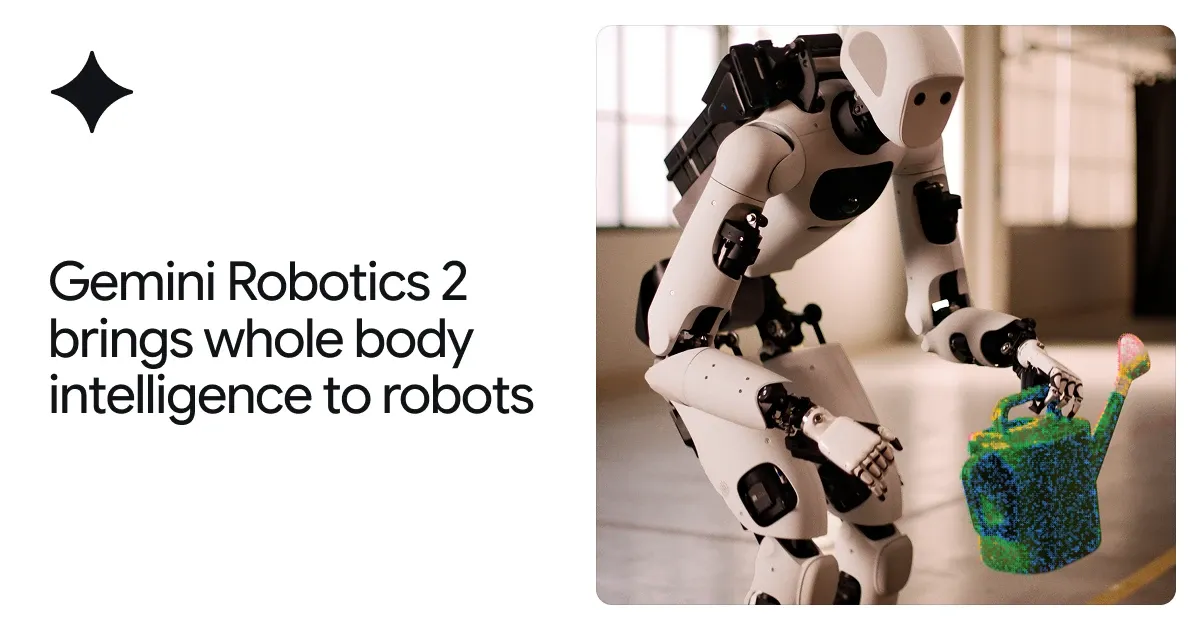
From feet to fingertips — we are teaching robots intelligent whole-body control, fine dexterity, and teamwork to complete a broad range of complex tasks.
MIT News · Artificial Intelligence· news.mit.eduOct 13, 2026
Machine-learning networks can learn without detailed instructions from a designer. Those that do may offer insight into how the brain reorganizes itself during learning.