Skip to content
#machine learning #computer vision Preprint Open access

Interpretable Retinal Disease Prediction Using Biology-Informed Heterogeneous Graph Representations

Laurin Lux Alexander H. Berger Maria Romeo Tricas Richard Rosen Alaa E. Fayed Sobha Sivaprasada Linus Kreitner Jonas Weidner Martin J. Menten Daniel Rueckert Johannes C. Paetzold
Sep 2026
Machine Learning Computer Vision

Abstract

Interpretability is crucial for utilizing machine learning models as clinical decision support tools for medical diagnostics. However, most state-of-the-art image classifiers based on neural networks are not interpretable. As a result, clinicians often resort to known biomarkers to guide diagnosis, although biomarker-based classification often suffers from drastic information loss compared to raw medical images. This work proposes a method that preserves the rich imaging information while simultaneously enhancing the interpretability of predictions for diabetic retinopathy staging from optical coherence tomography angiography (OCTA) images. The core contribution of our method is a novel biology-informed heterogeneous graph representation that models retinal vessel segments, intercapillary areas, and the foveal avascular zone (FAZ) in a human-interpretable way. This graph representation allows us to frame diabetic retinopathy staging as a graph-level classification task, which we solve using an established, efficient graph neural network architecture. We compare our method against established methods, including classical biomarker-based classifiers, convolutional neural networks (CNNs), and vision transformers in predicting the clinically assigned DR stage based on color fundus photography images. We find stage agreement rates of our method and alternative vision model based classifiers saturating at AUC-ROC values of 84%. Crucially, we use our biology-informed graph to provide explanations of great detail. Our approach surpasses existing methods in precisely localizing and identifying abnormal vessels and non-perfusion areas. Our approach sets the stage for the interpretable identification of patients who require special attention due to their traceable microvascular changes, only observable using the details of OCTA images.


View source

Similar papers

#artificial intelligence Conference Open access Jun 2018

Gibson Env: Real-World Perception for Embodied Agents

This paper investigates developing real-world perception for active agents, proposes Gibson Environment for this purpose, and showcases a set of perceptual tasks learned therein.

F. Xia, Amir Zamir, Zhi-Yang He et al. · 1,069 citations · ⚡112
#computer vision Review Sep 2017

Agile Software Development Methods: Review and Analysis

This publication proposes a definition and a classification of agile software development approaches and analyses ten software development methods that can be characterized as being "agile" against the defined criterion.

P. Abrahamsson, O. Salo, Jussi Ronkainen et al. · 727 citations · ⚡54
#computer vision Jun 2008

The impact of agile practices on communication in software development

The study shows that agile practices improve both informal and formal communication, but indicates that, in larger development situations involving multiple external stakeholders, a mismatch of adequate communication mechanisms can sometimes even hinder the communication.

M. Pikkarainen, Jukka Haikara, O. Salo et al. · 401 citations · ⚡48
#machine learning Review Open access Oct 2014

Software development in startup companies: A systematic mapping study

The results indicate that software engineering work practices are chosen opportunistically, adapted and configured to provide value under the constrains imposed by the startup context.

Nicolò Paternoster, Carmine Giardino, M. Unterkalmsteiner et al. · 394 citations · ⚡54

Diffusion models as plug-and-play priors

The possibility of inferring high-dimensional data inference in a model that consists of a prior and an auxiliary differentiable constraint given some additional information is considered, thereby allowing a range of potential applications in adapting models to new domains and tasks.

Alexandros Graikos, Esmeralda S. Whitammer, N. Jojic et al. · 316 citations · ⚡15

Related blog posts

MIT News · Artificial Intelligence Oct 28, 2026

Making machines that can listen

Professor Paris Smaragdis develops computers with superhuman hearing for applications like speech recognition, music understanding, and environmental monitoring.

Microsoft Research Blog Aug 11, 2026

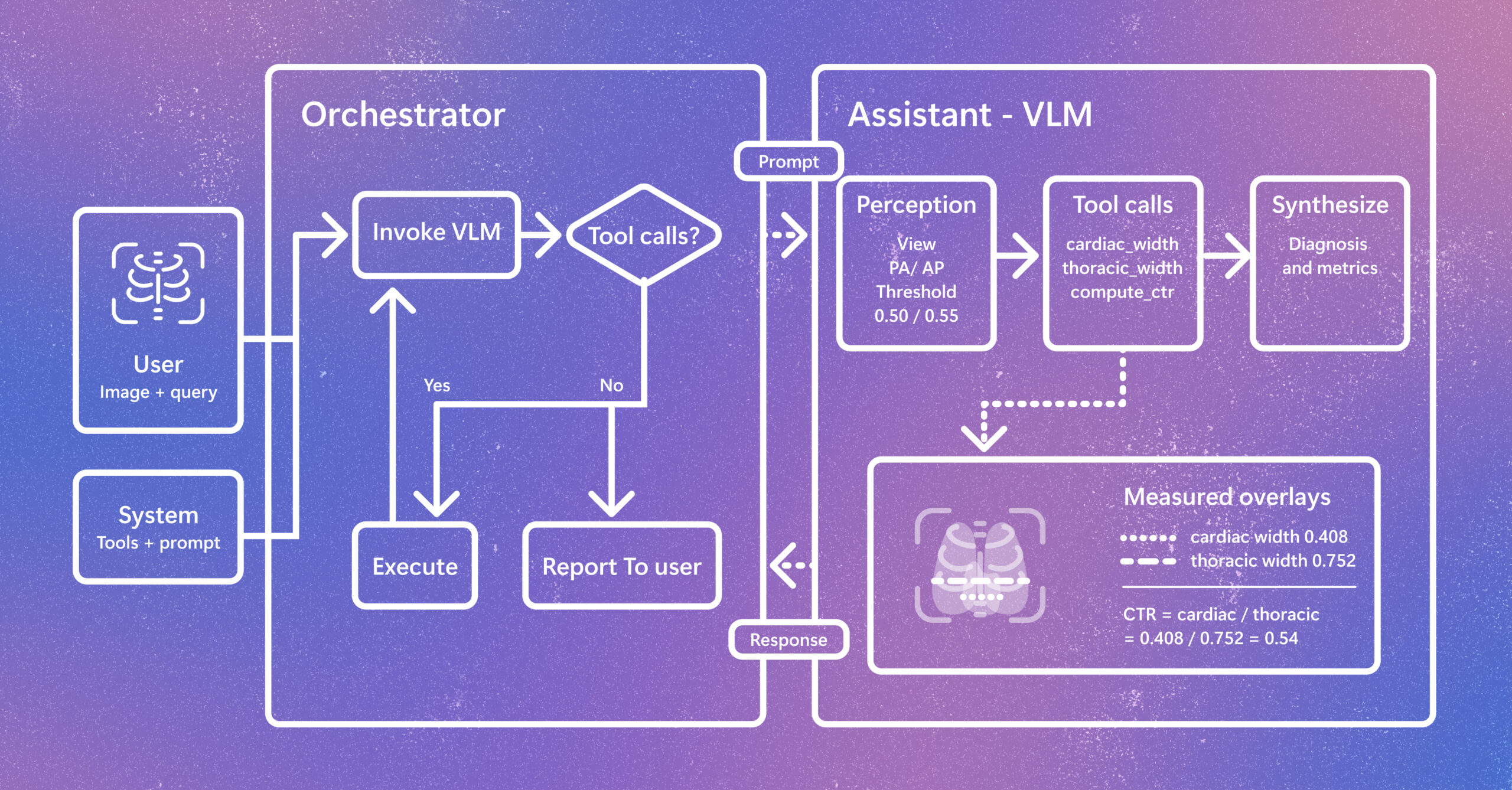
Introducing CARE-X: Towards Clinically Useful Radiology VLMs with Auxiliary Supervision, Reward-Aligned Learning, and Tool-Augmented Measurement

Radiology AI is evolving beyond report generation. CARE-X explores a unified approach that combines flexible reasoning, calibrated predictions, and measurement-based tools for chest X-ray interpretation. The post Introducing CARE-X: Towards Clinically Useful Radiology VLMs with Auxiliary Supervision, Reward-Aligned Learning, and Tool-Augmented Measurement appeared first on Microsoft Research.

We use cookies to run the site and, with your consent, for analytics and to show ads. See our Cookie Policy.