Sep 2026· Clinical transplantation and research· 0 citations
Medicine
TL;DR
This review synthesizes current evidence across these domains, highlights methodological limitations, and proposes a research agenda through which AI-augmented NHP experimentation can become a bridge from preclinical data complexity to clinical precision in xenotransplantation.
Abstract
Nonhuman primate (NHP) preclinical models remain an indispensable gateway for translating xenotransplantation into human clinical trials. These models generate high-dimensional immunological, physiological, behavioral, and histopathological datasets that are difficult to interpret with conventional analytical approaches and that limit the precision of translational inference. Artificial intelligence (AI) and machine learning (ML) may help address this complexity: computer vision can support continuous noninvasive behavioral phenotyping and pain assessment; anomaly detection algorithms can extract early warning signals from biosignal streams; multiomics integration can identify xenograft-specific biomarker signatures; digital twin frameworks may enable hypothesis-generating simulations of prospective human recipient responses; and explainable AI (XAI) can make model outputs more transparent and regulatory defensible. This review synthesizes current evidence across these domains, highlights methodological limitations, and proposes a research agenda through which AI-augmented NHP experimentation can become a bridge from preclinical data complexity to clinical precision in xenotransplantation. The framework also supports the ethical mandate of the 3Rs (Replacement, Reduction, and Refinement), aligning scientific rigor with animal welfare imperatives.
A prioritized roadmap for integrating AI into early clinical xenotransplantation is presented, based on clinical need, data availability, technical readiness, feasibility of clinician‐supervised implementation, and potential impact on graft assessment and safety monitoring.
K. Shirini, Zoe Hahn, J. Ladowski et al.· Xenotransplantation· 0 citations
Two cases in which organoid-derived findings enabled FDA-approved clinical trials are highlighted, illustrating how organoids can reveal disease mechanisms that are inaccessible or incompletely reproduced in animal models.
A. A. Martins, A. Muotri· Stem Cells and Development· 0 citations
Biomarkers are central to modern diagnostics and therapeutics, yet traditional discovery approaches suffer from single-modality analyses, weak mechanistic foundations, and low reproducibility. Artificial intelligence (AI) enables the integration of complex multimodal biomedical data, but the translation of AI-derived b...
Raşit Dinç, N. Ardic· Signal Transduction and Targ...· 1 citation
Preclinical research traditionally advances through hypothesis-driven experimentation that establishes mechanistic pathways to support translational development. While this approach has generated major biological insights, it may underemphasize alternative organizational patterns embedded within complex datasets, parti...
P. Madeddu, Monica Cattaneo, A. Puca· International Journal on Bio...· 0 citations
An AI-centred, multi-tier decision-support framework, to enable a phased shift toward animal-reduced and, ultimately, animal-free drug development and to address gaps in the ‘AI-orchestrated Human-Relevant Translational Ecosystem’ (AI-HRTE).
Prashant N. Amale, D. Tiwari· Alternatives to laboratory a...· 1 citation
The biological-grounding×translational-readiness (BG×TR) matrix is introduced, an NSCLC-specific framework that locates any AI model along these 2 axes and identifies the single next study required to advance it toward clinical use, showing that the field's most biologically grounded models are rarely its most clinical...
Hadeel Albalawi· American Journal of Clinical...· 0 citations
Enforcing physics-based constraints prevents AI models from generating unreliable predictions for complex nonlinear systems in weather, climate, and turbulent flows.
MIT News · Artificial Intelligence· news.mit.eduNov 20, 2026
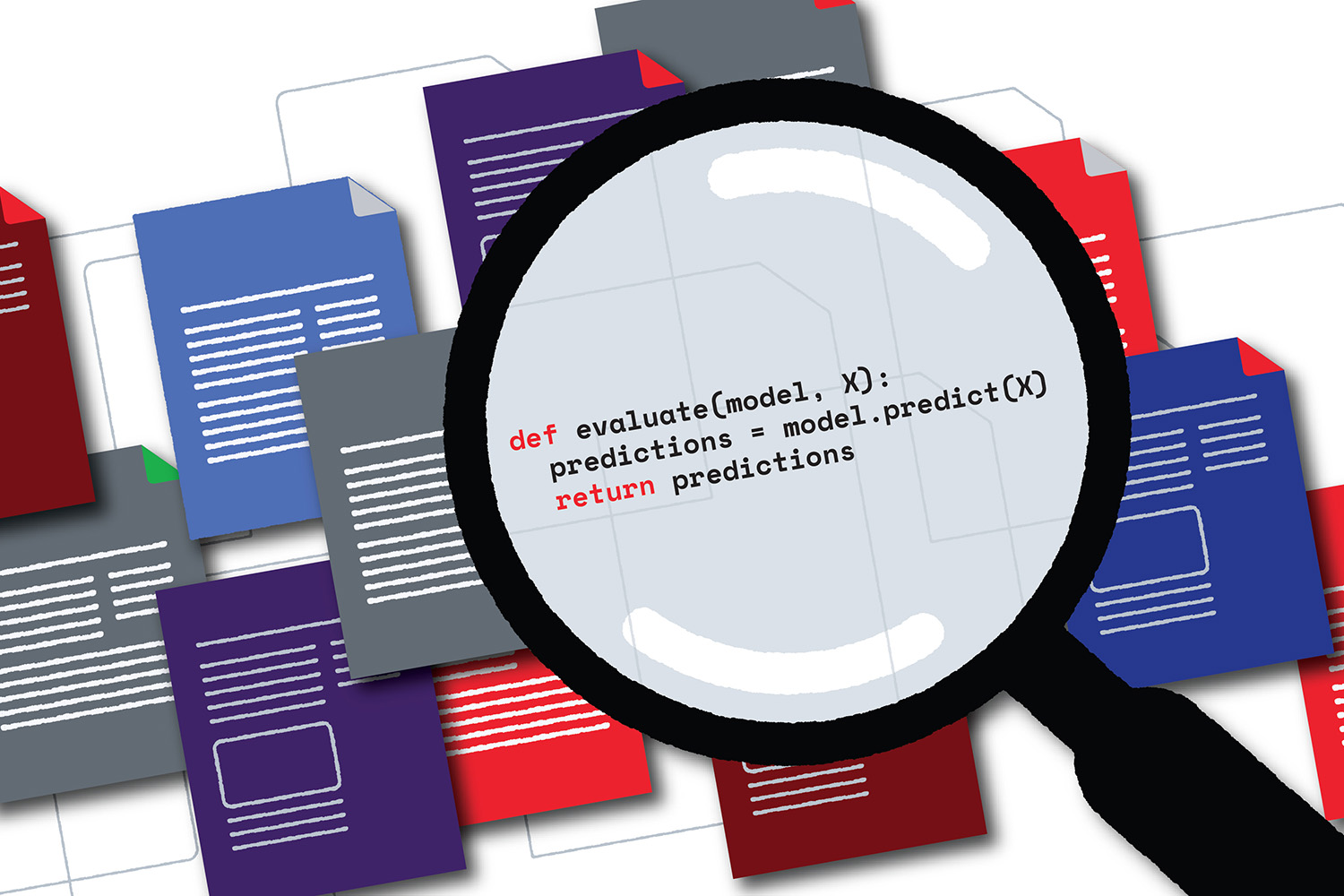
An MIT and Dana-Farber Institute-led team used large language models to examine nearly 4,000 studies and hundreds of code repositories, revealing gaps in the information needed to scrutinize and reuse published research.
We use cookies to run the site and, with your consent, for analytics and to show ads.
See our Cookie Policy.