Skip to content

Cooperative multi-agent reinforcement learning with entangled state representations and copula-based action coordination for urban navigation

Sep 2026 · Computational statistics (Zeitschrift) · Vol 41 · 0 citations · 22 references
Reinforcement Learning in Robotics

Abstract

Cooperative multi-agent reinforcement learning (MARL) enables autonomous agents to coordinate in complex spatial environments. This study proposes a MARL framework for goal-directed navigation that integrates entangled state embeddings, copula-based joint action transformations, and a shared reward mechanism. Entangled representations enhance cooperative awareness by incorporating peer-agent information, while copula transformations model dependence among actions to stabilize joint decision-making. A shared reward structure further aligns agent objectives toward collective performance. The framework is evaluated in synthetic continuous navigation environments and a Chicago crime-based real-data setting. Simulation studies compare three configurations: a full Copula Model, a No Copula model, and a Baseline model without cooperative enhancements. Results show that the Copula Model achieves the highest cumulative reward and the most stable coordination, whereas the Baseline model consistently underperforms. Sensitivity analysis indicates that intermediate actor learning rates provide the most stable convergence. Trajectory analyses reveal emergent cooperative behaviors such as spatial dispersion, obstacle avoidance, and coordinated movement toward target regions. In the Chicago crime experiment, agents exhibit risk-aware navigation and non-redundant exploration despite environmental complexity and sparse rewards. Overall, the findings demonstrate that combining relational state representations, copula-based dependence modeling, and shared rewards improves coordination, robustness, and stability in multi-agent navigation tasks.
Read PDF

Similar papers

#machine learning Review Open access Oct 2014

Software development in startup companies: A systematic mapping study

The results indicate that software engineering work practices are chosen opportunistically, adapted and configured to provide value under the constrains imposed by the startup context.

Nicolò Paternoster, Carmine Giardino, M. Unterkalmsteiner et al. · 394 citations · ⚡54
#machine learning Review Open access Jun 2014

Why Early-Stage Software Startups Fail: A Behavioral Framework

This state-of-practice investigation was performed using a literature review followed by a multiple-case study approach and presents how inconsistency between managerial strategies and execution can lead to failure by means of a behavioral framework.

Carmine Giardino, Xiaofeng Wang, P. Abrahamsson · 175 citations · ⚡19
#machine learning Review Open access Oct 2016

“Failures” to be celebrated: an analysis of major pivots of software startups

This study conducts a case survey study based on the secondary data of the major pivots happened in 49 software startups, and demonstrates that customer need pivot is the most common among all pivot types.

Sohaib Shahid Bajwa, Xiaofeng Wang, Anh Nguyen-Duc et al. · 127 citations · ⚡15
#machine learning Review Open access May 2016

Key Challenges in Software Startups Across Life Cycle Stages

It is found that what perceived as biggest challenges by software startups do vary across different life cycle stages, even though its significance decreases when the learning focuses of the startups move from problem to solution and their products mature.

Xiaofeng Wang, Henry Edison, Sohaib Shahid Bajwa et al. · 62 citations · ⚡6

Related blog posts

Microsoft Research Blog Sep 30, 2026

Forecasting space weather risks on power grids

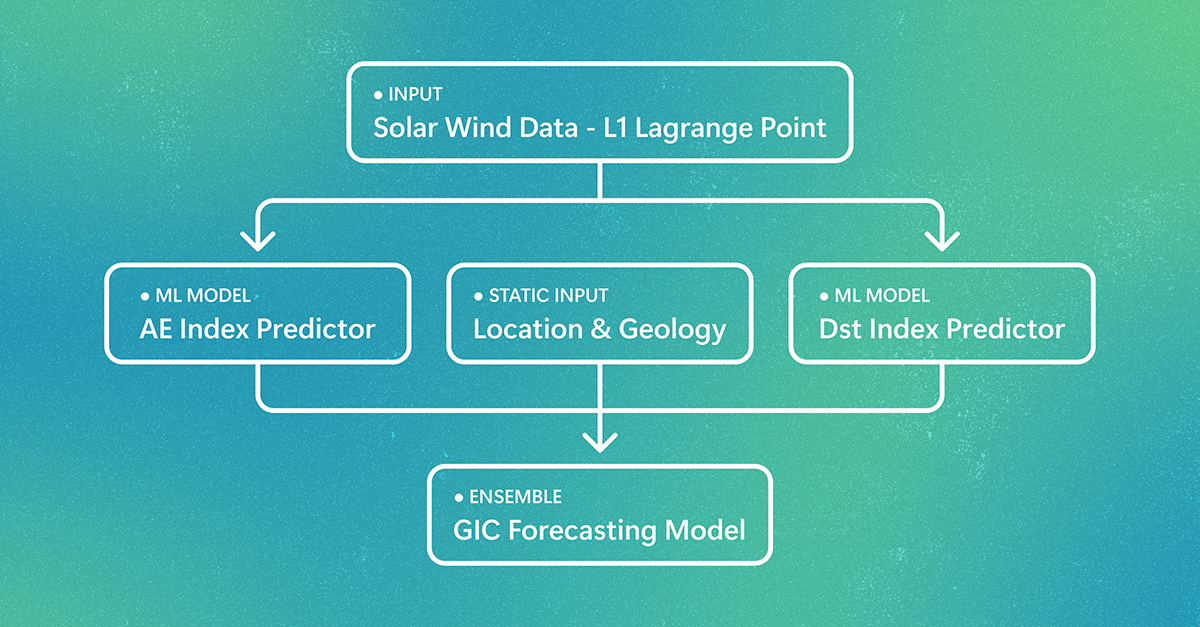
Extreme space-weather events can damage power systems on Earth and degrade GPS accuracy and satellite operations. A new machine learning system can predict where damage is likely to occur 30-60 minutes before a storm arrives. The post Forecasting space weather risks on power grids appeared first on Microsoft Research.

We use cookies to run the site and, with your consent, for analytics and to show ads. See our Cookie Policy.