Skip to content

Dynamic defense strategies for cyber-physical systems using Stackelberg games and deep reinforcement learning in discrete and continuous time

Sep 2026 · International Journal of Information Security · Vol 25 · 0 citations · 48 references
Smart Grid Security and Resilience

Abstract

As cyber threats to power grid infrastructures escalate, the urgency of understanding how to protect cyber-physical systems (CPS) has never been greater. These systems, which integrate physical processes with digital control, are increasingly susceptible to sophisticated cyberattacks that can lead to widespread disruption. While most existing defense models function within either discrete or continuous-time frameworks, this research addresses an important limitation in the literature: the limited comparative treatment of both temporal domains within a common strategic framework. This study presents a dual-domain defense framework that combines Stackelberg game theory with Deep Reinforcement Learning (DRL). Rather than merging discrete-time and continuous-time dynamics into a single hybrid model, the two temporal formulations are evaluated as alternative representations of the same CPS security interaction under identical attacker–defender scenarios and metrics, enabling a systematic comparison of strategic decision-making and physical system behavior. The objective of this framework is to facilitate proactive defense decisions that can anticipate and respond to attacks with strategic precision. We conducted extensive simulations using Python to assess the proposed model in both discrete and continuous-time scenarios. Our approach was evaluated through extensive simulations under realistic adversarial conditions to confirm its resilience and cost-effectiveness. Key findings indicate that defender-first strategies in discrete time effectively minimize system damage and alleviate computational burdens, while continuous-time responses, although immediate, demand significantly higher resource investment. This dual-domain solution offers a robust, adaptable toolset for CPS defense by clarifying the trade-offs between temporal abstractions in nonlinear and dynamic environments.
Read PDF

Similar papers

#machine learning Review Open access Oct 2014

Software development in startup companies: A systematic mapping study

The results indicate that software engineering work practices are chosen opportunistically, adapted and configured to provide value under the constrains imposed by the startup context.

Nicolò Paternoster, Carmine Giardino, M. Unterkalmsteiner et al. · 394 citations · ⚡54
#machine learning Review Open access Jun 2014

Why Early-Stage Software Startups Fail: A Behavioral Framework

This state-of-practice investigation was performed using a literature review followed by a multiple-case study approach and presents how inconsistency between managerial strategies and execution can lead to failure by means of a behavioral framework.

Carmine Giardino, Xiaofeng Wang, P. Abrahamsson · 175 citations · ⚡19
#machine learning Review Open access Oct 2016

“Failures” to be celebrated: an analysis of major pivots of software startups

This study conducts a case survey study based on the secondary data of the major pivots happened in 49 software startups, and demonstrates that customer need pivot is the most common among all pivot types.

Sohaib Shahid Bajwa, Xiaofeng Wang, Anh Nguyen-Duc et al. · 127 citations · ⚡15
#machine learning Review Open access May 2016

Key Challenges in Software Startups Across Life Cycle Stages

It is found that what perceived as biggest challenges by software startups do vary across different life cycle stages, even though its significance decreases when the learning focuses of the startups move from problem to solution and their products mature.

Xiaofeng Wang, Henry Edison, Sohaib Shahid Bajwa et al. · 62 citations · ⚡6

Related blog posts

Microsoft Research Blog Sep 30, 2026

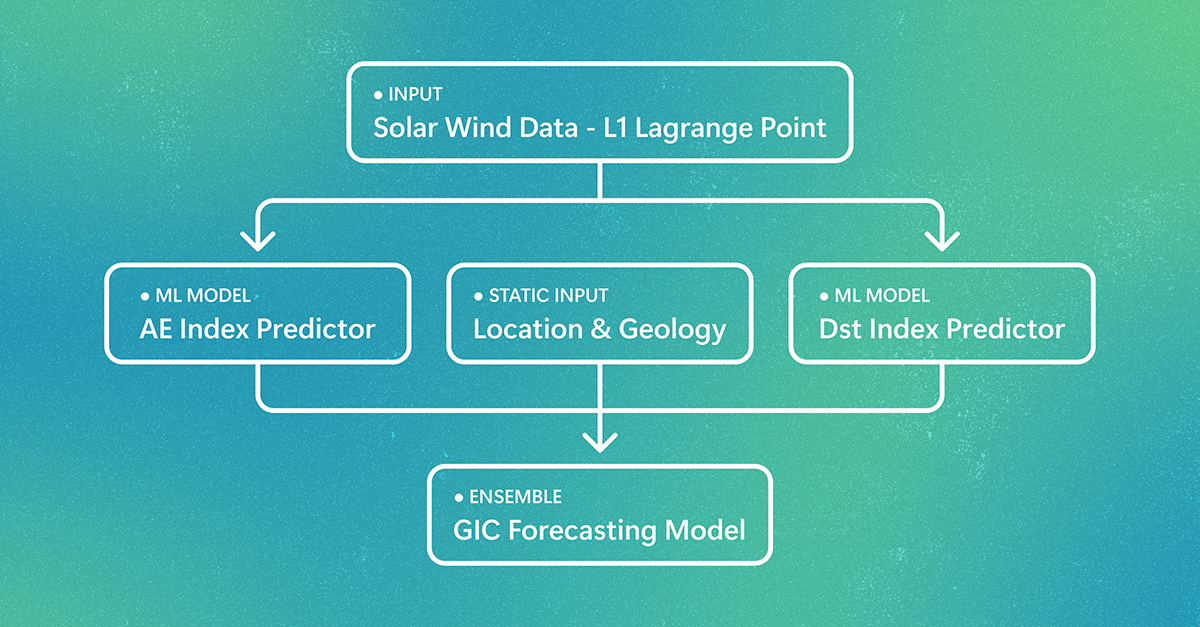
Forecasting space weather risks on power grids

Extreme space-weather events can damage power systems on Earth and degrade GPS accuracy and satellite operations. A new machine learning system can predict where damage is likely to occur 30-60 minutes before a storm arrives. The post Forecasting space weather risks on power grids appeared first on Microsoft Research.

We use cookies to run the site and, with your consent, for analytics and to show ads. See our Cookie Policy.