This research provides a coordinated control framework for integrating lateral and longitudinal controls that improve tracking performance and overall robustness and could accurately predict lateral distance, speed, and yaw angle with an average absolute percentage error of less than 3%, demonstrating its effectiveness in predicting vehicle dynamics.
This work introduces a Model Predictive Control (MPC) path tracking controller, which is developed to boost robustness, tracking precision, and vehicle stability when navigating high-speed and high-curvature driving scenarios. First, a 3-degree-of-freedom (3-DOF) dynamic model of the vehicle is established to serve as...
Hanzhengnan Yu, Xiao-Yi Hou, Hao Zhang et al.· SAE technical paper series· 0 citations
To solve the conflict between trajectory tracking and stability control for distributed drive electric vehicles under complex driving conditions, an integrated longitudinal and lateral coordinated control strategy based on a hierarchical architecture is proposed in this paper. First, a stability-boundary dataset is con...
Danhua Chen, Jie Hu, Yuting Liu et al.· Mathematics· 0 citations
For distributed drive electric vehicles, designing an effective automatic lane keeping system and optimizing wheel torque allocation to enhance overall performance have consistently been a key research focus in this field. However, such systems face multiple challenges in practical applications, including external dist...
Yao-Yang Chen, You-Qun Zhao, Danyang Li et al.· Proceedings of the Instituti...· 0 citations
Unmanned Underwater Vehicles (UUVs) operate in complex and uncertain environments, which require a suitable controller. While traditional PID controllers are widely used, they often have slow response speed and inadequate disturbance rejection, particularly under complex and uncertain conditions. To overcome these sho...
Ling Wang, Yan Shi· SAE technical paper series· 0 citations
This study addresses target curvature tracking for lateral vehicle motion under low-friction driving conditions. To this end, a reinforcement learning-based steering control framework was developed for steer-by-wire vehicles using a curvature-based steering target. The target curvature was generated from the driver’s s...
Yujin Kim, Jaepoong Lee, Minjun Kim et al.· IEEE Access· 0 citations
Related blog posts
MIT News · Artificial Intelligence· news.mit.eduOct 2, 2026
Martin Trust Center Managing Director Bill Aulet introduces Dear Dreamer, a free platform for middle and high school students who want to learn about entrepreneurship.
Microsoft Research Blog· microsoft.comSep 30, 2026
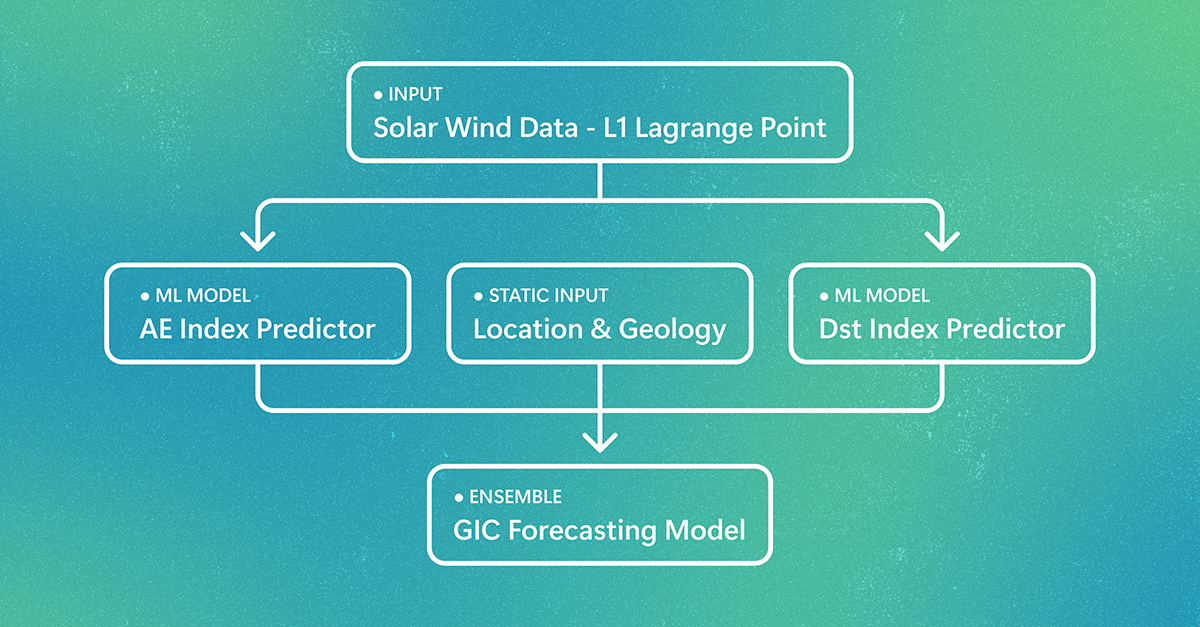
Extreme space-weather events can damage power systems on Earth and degrade GPS accuracy and satellite operations. A new machine learning system can predict where damage is likely to occur 30-60 minutes before a storm arrives. The post Forecasting space weather risks on power grids appeared first on Microsoft Research.
We use cookies to run the site and, with your consent, for analytics and to show ads.
See our Cookie Policy.