World Action Models (WAMs) have demonstrated strong robotic manipulation capabilities by augmenting pretrained video generative models with action experts. However, current WAMs still show limited instruction-following ability when conditioned solely on text instructions. We argue that this limitation stems in part from a structural imbalance in robot-learning data: rich visual-action trajectories are often paired with sparse and repetitive language annotations, allowing policies to identify tasks from visual context and motion regularities rather than grounding the instruction itself. To address this limitation, we introduce JEPA-WAM, which augments each text instruction with a bank of stochastically generated visual instructions, providing diverse visual cues for instruction following. Specifically, JEPA-WAM uses an off-the-shelf text-to-image generator to sample multiple task-completion images conditioned on the text instruction, without training the generator. Although these generated images may differ from the current visual scene in appearance and layout, they remain semantically aligned with the instruction and serve as visual goal references. To focus on task-level semantics beyond appearance, we encode these references with a frozen V-JEPA 2.1 encoder. The resulting dense goal representations are compressed into compact goal tokens that condition both the video and action experts through cross-attention. We further construct a real-robot instruction-following benchmark covering in-distribution, out-of-distribution scene, and out-of-distribution instruction settings. On this benchmark, JEPA-WAM achieves success rates of 87.3%, 74.5%, and 80.9% in these three settings, outperforming {\pi}0 and Fast-WAM by at least 10.0, 27.3, and 14.5 percentage points, respectively.

This paper investigates developing real-world perception for active agents, proposes Gibson Environment for this purpose, and showcases a set of perceptual tasks learned therein.
F. Xia, Amir Zamir, Zhi-Yang He et al.· 2018 IEEE/CVF Conference on...· 1,069 citations· ⚡112
GAOKAO-Bench is introduced, an intuitive benchmark that employs questions from the Chinese GAOKAO examination as test samples, including both subjective and objective questions that contribute a robust evaluation benchmark for future large language models and offers valuable insights into the advantages and limitations...
Xiaotian Zhang, Chun-yan Li, Yi Zong et al.· arXiv.org· 216 citations· ⚡17
An algorithm is proposed which leverages disentangled semantic factors to generate adversarial perturbation by altering controlled semantic attributes to fool the learner towards various "adversarial" targets.
Haonan Qiu, Chaowei Xiao, Lei Yang et al.· arXiv.org· 208 citations· ⚡17
This work proposes a HALO that directly maximizes the utility of generations instead of maximizing the log-likelihood of preferences, and suggests that the best loss depends on the inductive biases most appropriate for a given setting, an oft-overlooked consideration.
This work investigates the possibilities of using LLMs in a resume screening setting via a document retrieval framework that simulates job candidate selection and finds that the MTEs are biased, significantly favoring White-associated names in 85% of cases and female-associated names in only 11.1% of cases.
This work shows that orders of magnitude enhancement in performance could be obtained by a combination of hardware improvements and tight quantum-HPC integration and introduces high-performance architectures for quantum-probabilistic computing with custom-designed accelerators to tackle today's industry-scale classical...
Masoud Mohseni, Artur Scherer, K. Johnson et al.· arXiv.org· 121 citations· ⚡9
Related blog posts
MIT News · Artificial Intelligence· news.mit.eduJul 30, 2026
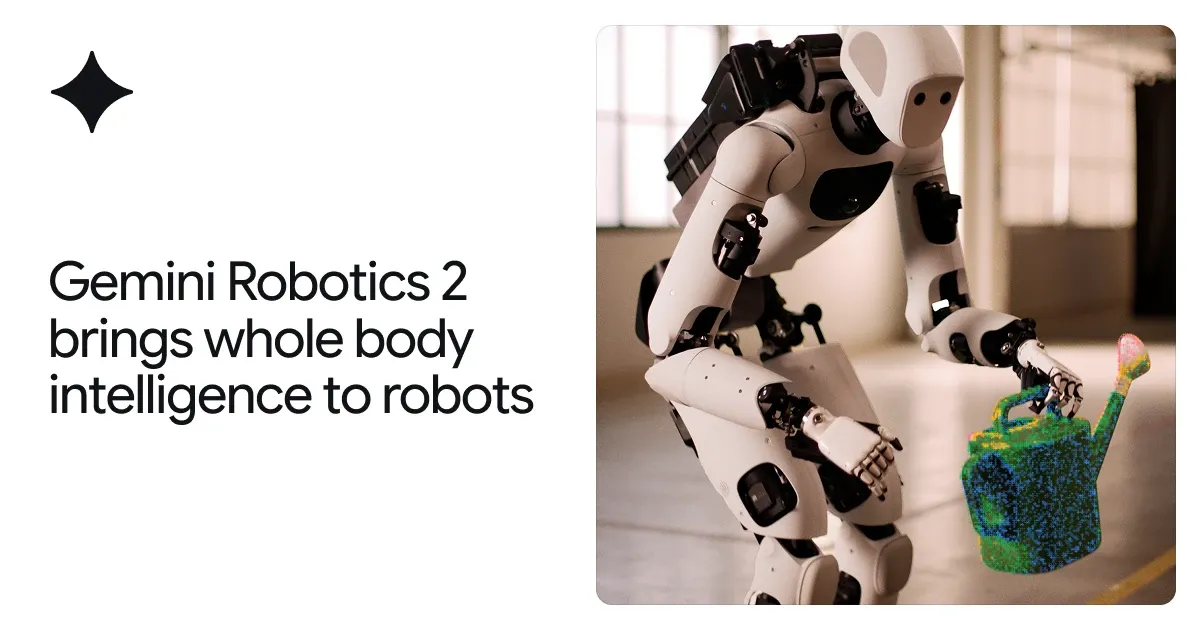
From feet to fingertips — we are teaching robots intelligent whole-body control, fine dexterity, and teamwork to complete a broad range of complex tasks.