Sep 2026· Proceedings of the 18th International Conference on Automotive User Interfaces and Interactive Vehicular Applications· 0 citations· 27 references
TL;DR
HACoD is proposed, a Human–Agent Emotional Co-Driving Framework that links driver emotional needs, human–agent collaboration patterns, and affective agent design elements and highlights the need for transparent data boundaries and real-world validation.
Abstract
As AI becomes increasingly embedded in intelligent cockpits, human-vehicle interaction is shifting from task assistance toward affective and collaborative driving experiences. Yet little is known about what emotional support drivers expect from in-vehicle AI agents or how these expectations can inform design. We conducted semi-structured interviews with 22 novice drivers and a follow-up evaluation with four experts from relevant domains. Thematic analysis identified six design dimensions spanning interaction modality, agent persona, feedback strategy, contextual adaptation, system transparency, and personalization. Participants expected AI agents to combine safety-critical guidance with emotionally calibrated support, including adaptive voice tone, multimodal prompts, explainable interventions, privacy-aware sensing, and roles that evolve from coach to companion. Based on these findings, we propose HACoD, a Human–Agent Emotional Co-Driving Framework that links driver emotional needs, human–agent collaboration patterns, and affective agent design elements. Expert feedback supported the framework’s coherence and design applicability while highlighting the need for transparent data boundaries and real-world validation.

Driver emotions such as stress, frustration, and anxiety are associated with riskier behavior and reduced situational awareness, motivating in-vehicle systems that regulate affect in real time. However, emotion-only approaches capture how a driver feels, but not why, limiting appropriate support delivery. We present Em...
Laura Radetzky, Krishnakant Shedge, Krishnaben Patel et al.· Adjunct Proceedings of the 1...· 0 citations
Results suggest that functional reliability and voice interaction quality form the primary acceptance baseline, while visual representation serves as a secondary and strategically differentiating layer for in-car conversational agents.
Esther Carolina Kaehne, Ignacio J. Alvarez· Adjunct Proceedings of the 1...· 0 citations
This work presents Affective Agent, a three-layer reference architecture for personalized intervention reasoning under uncertainty on wearable-class hardware that combines a compact sub-billion-parameter language model with physiological evidence, context, and user history to decide whether to intervene, without cloud...
R. Mun, Zi-Shen Wan, V. Reddi· IEEE Internet Computing· 0 citations
PAIR, a theory-based emotion-regulation companion, was deployed with 19 participants for 14 days and linked memory updates and retained corrections to cross-session personalization, informing future emotional support tools that adapt to evolving needs, learn from prior outcomes, and preserve user control over memory.
Kexin Quan, Zi-Jian Ding, Jia-Ye Yong et al.· 0 citations
AffAdapt is presented, a seamless interaction design framework for AI-personas, which coordinates streaming speech recognition, proactive turn-management, persona-grounded response generation, a persistent emotional state, and synchronized embodied output into a single interaction loop.
Nishanth Chidambaram, K. Paliwal, Kayla Hom et al.· 1 citation· ⚡1
The Vivience Framework for Affective Scaffolding is advanced, extending the Affective-Emotive Resonance model and presenting a system-level architecture separating the base language model from memory, inference, pedagogical-state estimation, relational policy, generation, multimodal expression, and governance.
At ICSOB 2026 in Gothenburg, we presented TenderIntell, our work on multi-agent support for tendering. This post looks back at the conference, the idea behind a panel of three AI reviewers who score each proposal independently, and why evaluating agents reliably is the question we keep coming back to. The post TenderIntell at ICSOB 2026: Three Days in Gothenburg appeared first on GPT-Lab.
MIT News · Artificial Intelligence· news.mit.eduNov 13, 2026
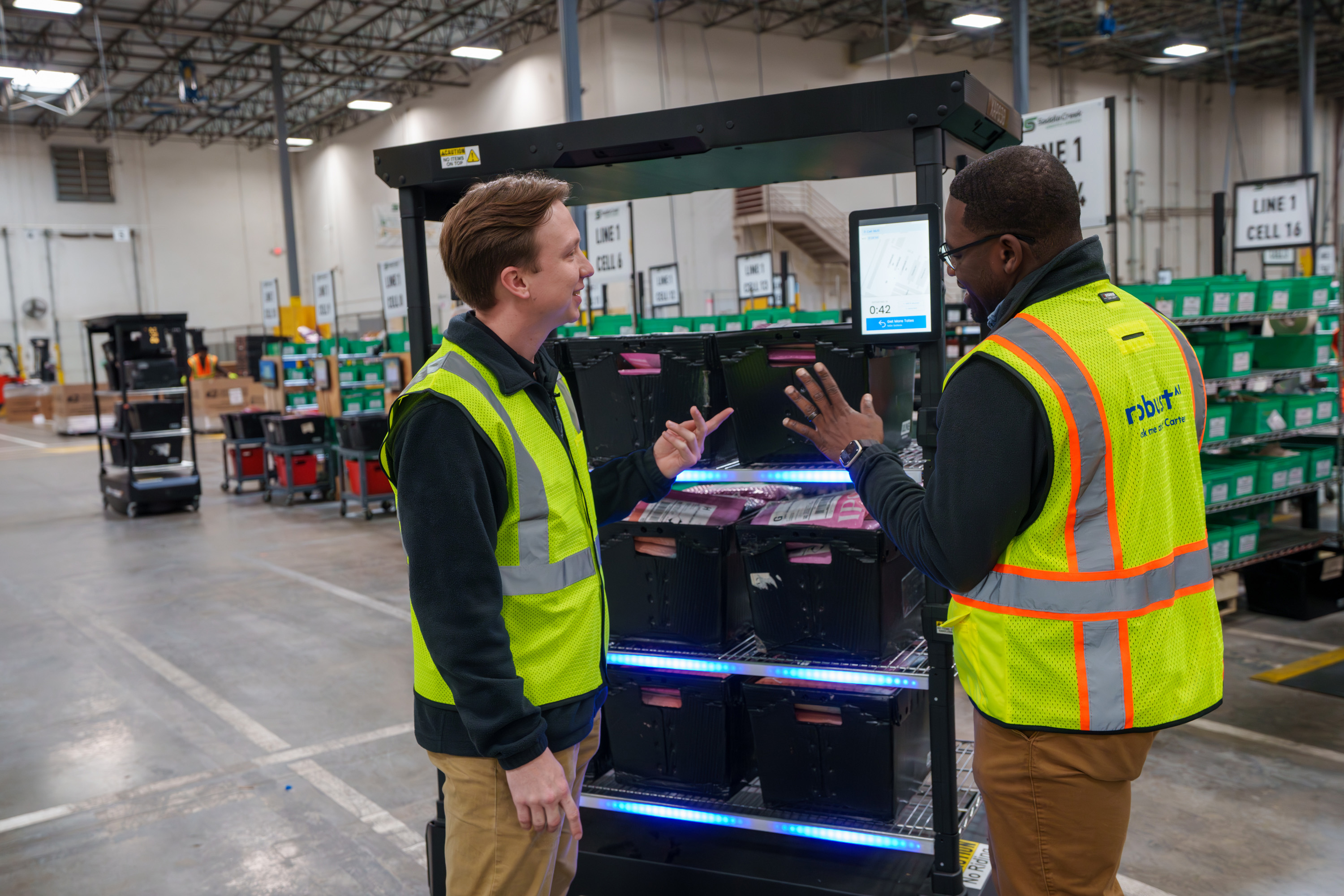
Founded by Anthony Jules ’92, SM ’92 and Professor Emeritus Rodney Brooks, Robust AI’s robots are designed to collaborate with humans in factories and warehouses.
MIT News · Artificial Intelligence· news.mit.eduNov 13, 2026