Sep 2026· AI and Ethics· Vol 6· 0 citations· 50 references
Authorship Attribution and Profiling
Abstract
AI-text detectors are increasingly used to police authorship in student assessment and scholarly publishing. This paper argues that they are the wrong instrument for that task. Its design combines a critical synthesis of empirical, information-theoretic, and policy evidence with an original documented exploratory multi-tool audit. The review synthesises empirical evaluations, information-theoretic results, and institutional policy decisions to develop a conceptual account of what detectors can directly observe: statistical or learned properties of submitted text, not provenance itself. Predictability-related properties such as low perplexity, reduced variation in local predictability, and formulaic density provide one mechanism through which both additional-language writing and highly conventional academic prose may become vulnerable to machine-authorship classification. While a growing number of universities across several national higher-education systems have disabled or restricted AI detection in high-stakes assessment, and a New York court has annulled a misconduct finding that rested on a detector score, detector reliance persists in three under-examined arenas: individual grading practice at scale, scholarly journal screening, and institutions without formal policy revision. The paper adds a documented exploratory multi-tool audit in which a single human-authored manuscript, submitted to five commercial detectors on the same day, received materially different classifications spanning from “0% human” to “Human Generated”, demonstrating substantial cross-tool inconsistency and limited independent verifiability of the underlying classifications. A paired exploratory comparison further found that extensive machine rewriting by a commercial “humanizer” materially degraded the manuscript while producing only a small change in the reported detection score. The paper distinguishes genuine false positives from definitional boundary cases involving AI-assisted translation and polishing, engages the counter-argument that AI-polished prose may itself flatten linguistic diversity in academic English, and proposes a concrete process-oriented assessment model based on declared starting points, versioned drafting, process artefacts, and targeted oral verification. The model predates generative AI in its component practices but acquires renewed relevance because final-text classification cannot establish authorship, understanding, or misconduct on its own.
The results are packaged in the Greenfield Startup Model (GSM), which explains the priority of startups to release the product as quickly as possible, and the need to shorten time-to-market, by speeding up the development through low-precision engineering activities.
Carmine Giardino, Nicolò Paternoster, M. Unterkalmsteiner et al.· IEEE Transactions on Softwar...· 178 citations· ⚡14
Software startup companies develop innovative, software-intensive products within limited timeframes and with few resources, searching for sustainable and scalable business models.
M. Unterkalmsteiner, P. Abrahamsson, Xiaofeng Wang et al.· e-Informatica Software Engin...· 157 citations· ⚡17
This study conducts a case survey study based on the secondary data of the major pivots happened in 49 software startups, and demonstrates that customer need pivot is the most common among all pivot types.
Sohaib Shahid Bajwa, Xiaofeng Wang, Anh Nguyen-Duc et al.· Empirical Software Engineeri...· 127 citations· ⚡15
The comparison of adopter and non-adopter sample reveals three potential adoption inhibitor, security, data privacy, and portability, which underlines the importance of the technical and security perspectives for research investigating the adoption of technology.
Nattakarn Phaphoom, Xiaofeng Wang, S. Samuel et al.· Journal of Systems and Softw...· 111 citations· ⚡8
This study investigates how Lean internal startup facilitates software product innovation in large companies and identifies its enablers and inhibitors, and shows the potential of the method-in-action framework to investigate the Lean startup approach in non-startup context.
Henry Edison, Nina M. Smørsgård, Xiaofeng Wang et al.· Journal of Systems and Softw...· 78 citations· ⚡6
The application of agile software methods and more recently the integration of Lean practices contribute to the trend of continuous improvement in the software industry. One such area warranting proper empirical evidence is a project’s operational efficiency when using the Kanban method. This short paper takes a new an...
Marko Ikonen, Petri Kettunen, Nilay V. Oza et al.· EUROMICRO Conference on Soft...· 67 citations· ⚡9
Related blog posts
MIT News · Artificial Intelligence· news.mit.eduOct 1, 2026
Able to defeat top-ranked human players and more efficient than other models, the new system could help decision-makers in military maneuvers or business negotiations.
Microsoft Research Blog· microsoft.comSep 29, 2026
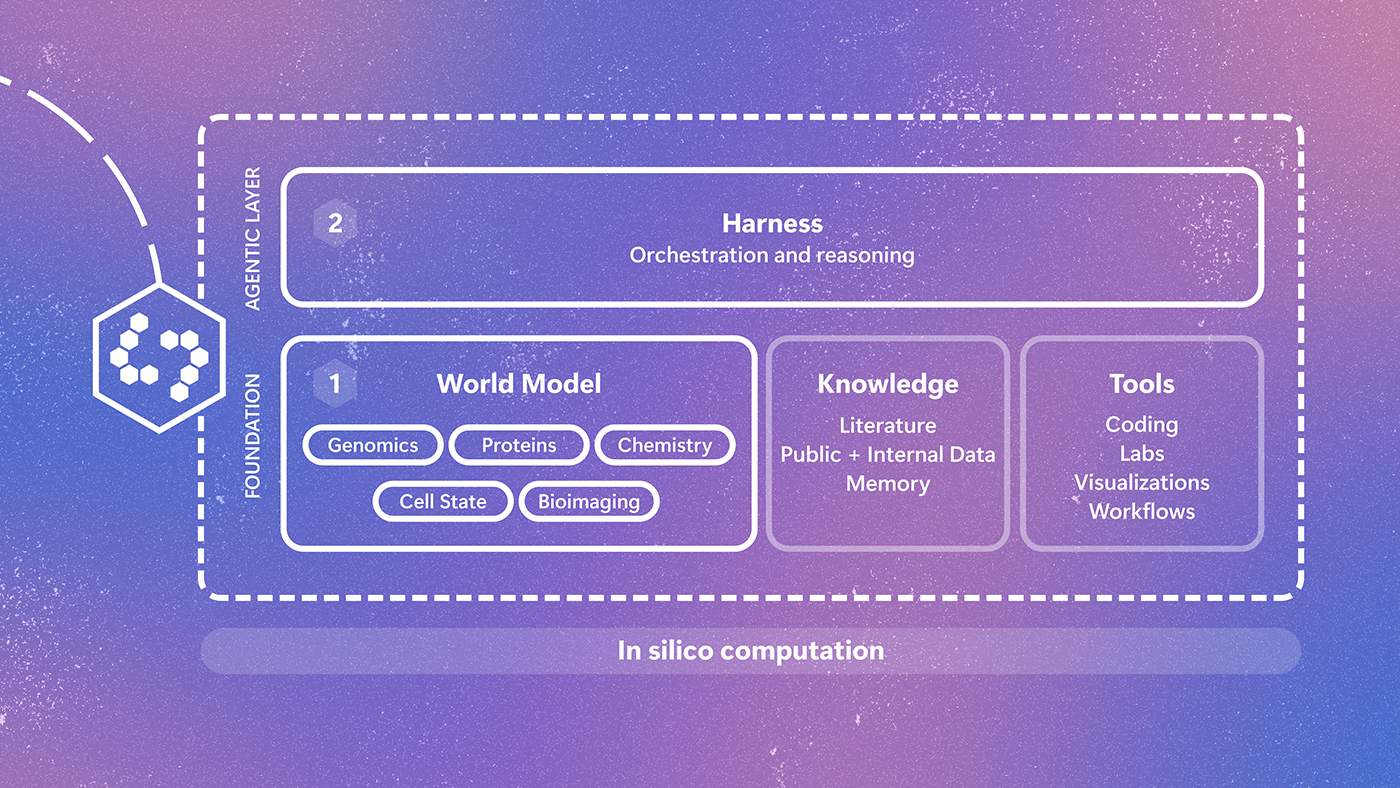
Biology doesn't operate in silos, and neither should the AI representation of it. Quine is an early-stage research effort to create a multimodal world model of biology. By connecting insights across biological scales and modalities, Quine helps scientists computationally search a space far larger than intuition allows and prioritize hypotheses before they reach the lab. Experimental results provide important feedback, helping researchers sharpen future research directions. The post Introducing Q…