Skip to content

Class balanced diabetic retinopathy image synthesis using a latent diffusion framework

Sep 2026 · Discover Artificial Intelligence · Vol 6 · 0 citations · 52 references
Retinal Imaging and Analysis

TL;DR

This study establishes the Diabetic Retinopathy Latent Diffusion Synthesizer (DR-LDS) as a highly resource-efficient solution to the medical data bottleneck by leveraging a fine-tuned Variational Autoencoder for domain-adapted latent space compression, alongside an optimized U-Net.

Abstract

Diabetic Retinopathy (DR) is one of the major causes of preventable blindness globally. Automated screening for DR is critical but is severely hindered by data scarcity and class imbalance. Real-world datasets, such as APTOS 2019, exhibit extreme class imbalance, where sight-threatening classes are statistically rare. Traditional augmentation fails to capture complex pathological features, while Generative Adversarial Networks (GANs) often suffer from mode collapse. Existing diffusion approaches typically operate in pixel space, limiting image resolution and requiring extreme computational resources. To address this, we introduce the Diabetic Retinopathy Latent Diffusion Synthesizer (DR-LDS), a class-conditional framework that synthesizes high-fidelity, \documentclass[12pt]{minimal} \usepackage{amsmath} \usepackage{wasysym} \usepackage{amsfonts} \usepackage{amssymb} \usepackage{amsbsy} \usepackage{mathrsfs} \usepackage{upgreek} \setlength{\oddsidemargin}{-69pt} \begin{document}$$512 \times 512$$\end{document} fundus images natively deployable on consumer-grade hardware. By leveraging a fine-tuned Variational Autoencoder (VAE) for domain-adapted latent space compression, alongside an optimized U-Net, our method achieves superior anatomical realism with convergence in just 150 epochs (at 17 min 22 s per epoch). Extensive benchmarking demonstrates that DR-LDS outperforms state-of-the-art baselines, achieving a Fréchet Inception Distance (FID) of 8.05. When used to augment minority classes to a uniform target for the APTOS 2019 dataset across 11 deep learning architectures, our synthetic data significantly improved diagnostic accuracy by up to 15.25% (\documentclass[12pt]{minimal} \usepackage{amsmath} \usepackage{wasysym} \usepackage{amsfonts} \usepackage{amssymb} \usepackage{amsbsy} \usepackage{mathrsfs} \usepackage{upgreek} \setlength{\oddsidemargin}{-69pt} \begin{document}$$p < 0.001$$\end{document}), enabling a lightweight SqueezeNet model to reach 95.60% validation accuracy and an F1 Score of 0.96. Moreover, rigorous data leakage analyses and Explainable AI (XAI) verify that DR-LDS learns genuine pathological biomarkers. This study establishes DR-LDS as a highly resource-efficient solution to the medical data bottleneck. The source code is available at: https://github.com/Touhid-Alam/DR-LDS

Read PDF

Similar papers

Open access Aug 2026

A Hybrid-Based Generative Adversarial Network Pattern For Diabetic Retinopathy Prediction

Diabetic retinopathy (DR), a primary cause of lack of vision, can be detected early with comprehensive examination of fundus visuals of the retina that can be averted worldwide. Several noise sources frequently damage fundus visuals, reducing visual quality and making it more difficult to see fragile macular structures...

Minnu C. Tomy, C. Malathy · 0 citations
Conference Aug 2026

Synthetic Data Augmentation via Class-Conditional Latent Diffusion Models for Fundus Image Quality Assessment

Reliable automated fundus image quality assessment (FIQA) is a critical prerequisite for large-scale diabetic retinopathy (DR) screening, yet clinical datasets typically suffer from severe class imbalance that undermines classifier performance on minority quality grades. We present a comprehensive comparative study of...

N. Sharaf, S. Abdulwahab, Domènec Puig et al. · 0 citations
Open access Sep 2026

GAN-Driven Retinal Augmentation: A Study of Synthetic Augmentation Strategies and Their Effect on Multilabel Retinal Disease Classification

Diabetic retinopathy (DR) is a leading cause of preventable blindness that affects millions of people with diabetes across all income settings. Automated grading of fundus photographs holds real promise for expanding screening access in resource-limited settings. A persistent barrier, however, is class imbalance, where...

Micheal T. Oyebamiji, Hilary Orefo · 0 citations
Open access Sep 2026

A Fair Evaluation of Lightweight CNNs and Ordinal Regression for Diabetic Retinopathy Grading: The Double-Rebalancing Pitfall

Diabetic retinopathy (DR) is a leading cause of preventable blindness worldwide, affecting approximately one-third of diabetic patients. Early detection through automated retinal screening systems can significantly reduce the burden of vision loss. In this study, we present a comparative analysis of three lightweight c...

Fatih Şahin · 0 citations
Open access Aug 2026

Clinical-guided deep learning framework for diabetic retinopathy: integrating lesion-aware attention, adversarial augmentation, and uncertainty quantification

The global prevalence of diabetic retinopathy (DR) is increasing in parallel with the rising burden of diabetes, posing a substantial public health challenge. Current automated DR screening systems often lack lesion-level interpretable, robustness against class imbalance, and reliable uncertainty estimation, limiting t...

Sehrish Saleem, Ramzan Talib, Muhammad Kashif Hanif et al. · 1 citation
#explainable ai Open access Sep 2026

Loss-Aware Residual Learning for Imbalanced Multi-Class Diabetic Retinopathy Diagnosis

Diabetic Retinopathy (DR) is a severe complication of diabetes that can lead to vision impairment or blindness, making early detection crucial. Traditional deep learning models often struggle with class imbalance in medical datasets, leading to poor performance for minority classes. This study proposes a novel deep...

Miracle Ugomma Anunobi · 0 citations

Related blog posts

MIT News · Artificial Intelligence Sep 30, 2026

This game-playing AI is the new champ at Stratego

Able to defeat top-ranked human players and more efficient than other models, the new system could help decision-makers in military maneuvers or business negotiations.

Microsoft Research Blog Sep 29, 2026

Introducing Quine: An AI research system designed for the complexity of biology

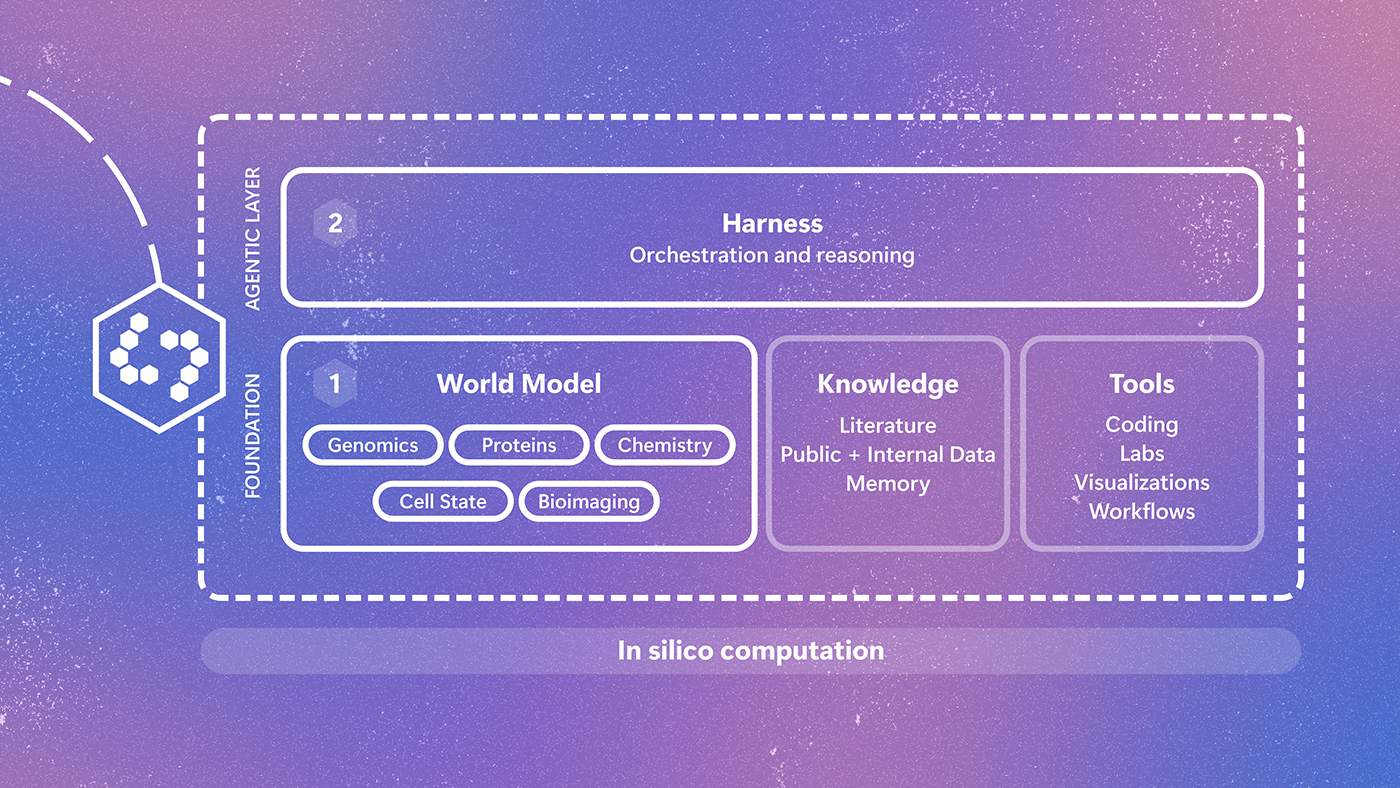
Biology doesn't operate in silos, and neither should the AI representation of it. Quine is an early-stage research effort to create a multimodal world model of biology. By connecting insights across biological scales and modalities, Quine helps scientists computationally search a space far larger than intuition allows and prioritize hypotheses before they reach the lab. Experimental results provide important feedback, helping researchers sharpen future research directions. The post Introducing Q…

We use cookies to run the site and, with your consent, for analytics and to show ads. See our Cookie Policy.