This paper proposes an explainable decision-making framework that integrates a neuro-fuzzy prediction model with a two-stage explainable component, and is believed to be the first fuzzy logic-based framework enabling both feature-level and local rule-based explanations of black box models.
Abstract
Predicting when maritime systems require maintenance can be critical, avoiding hazards and costly consequences. To address this problem, this paper proposes an explainable decision-making framework that integrates a neuro-fuzzy prediction model with a two-stage explainable component. The first stage of this component produces feature-attribution explanations, using gradient-based saliency maps, and the second stage extracts local rules using a fuzzy decision tree. The proposed framework is generic and can be integrated into any deep learning-based approach, rendering it explainable. To the best of our knowledge, this is the first fuzzy logic-based framework enabling both feature-level and local rule-based explanations of black box models. This approach aims to foster trustworthiness in decision making through user-understandable machine inferences. The performance of the proposed framework using a deep residual-based neural backbone is evaluated on various general-purpose public benchmark datasets, and its utility in maritime is demonstrated in the context of early fault detection in a naval propulsion system dataset. The results indicate that it can provide predictions outperforming relevant state-of-the-art approaches, with an average AUC-ROC (Area Under the Receiver Operating Characteristic Curve) value, reaching up to 99%, while offering the advantage of explainability.

A novel framework based on a fuzzy decision tree and a deep residual neural network, aiming to perform explainable PdM on naval vessels is proposed, able to generate fuzzy local rules based on the dataset used, and can provide explanations of its outcomes in a way that is understandable to users, thereby gaining their...
Dionysis Kalogeropoulos, Georgia Sovatzidi, P. Kalozoumis et al.· Proceedings of the 29th Pan-...· 0 citations
Driving drowsiness is a major cause of road accidents, underscoring the need for reliable detection systems to enhance road safety. This paper introduces a novel hybrid architecture, adaptive neuro-fuzzy inference system (ANFIS) (EM)–LSTM, which integrates the complete fuzzy inference process with recurrent modeling, c...
Mouhcine Lakhloufi, E. Mellouli· Bulletin of Electrical Engin...· 0 citations
This study addresses the challenge of fault prediction in smart lamp post systems. It proposes a fault-prediction and intelligent decision-making framework (DSADN) based on an improved machine-learning algorithm. By integrating a support vector machine (SVM) optimized with a kernel function, a long short-term memory (L...
Modern supply chain systems require more than accurate demand forecasts and they also need decision making tools that can be used directly in the real operations. While many machine learning models provide strong predictive performance, they often lack in transparency and are difficult to use in the practice. In this w...
Praveen Kumar, R. Pavithra, M. Trupthi· 2026 International Conferenc...· 0 citations
An uncertainty-aware transformer framework is proposed which is explainable when forecasting the short-term PV power under dynamically changing environmental conditions and then explains the renewable energy forecasting system in the entire system for photovoltaic uncertainty-aware and interpretable prediction.
Udit Mamodiya, I. Kishor, P. Mudholkar et al.· International Journal of Dat...· 0 citations
Remaining useful life (RUL) prediction is a key task in predictive maintenance; however, most existing methods emphasize point estimation accuracy, limiting their ability to characterize predictive uncertainty and support maintenance decision-making. To address this issue, this paper proposes RQDNet, an integrated fram...
Yu Wang, Wei Zhang, Zhen Li et al.· Measurement science and tech...· 0 citations
Related blog posts
MIT News · Artificial Intelligence· news.mit.eduNov 17, 2026
By studying the computational foundations of language learning, Associate Professor Jacob Andreas builds intelligent systems that can communicate effectively with humans.
Microsoft Research Blog· microsoft.comNov 16, 2026
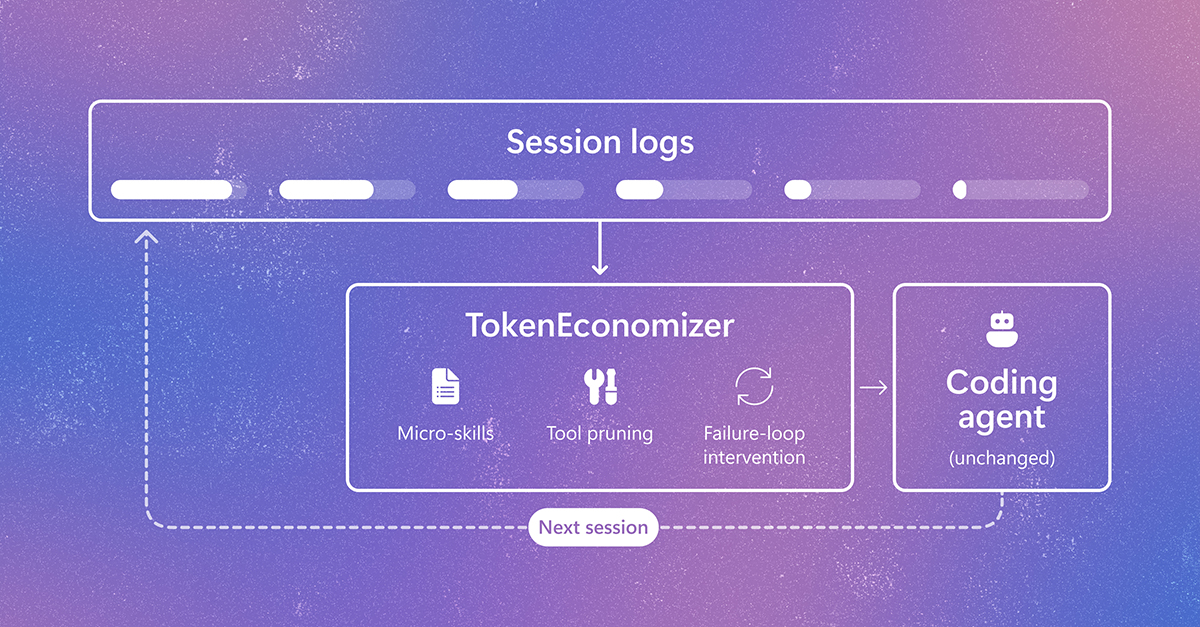
AI coding agents are increasingly help developers fix bugs and build features largely on their own, but every interaction with their models consumes tokens. In each session, an agent sends instructions, tool descriptions, and session history to its model. Most efforts to reduce this cost focus on individual tasks. Yet developers return to the same […] The post TokenEconomizer: Learning from Experience to Make AI Coding Agents More Efficient appeared first on Microsoft Research.
MIT News · Artificial Intelligence· news.mit.eduNov 13, 2026