Skip to content

A Federated Artificial Intelligence Framework for Optimizing Pancreatic Cancer Treatment - Strategy Update

Sep 2026 · arXiv.org · Vol abs/2609.24718 · 0 citations · 5 references
Computer Science

TL;DR

This report sharing the experience in tackling the challenges and preliminary results of the actual federated learning AI pipelines for improving subtype identification and assessing treatment options in pancreatic cancer.

Abstract

While a centralized approach involving patient consent to collect and analyze data centrally would theoretically offer the best data quality and predictive performance, it is not always feasible in practice. Federated Learning (FL) architectures have shown to be a very promising approach to use and access distributed disease related resources within the GDPR boundaries. In a previous case report, we described the preconditions at the participating sites and necessary administrative and process related steps to prepare data, people and infrastructure for improving subtype identification and assessing treatment options in pancreatic cancer. We update this report sharing our experience in tackling the challenges and show preliminary results of the actual federated learning AI pipelines. At the participating sites, we have to identify and annotate the data being accessible after extraction and transformation in a local FL hub - in our case a centrally developed and distributively deployed Docker container. This container comprises the FL scripts generating local models. We apply a newly developed FL algorithm considering all local features, including partial overlapping features specific to the local sites. Theoretically, an annotation in a cancer setting should succeed using the German oncology core data set (oBDS), which is already utilized for mandatory reporting to cancer registries, and can be sustained in the FL setting. The FL algorithms deal robustly with partially overlapping features as we showed with public data sets. Major roadblocks including straightening operational concepts for the infrastructures, ethics approval for such novel architectures and support for every site have been addressed. However, scaling up this approach in the future faces hurdles; while including broader multi-modal data sets should be feasible, large-scale deployment to more sites remains challenging.


View source

Similar papers

Open access Oct 2026

FedMann: A Manually Coordinated Federated Learning Framework Applied to Multiple Myeloma—A Feasibility Study

Background/Objectives: Federated learning (FL) enables multi-institutional model development in oncology without sharing patient-level data, but automated FL infrastructures typically require dedicated servers, firewall modifications, and substantial IT support to deploy. These requirements may be prohibitive for small...

Stuart W. Sommers, Chun-Lei Zheng, J. Corrigan et al. · 0 citations
Conference Sep 2026

A Secure Federated GNN Framework for Healthcare Prediction

Artificial Intelligence (AI) and Machine Learning (ML) have greatly enhanced several areas of healthcare, including disease prediction and clinical decision-making, but centralised models are negatively affecting patient data privacy and security. This paper presents a secure healthcare prediction framework based on Fe...

Deepika, Charanya Vanditha, Sumit Gupta et al. · 0 citations
Review Open access Oct 2026

Federated learning in cancer imaging: a comprehensive review and future outlook.

The rapid development of artificial intelligence has promoted the advancement of data-driven AI medical models, bringing transformative changes to the field of traditional cancer imaging by significantly improving diagnostic accuracy. However, despite these remarkable achievements, a fundamental challenge remains: data...

Yi-Ming Shi, Wen Li, Jing Cai · 0 citations

Related blog posts

MIT News · Artificial Intelligence Nov 17, 2026

Learning the language of machine learning

By studying the computational foundations of language learning, Associate Professor Jacob Andreas builds intelligent systems that can communicate effectively with humans.

Microsoft Research Blog Nov 16, 2026

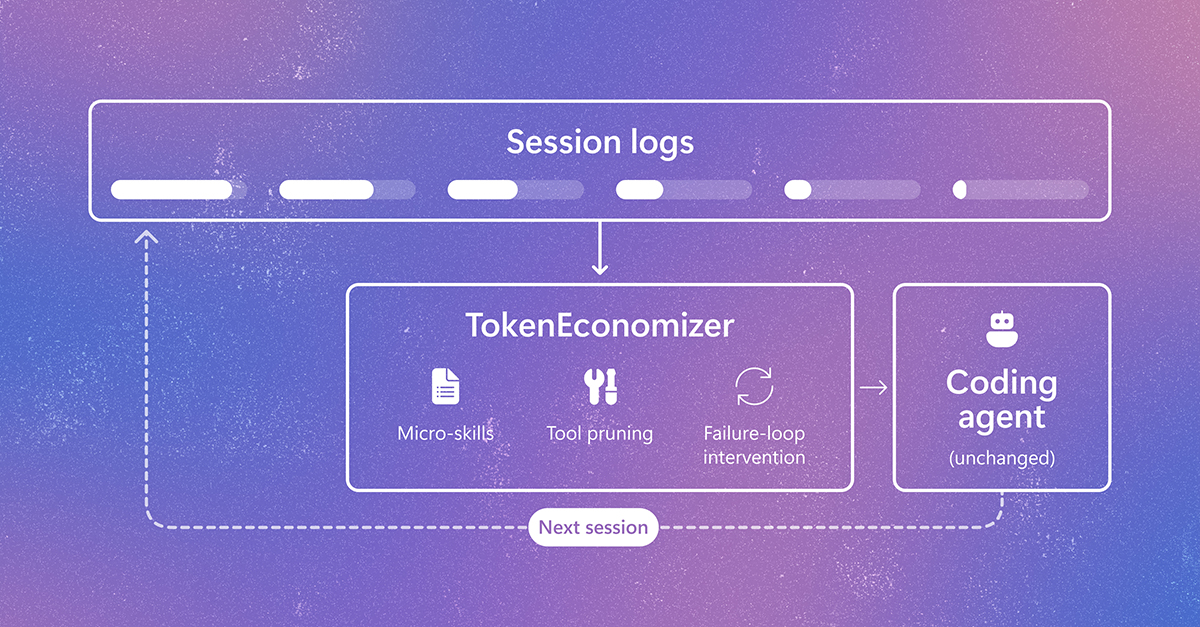
TokenEconomizer: Learning from Experience to Make AI Coding Agents More Efficient

AI coding agents are increasingly help developers fix bugs and build features largely on their own, but every interaction with their models consumes tokens. In each session, an agent sends instructions, tool descriptions, and session history to its model. Most efforts to reduce this cost focus on individual tasks. Yet developers return to the same […] The post TokenEconomizer: Learning from Experience to Make AI Coding Agents More Efficient appeared first on Microsoft Research.

We use cookies to run the site and, with your consent, for analytics and to show ads. See our Cookie Policy.