Skip to content

ORION-CMR: On-scanner Reporting with Integrated Foundation Model for End-to-End Cardiac MRI Analysis and Interpretation

Sep 2026 · 0 citations · 29 references
Engineering Computer Science Physics

Abstract

Cardiovascular magnetic resonance (CMR) provides comprehensive cardiac assessment but remains underutilized because of the complexity of acquisition, post-processing, and interpretation. Existing artificial intelligence (AI) methods address isolated tasks, limiting clinical integration. We present ORION-CMR (On-scanner Reporting with Integrated fOunda-tioN Model), the first clinically evaluated scanner-native end-to-end CMR foundation model. Pretrained on 12,896,733 CMR images from 9,258 studies, ORION-CMR performs sequence classification, ventricular function assessment, late gadolinium enhancement (LGE) detection, binary and multiclass disease classification, and local large language model-based report generation in approximately 90 seconds. The framework. was evaluated on public benchmarks and clinically validated in a multi-vendor cohort of 68 subjects with normal examinations, congenital heart disease, dilated cardiomyopathy, and myocardial infarction. ORION-CMR outperformed supervised baselines and the previously published CMR foundation model (CMR-FM), achieving state-of-the-art performance for LGE classification and scar segmentation. Clinical evaluation achieved an AUC of 0.96 for normal-versus abnormal classification and 0.88 for multiclass disease classification, while generated reports demonstrated 81.4% agreement with expert interpretation. These results demonstrate the feasibility of real-time scanner-native AI-assisted CMR analysis and automated report generation.

View source

Similar papers

Preprint Sep 2026

CMRVision: A Foundation Model for Cardiac MR Image Analysis

CMRVision, a CMR-specific foundation model trained using DINOv3-style self-supervised learning on a multi-center, multi-sequence cohort of 36 million CMR images, is introduced and the potential of CMRVision to support robust and generalizable cardiac MRI analysis across multiple sequences and views is highlighted.

Athira J. Jacob, Puneet Sharma, D. Rueckert · 0 citations
Open access Sep 2026

AI-Powered Detection of Left Ventricular Myocardial Scar from Dual-Sequence CT: Global and Segmental Prediction Validated by CMR​.

The potential role of the proposed CT-based framework in providing complementary scar-related information and identifying high-risk patients who may benefit from further CMR evaluation in appropriate clinical settings is supported.

Ren-Jie Lu, Tai-Yu Yang, Ming-Yang Li et al. · 0 citations
Open access Aug 2026

Assessment and validation of the established free-running framework for cardiac function by magnetic resonance imaging at 1.5T (FAST-CMR): an international multi-center, multi-vendor study.

This first prospective international multi-center, multi-vendor evaluation of 5D FISS-FRF can provide measurements that are comparable to conventional 2D cine across diverse clinical settings, while potentially offering improvements in workflow, scan efficiency and patient experience is evaluated.

K. Eyre, Kenan Kaya, T. Coudert et al. · 0 citations
Open access 2026

Native T1 and T2 mapping reference values in a South African population: Scanner-specific calibration on a 1.5 Tesla Siemens Aera system at Tygerberg Hospital

Background: Quantitative myocardial T1 and T2 mapping is integral to cardiovascular magnetic resonance (CMR) imaging. Absolute myocardial relaxation times vary across imaging platforms due to system-specific technical factors. Consequently, mapping reference ranges are not transferable across platforms and require scan...

L. J. Giliomee · 0 citations
Conference Aug 2026

SCAN-R: bridging precision imaging and natural language for automated stroke diagnosis

This work presents Stroke CT Analysis and Natural Language Reporting (SCAN-R), a unified end-to-end framework that integrates multiclass stroke detection, Transformerenhanced U-Net segmentation with task-specific pre-trained backbones, and Retrieval-Augmented Generation for evidence-based clinical report generation.

Le Minh Toan Truong, X. Nguyen, Dang Khanh Tran · 0 citations
Review Aug 2026

Advancements in T1 Mapping for Cardiac MRI: Comprehensive Review of Techniques, Clinical Applications, Artificial Intelligence Integration, and Future Perspectives.

INTRODUCTION The use of cardiovascular magnetic resonance (CMR) T1 mapping is becoming the dominant method for quantitatively characterizing diffuse tissue abnormalities in the myocardium that cannot be detected by traditional late gadolinium enhancement (LGE). This review provides a comprehensive overview of recent te...

Mariem Dali, Narjes Benameur, Wafa Baccouch et al. · 0 citations

Related blog posts

Microsoft Research Blog Aug 11, 2026

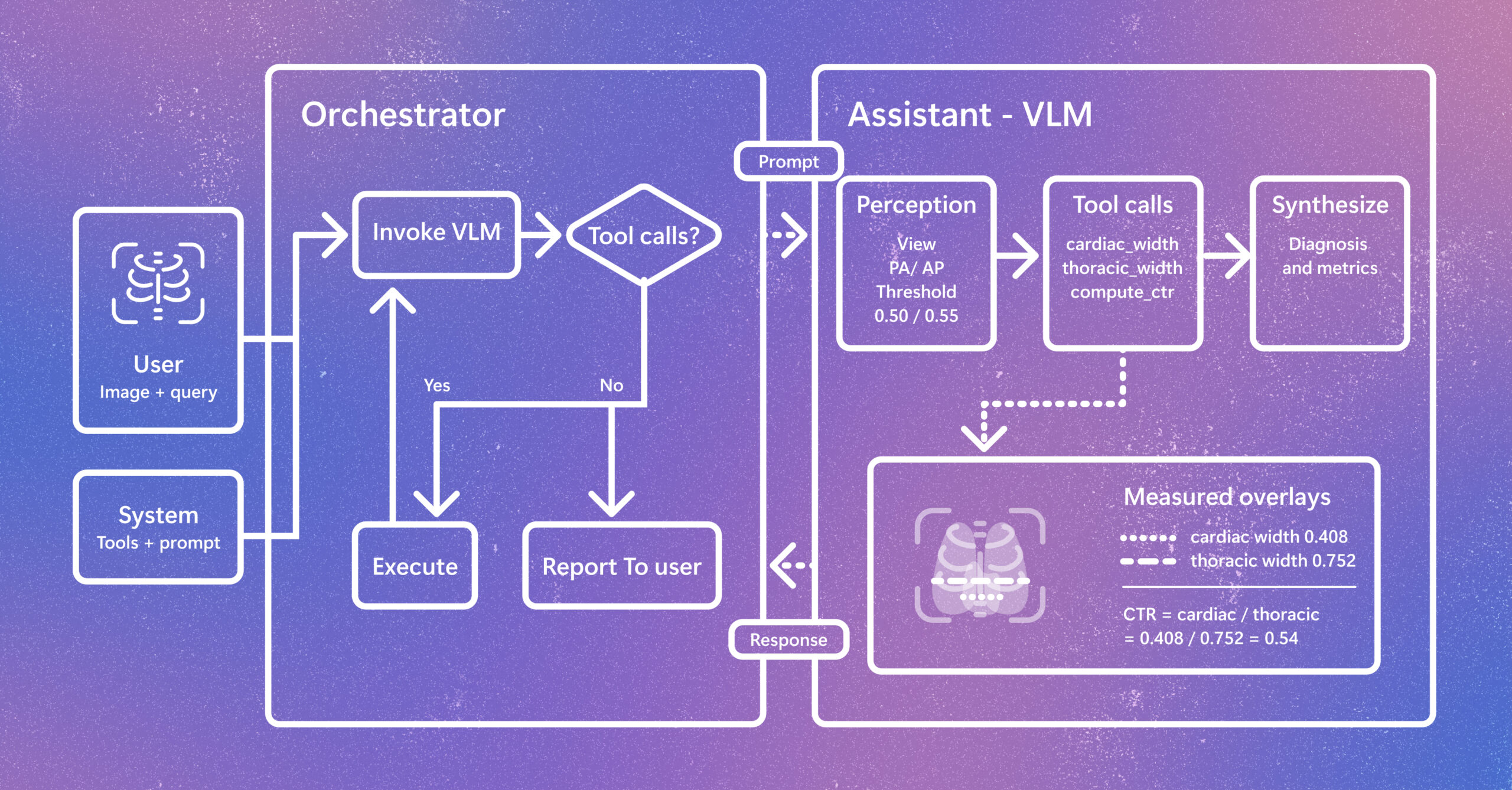
Introducing CARE-X: Towards Clinically Useful Radiology VLMs with Auxiliary Supervision, Reward-Aligned Learning, and Tool-Augmented Measurement

Radiology AI is evolving beyond report generation. CARE-X explores a unified approach that combines flexible reasoning, calibrated predictions, and measurement-based tools for chest X-ray interpretation. The post Introducing CARE-X: Towards Clinically Useful Radiology VLMs with Auxiliary Supervision, Reward-Aligned Learning, and Tool-Augmented Measurement appeared first on Microsoft Research.

MIT News · Artificial Intelligence Oct 7, 2026

Discovering the value of humanistic inquiry

Students in MIT’s Concourse program delve deeply into the human condition, debate challenging questions, and learn to develop judgment about issues that can’t be quantified.

We use cookies to run the site and, with your consent, for analytics and to show ads. See our Cookie Policy.