Evaluation of Computer-Use Agents (CUAs) is often limited to the final deliverables they create (at the end of hundreds of steps) and assessed with functional verifiers, as seen in OSWorld. However, such evaluation of end-state performance lacks transparency into how and why agents fail in various tasks, obfuscating critical insight for subsequent improvement. For instance, agents that err during keyboard inputs would require a different mitigation strategy from those that fail to precisely provide click-based inputs on the graphical UI. We introduce OSWorld-Pro: a set of over 300 tasks containing over 2800 subgoals to enable the procedural evaluation of CUAs grounded in over 67,000 human annotations. We use robust human-aligned LLM-Judges to evaluate the fulfillment of OSWorld-Pro subgoals and thereby reveal the progress that models make throughout a series of sequentially dependent subgoals. Our findings reveal that OSWorld-Pro is challenging even for state-of-the-art LLMs, with top performers like Claude Opus 5 achieving only 75.7% vs. 83.4% on OSWorld. Furthermore, we identify critical process-focused failure modes of various models (e.g. subgoal-irrelevant actions and click-based mistakes) to provide insights to improve performance and efficiency of CUAs.

This publication proposes a definition and a classification of agile software development approaches and analyses ten software development methods that can be characterized as being "agile" against the defined criterion.
P. Abrahamsson, O. Salo, Jussi Ronkainen et al.· arXiv.org· 727 citations· ⚡54
The results indicate that software engineering work practices are chosen opportunistically, adapted and configured to provide value under the constrains imposed by the startup context.
Nicolò Paternoster, Carmine Giardino, M. Unterkalmsteiner et al.· Information and Software Tec...· 394 citations· ⚡54
The possibility of inferring high-dimensional data inference in a model that consists of a prior and an auxiliary differentiable constraint given some additional information is considered, thereby allowing a range of potential applications in adapting models to new domains and tasks.
Alexandros Graikos, Esmeralda S. Whitammer, N. Jojic et al.· Neural Information Processin...· 316 citations· ⚡15
It is proved that any global minimizer of the trajectory balance objective can define a policy that samples exactly from the target distribution, and empirically demonstrate the benefits of the trajectories balance objective for GFlowNet convergence, diversity of generated samples, and robustness to long action sequenc...
Esmeralda S. Whitammer, Moksh Jain, Emmanuel Bengio et al.· Neural Information Processin...· 302 citations· ⚡60
Consequences of happiness and unhappiness that are beneficial and detrimental for developers' mental well-being, the software development process, and the produced artifacts are found.
D. Graziotin, Fabian Fagerholm, Xiaofeng Wang et al.· Journal of Systems and Softw...· 236 citations· ⚡13
The Mobile-D approach is briefly outlined here and the experiences gained from four case studies are discussed, which helped develop an agile development approach for mobile application development.
P. Abrahamsson, Antti Hanhineva, H. Hulkko et al.· Conference on Object-Oriente...· 225 citations· ⚡18
Related blog posts
MIT News · Artificial Intelligence· news.mit.eduSep 29, 2026
Professor Sherry Turkle’s new book, “Artificial Intimacy,” offers a withering critique of chatbots and the antisocial dynamics she believes they encourage.
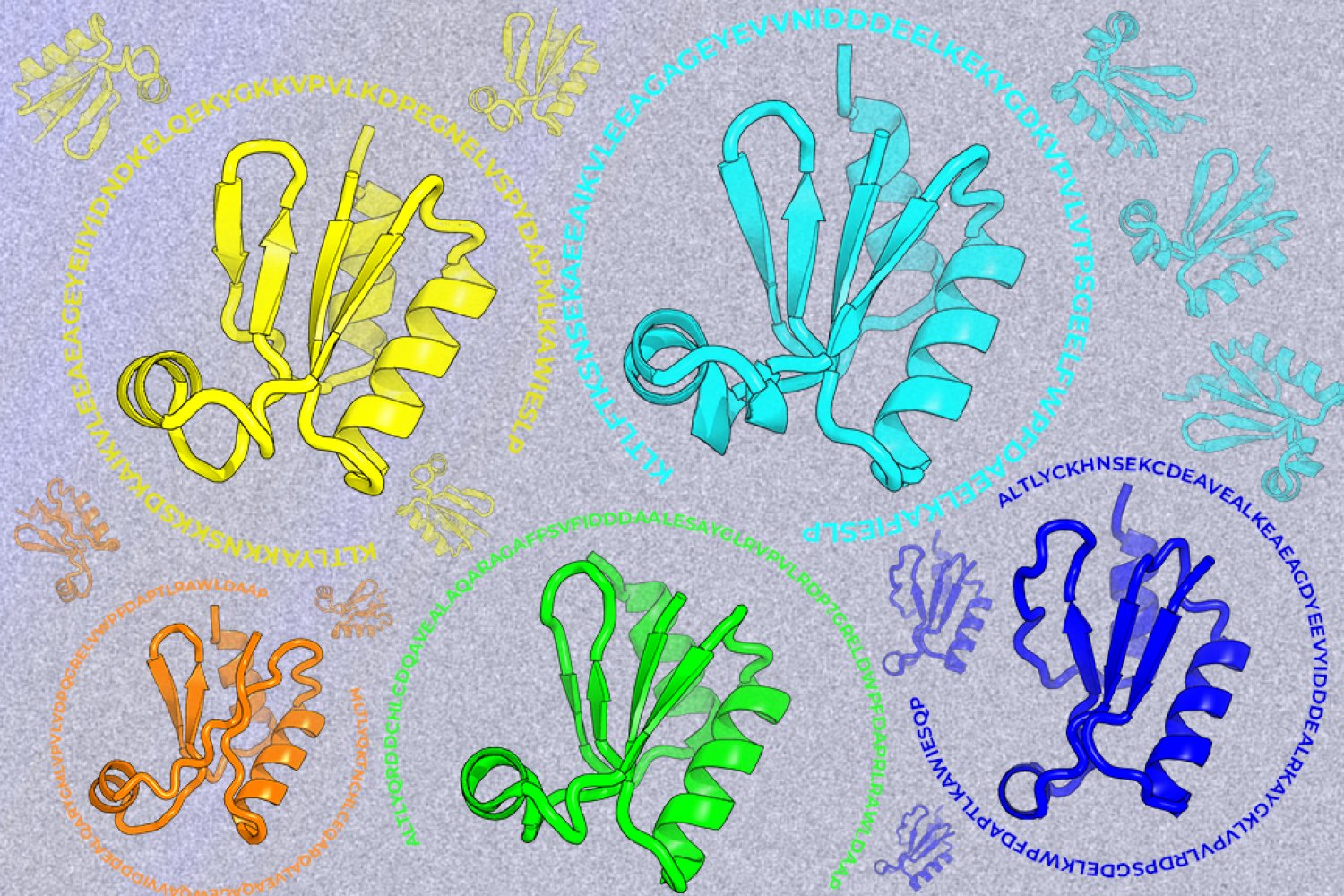
A new machine-learning framework aims to improve the success rate of computational protein design while moving away from results that reproduce sequences found in nature.
We use cookies to run the site and, with your consent, for analytics and to show ads.
See our Cookie Policy.