Skip to content

Developing a Federated, Lightweight, Interpretable, and Specialized AI-Based Intrusion Detection System for Medical Internet of Things (IoMT) Environments

Sep 2026 · Applied Informatics · 0 citations · 28 references
Network Security and Intrusion Detection

Abstract

The rapid expansion of the Internet of Medical Things (IoMT) has enhanced healthcare services, but it has also exposed these systems to a growing range of cyberattacks. Addressing this challenge requires effective intrusion detection solutions. Machine learning-based intrusion detection systems (IDSs) offer a promising approach. In this research, we leverage IoMT-TrafficData, a recently published dataset specific to IoMT environments, to develop intrusion detection models based on federated learning (FL), which preserves data privacy while enabling the use of lightweight learning algorithms suited to resource-constrained devices. In addition, SHAP-based interpretability methods are employed to explain model decisions, thereby improving reliability and transparency. Compared with existing IDS solutions for IoMT, this research proposes an approach that balances performance, privacy, and interpretability while accounting for resource limitations, resulting in three unified, lightweight, and interpretable detection models tailored to different data types in IoMT environments. This work thus provides a solid foundation for future research on secure medical IoT systems.


Read PDF

Similar papers

#machine learning Review Open access Oct 2014

Software development in startup companies: A systematic mapping study

The results indicate that software engineering work practices are chosen opportunistically, adapted and configured to provide value under the constrains imposed by the startup context.

Nicolò Paternoster, Carmine Giardino, M. Unterkalmsteiner et al. · 394 citations · ⚡54
#machine learning Review Open access Jun 2014

Why Early-Stage Software Startups Fail: A Behavioral Framework

This state-of-practice investigation was performed using a literature review followed by a multiple-case study approach and presents how inconsistency between managerial strategies and execution can lead to failure by means of a behavioral framework.

Carmine Giardino, Xiaofeng Wang, P. Abrahamsson · 175 citations · ⚡19
#machine learning Review Open access Oct 2016

“Failures” to be celebrated: an analysis of major pivots of software startups

This study conducts a case survey study based on the secondary data of the major pivots happened in 49 software startups, and demonstrates that customer need pivot is the most common among all pivot types.

Sohaib Shahid Bajwa, Xiaofeng Wang, Anh Nguyen-Duc et al. · 127 citations · ⚡15
#artificial intelligence Conference Open access Apr 2020

ECCOLA - a Method for Implementing Ethically Aligned AI Systems

The method, ECCOLA, is presented, which aims at making the high-level AI ethics principles more practical, making it possible for developers to more easily implement them in practice.

Ville Vakkuri, Kai-Kristian Kemell, P. Abrahamsson · 64 citations · ⚡6
#computer vision Review Apr 2024

AI-powered Code Review with LLMs: Early Results

The goal is to not only refine the accuracy of the LLM-based tool but also to underscore its potential in streamlining the software development lifecycle through proactive code improvement and education.

Z. Rasheed, Malik Abdul Sami, Muhammad Waseem et al. · 62 citations · ⚡3

Related blog posts

GPT-Lab Aug 28, 2026

We built an AI factory for HVAC control

What does it take to trust AI-driven HVAC optimization? Our AI Model Factory combines agents, machine learning, reinforcement learning and deterministic checks in a governed workflow designed for messy, real-world building data. The post We built an AI factory for HVAC control appeared first on GPT-Lab.

Microsoft Research Blog Aug 11, 2026

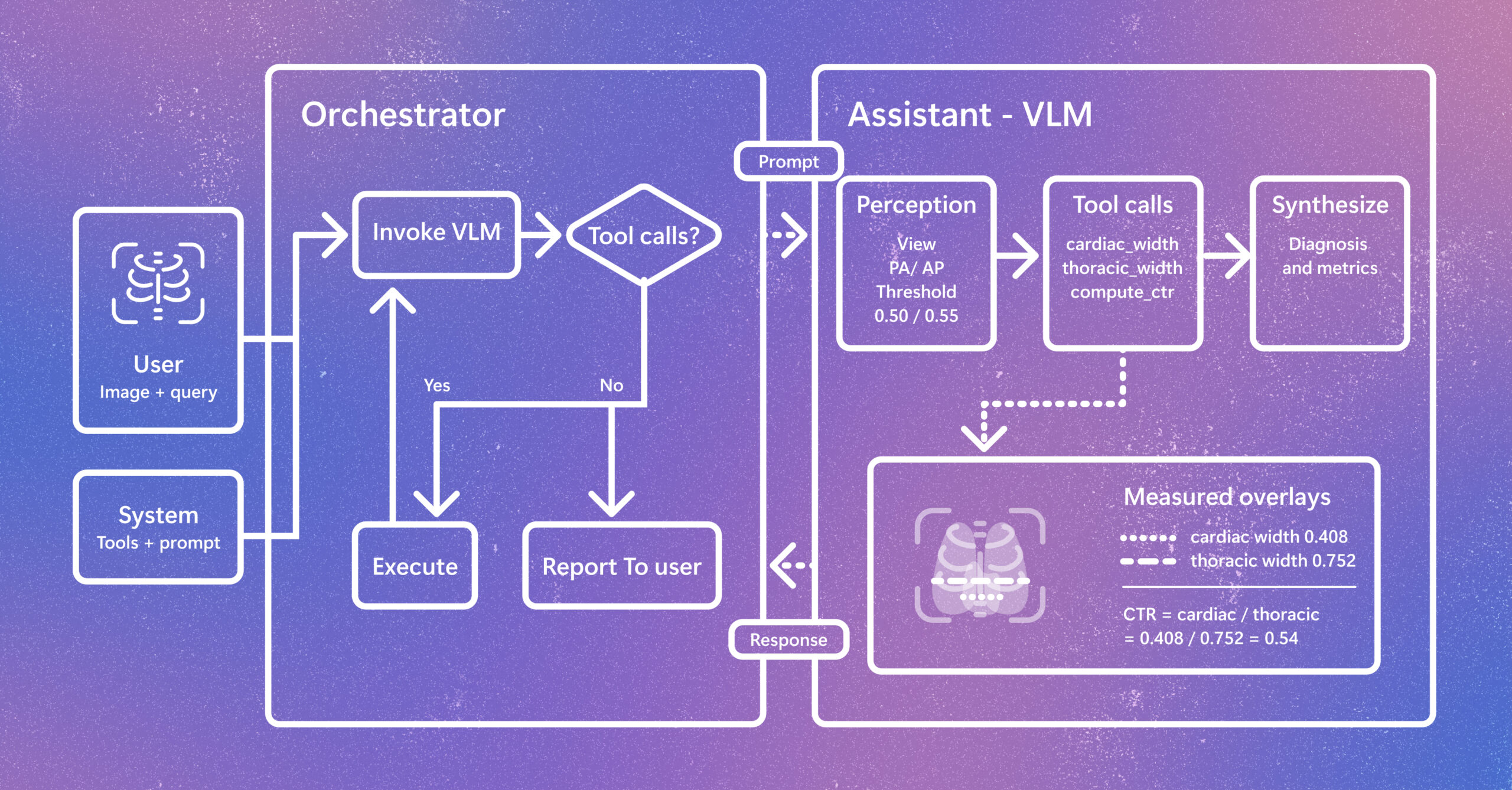
Introducing CARE-X: Towards Clinically Useful Radiology VLMs with Auxiliary Supervision, Reward-Aligned Learning, and Tool-Augmented Measurement

Radiology AI is evolving beyond report generation. CARE-X explores a unified approach that combines flexible reasoning, calibrated predictions, and measurement-based tools for chest X-ray interpretation. The post Introducing CARE-X: Towards Clinically Useful Radiology VLMs with Auxiliary Supervision, Reward-Aligned Learning, and Tool-Augmented Measurement appeared first on Microsoft Research.

We use cookies to run the site and, with your consent, for analytics and to show ads. See our Cookie Policy.