This first work to look at L2D in the context of real-world medical imaging data with human annotations, and introduces a new setup, L2D with Guidance, where the decision space is extended to three choices: predict autonomously, defer to a human expert, or defer to a human expert and provide AI guidance.
Abstract
Medical image interpretation is high-volume and time-consuming, and while AI interpretation can reduce workload, fully autonomous deployment carries potential safety concerns and low specificity may in practice lead to increased clinician workload. Learning to Defer (L2D) addresses this by selectively routing cases between autonomous prediction and human experts by learning from input features and AI model and human performance. While theoretical guarantees have been proven for L2D, its performance has not been validated on real-world medical datasets with human reader annotations. We evaluate the predictor-rejector formulation of two-stage L2D, where the AI predictor model is fixed and separate from the trainable routing or rejector model, on Collab-CXR, a multilabel chest X-ray dataset with multiple human annotations per case. This is the first work to look at L2D in the context of real-world medical imaging data with human annotations. We further introduce a new setup, L2D with Guidance, where the decision space is extended to three choices: predict autonomously, defer to a human expert, or defer to a human expert and provide AI guidance. We compare multiple rejector architectures and loss functions, and different input feature availabilities. This is reproduced on two larger datasets, VinDr-CXR and CheXpert. Our results show that two-stage L2D with Guidance outperforms classic two-stage learning to defer, as well as human-alone, AI-alone and AI-guided human baselines. Notably, this performance is achieved with simpler loss functions compared to formally defined L2D surrogate loss functions in current literature.

Radiology AI systems increasingly inform clinical decisions such as triage, follow-up imaging, and treatment planning. For these decisions to be made safely, model outputs must be well calibrated, meaning predicted probabilities accurately reflect true risk. Many standard techniques for improving calibration, such as M...
Nathan Le, Magdalini Paschali, Arogya Koirala et al.· 0 citations
Artificial intelligence (AI) has become one of the most actively discussed tools in modern day radiology, promising to help interpret X-rays, CT scans, and MRIs alongside human radiologists. It has matched or exceeded human accuracy outright, particularly in a few narrow tasks. Furthermore, AI has come at a time when i...
This work underscores the need for a holistic approach to uncertainty quantification in recent development of medical vision foundation model, ensuring robust and interpretable AI-driven decision-making and highlights the importance of careful model selection and the inte- gration of both point and region prediction to...
Medical image segmenters often get worse when sites, scanner vendors, or protocols change. Continual test-time adaptation (CTTA) addresses this problem without target labels, but it can be impossible to update a model on a non-stationary stream and can lead to a lot of errors. We examine a more reasonable and meaningfu...
The effect of real-world distribution shifts on three-dimensional AI models for lung nodule analysis on CT and MedStyle-3DG, an open-source 3D vision-language framework for domain generalization, are quantified and evaluated.
B. Bercean, Rafael Medelean, A. Tenescu et al.· Journal of imaging informati...· 0 citations
Findings indicate that gradient-level and graph-based analysis can enhance the effectiveness, transparency, and clinical applicability of quality control in multi-label medical image classification.
Shelley Zixin Shu, Aurélie Pahud de Mortanges, A. Poellinger et al.· Journal of imaging informati...· 0 citations
Related blog posts
MIT News · Artificial Intelligence· news.mit.eduNov 17, 2026
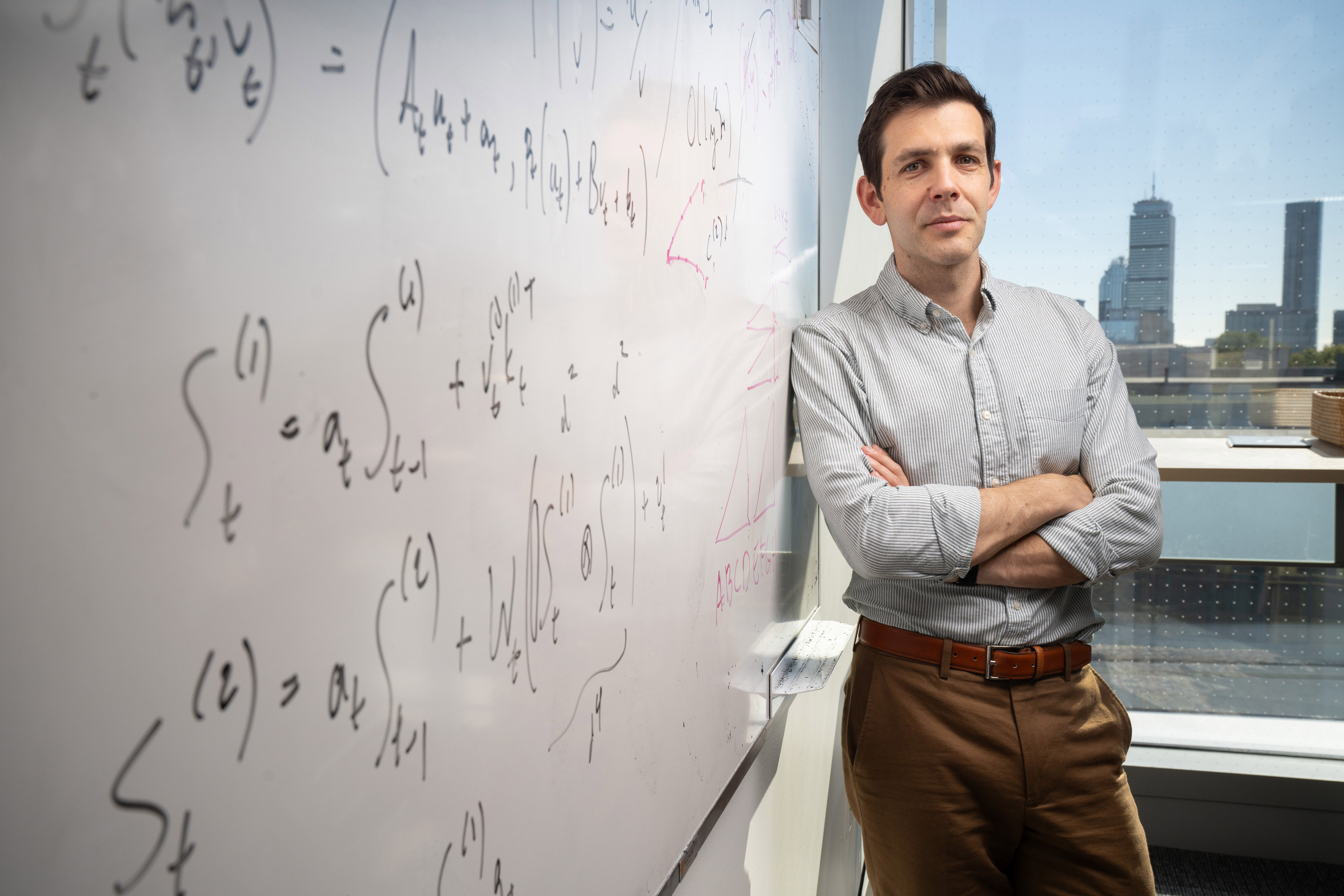
By studying the computational foundations of language learning, Associate Professor Jacob Andreas builds intelligent systems that can communicate effectively with humans.
Microsoft Research Blog· microsoft.comNov 16, 2026
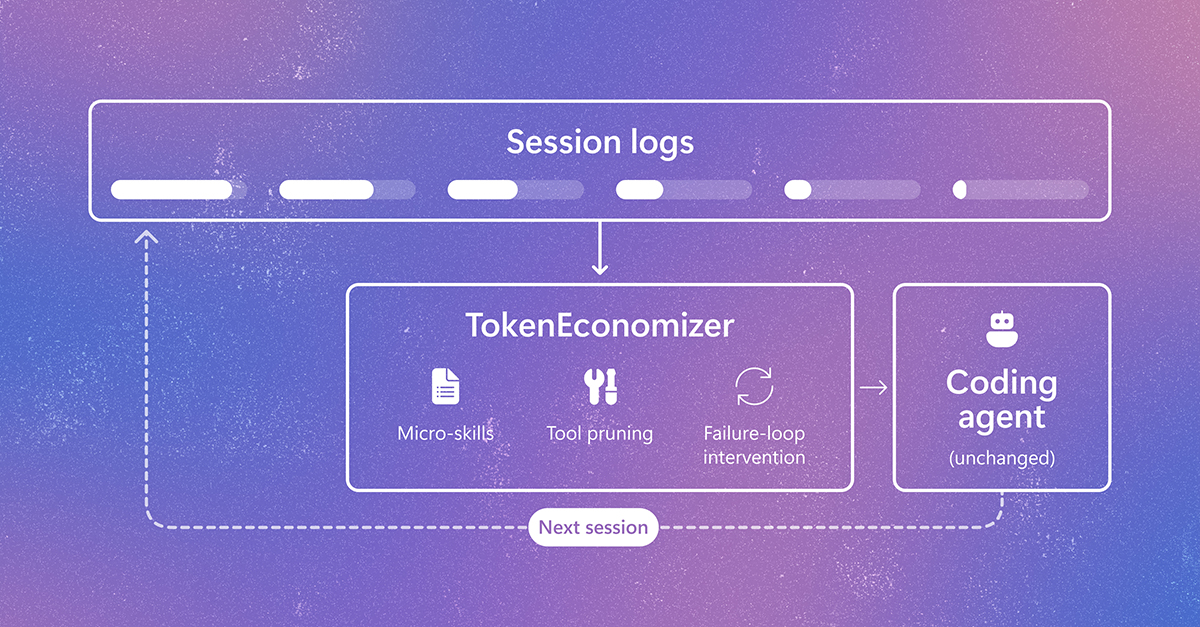
AI coding agents are increasingly help developers fix bugs and build features largely on their own, but every interaction with their models consumes tokens. In each session, an agent sends instructions, tool descriptions, and session history to its model. Most efforts to reduce this cost focus on individual tasks. Yet developers return to the same […] The post TokenEconomizer: Learning from Experience to Make AI Coding Agents More Efficient appeared first on Microsoft Research.
MIT News · Artificial Intelligence· news.mit.eduNov 13, 2026