These results establish scope matching as a complementary control for persistent agent memory: certification determines whether an edit is supported, while retrieval scope determines where that evidence authorizes its use.

Abstract
Persistent memory lets language-model agents improve prompts and skills without updating model weights. We show that matching retrieval scope to certification scope enables these edits to support reliable repeated adaptation across recurring task families. We study frozen-model agents on ProcStream-RSI, a 12-round code-repair stream, using Orthogonal Regression Control (ORC), an execution-grounded gate for persistent skill edits. In an intervention that holds proposals and gate decisions fixed, retrieving each accepted skill only for its originating family raises mean hidden trajectory utility from 0.713 under global memory to 0.816 and changes harmful deployments from six of eight to none. In 27 paired randomized-order streams, Scoped-ORC improves mean trajectory utility by 0.063 [0.037, 0.094] over Global-ORC, accepts 63 rather than 12 updates, and produces multiple accepted updates in 19/27 streams, with 0/63 harmful acceptances. The global control reaches 0.713, below the static agent's 0.775, because locally valid edits can interfere with unrelated families. These results establish scope matching as a complementary control for persistent agent memory: certification determines whether an edit is supported, while retrieval scope determines where that evidence authorizes its use.
The introduction of TEPA, a revocable evidence-memory mechanism that makes validity an explicit state of memory, and the results establish lifecycle revocation as a core memory operation for agents that must falsify, audit, and later re-promote evolving knowledge.
Yan Zhou, Yue Ouyang, Kaiyang Zheng et al.· 3 citations· ⚡1
Large language model agents that persist across sessions, tools, users, and changing environments do more than answer isolated prompts; they accumulate state. When new evidence arrives, the central question is where that change should live: transient context, external memory, tool or workflow definitions, activation st...
Gabriel Chavira-Juárez, Eder Jahir Gonzalez Bravo, G. Rivera-García et al.· Frontiers in Big Data· 0 citations
Long-horizon LLM agents must convert accumulated experience into durable memory, deciding what to keep, compress, abstract into reusable skills and rules, or forget. We report a four-phase research program on this consolidation problem whose central finding is a shift in what is measured: from how much an agent remembe...
Persistent memory creates a control problem that retrieval relevance alone does not solve: a memory can remain highly useful after an update, deletion, or revocation makes it inadmissible for the current answer. We formalize this as a separation between utility and authority. A fixed finite penalty applied to an unnorm...
Persistent memory supports personalized agents, but a stale stored fact can override current authoritative evidence without warning. We study when this harm begins as model capability changes. We evaluate a frozen, closed-set, action-scored benchmark with 2 suites that represent 2 different meanings of"no memory"(a Ben...
The memory-clarification boundary is studied: whether interaction-derived information should be persisted, used only in the current context, re-verified, or clarified with the user, as well as across Claude and Qwen.
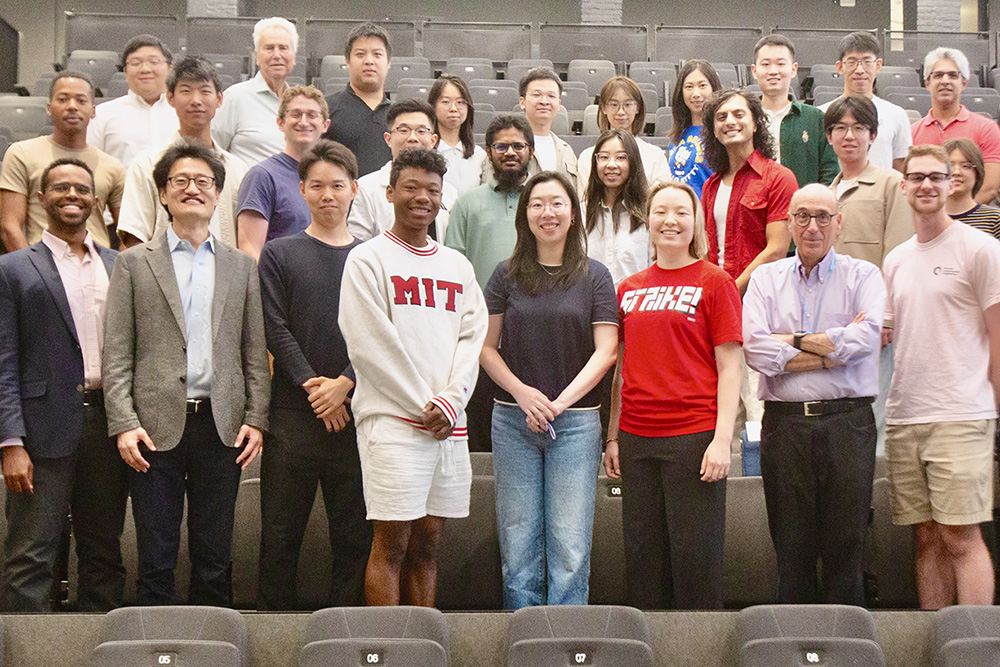
With $2.1 million funding from Google.org, the open-source Public Transit Intelligence Hub will unify public transit monitoring, operations, and passenger communication.
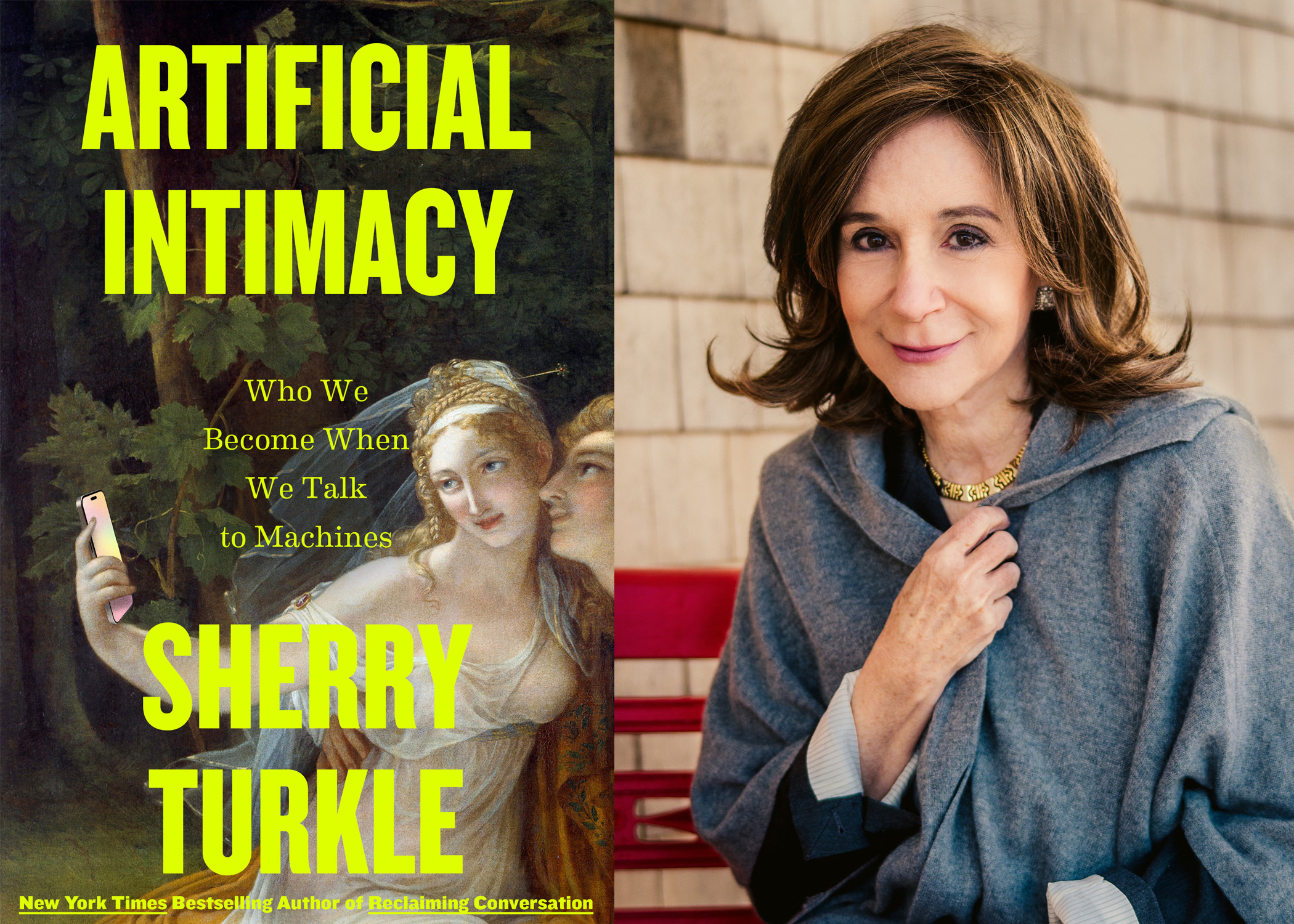
Professor Sherry Turkle’s new book, “Artificial Intimacy,” offers a withering critique of chatbots and the antisocial dynamics she believes they encourage.
We use cookies to run the site and, with your consent, for analytics and to show ads.
See our Cookie Policy.