A novel spatio-temporally complementary feature propagation framework that leverages the strengths of two distinct data sources: spatially sparse but temporally dense loop detector data, and a spatially complete but temporally sparse macroscopic transportation model is proposed.
Abstract
The estimation of Annual Average Daily Traffic (AADT) is vital for transportation planning and infrastructure maintenance, yet obtaining accurate values for an entire urban network across multiple years remains challenging due to the high cost and spatial sparsity of physical sensors. This research proposes a novel spatio-temporally complementary feature propagation framework that leverages the strengths of two distinct data sources: spatially sparse but temporally dense loop detector data, and a spatially complete but temporally sparse macroscopic transportation model. The methodology highlights a feature propagation algorithm on directed graphs, formulated as a Poisson energy minimization considering residues. The standard binary adjacency matrix is replaced with flow ratio matrices to capture real-world vehicle turn ratios at intersections. Validated in the city of Zurich, the algorithm demonstrates high computational efficiency, achieving convergence within minutes. Results indicate that the framework effectively reconciles theoretical models with empirical ground truths, yielding a normalized mean absolute error below $10\%$. This scalable approach provides a feasible solution for spatio-temporal network-wide AADT estimation through combining real-world limited sensor coverage and traffic models.

Using an uncertainty-aware physics-informed framework, this work infer future OD flows from area-level counts alone across twelve mobility datasets from cities in the United States and China, reaching accuracy comparable to models that take historical OD matrices as input.
Yi Wang, Jing Li, Jin-Liang Deng et al.· 0 citations
A Spatio-Temporal Graph Convolutional Network (STGCN) for forecasting route-level travel times on a simulated Nashville, Tennessee road network with 1,037 junctions and 1,601 road segments is presented, demonstrating the potential of the model as an efficient surrogate for transportation resilience screening, incident...
Abhilasha J. Saroj, Natalie R. D. Myers, Hao-Ran Niu· 0 citations
In STTF, a knowledge graph capturing multi-node relationships is built to align trajectories with the road network and a spatial-temporal topology fusion module is designed to integrate temporal information with road network topology explicitly.
A real-time, spatial occupancy–driven framework for adaptive green signal prediction built upon a novel hybrid two-stream detection architecture integrated with a visibility-aware fusion mechanism, offering the research community a benchmark framework for integrating perception-aware learning into traffic management, s...
Geographic flows represent the movement of geographic objects between locations at different times. Flow hotspots reflect aggregated movements within specific spatiotemporal ranges. Accurately identifying these hotspots helps reveal their underlying causes and provides targeted insights. Among existing methods, scan...
Zhuoting Fu, Xiaorui Yan, T. Pei et al.· Geographical Analysis· 0 citations
A novel method called adaptive diffused spatiotemporal graph convolution network (ADSTGCN) is proposed for accurate traffic flow prediction and achieves superior performance compared to other state-of-the-art methods.
Xiao Luo, Shanshan Wang, Shao-Bao Li et al.· Journal of Transportation En...· 0 citations
Related blog posts
MIT News · Artificial Intelligence· news.mit.eduNov 17, 2026
By studying the computational foundations of language learning, Associate Professor Jacob Andreas builds intelligent systems that can communicate effectively with humans.
Microsoft Research Blog· microsoft.comNov 16, 2026
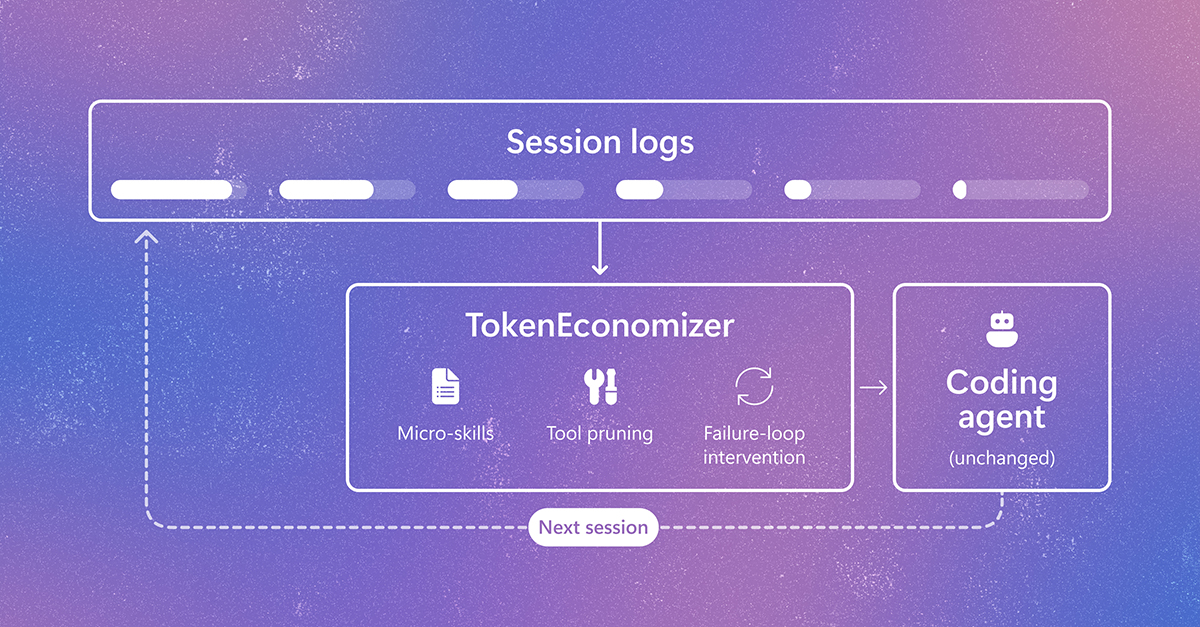
AI coding agents are increasingly help developers fix bugs and build features largely on their own, but every interaction with their models consumes tokens. In each session, an agent sends instructions, tool descriptions, and session history to its model. Most efforts to reduce this cost focus on individual tasks. Yet developers return to the same […] The post TokenEconomizer: Learning from Experience to Make AI Coding Agents More Efficient appeared first on Microsoft Research.
MIT News · Artificial Intelligence· news.mit.eduNov 13, 2026